

About Us
Wuxi Changrong Conveying Machinery Company locates qianzhou town where is nearly by lake Tai. Wuxi Changrong gets well developed: east is Xicheng expressway ,Yangtze Riverside expressway ,west is 312 National highway, Hu Ning expressway cross qianzhou town ( Yuqi exit is 1 kilo to Wuxi Changrong ).
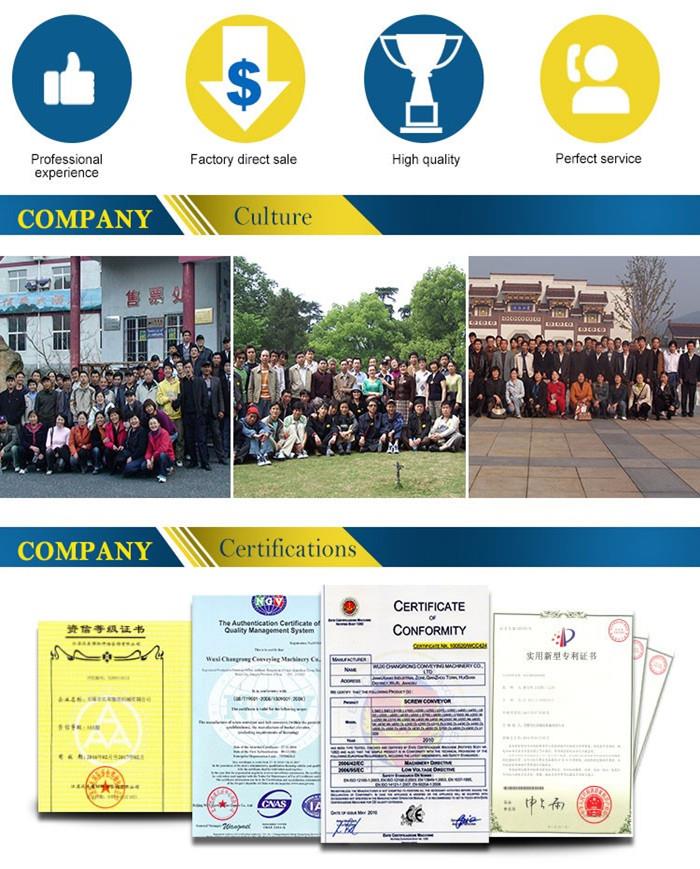
Wuxi Changrong has been engaged in development, design, manufacture of conveying equipment for various materials for more than thirty years. With a team engaged in professional design on all kinds of conveying equipment as well as a team of technical workers who are engaged in the production of various conveying equipments ,Wuxi Changrong always adhere the principle of “Accurately design, Exactly manufacturing ,Sincerely service and constantly perfecting “ for customers . Wuxi Changrong is the pointing manufacturer of China Chemical Industry Reconnaissance Design Association and one of the earliest enterprises in the field which passed ISO9001 Certification.Moreover ,Wuxi Changrong’s many products are qualified with CE certifications.
why choose us
Advanced equipment
Equipment based on the latest technological developments has higher efficiency, better performance and stronger reliability.
Professional team
Our professional team collaborate and communicate effectively with one another, and are committed to delivering high-quality results. They are capable of handling complex challenges and projects that require
Customized services
Our team of experts will work closely with you to understand your needs and will provide solutions that are tailored to meet your expectations.
Rich experience
Our company has many years of production work experience. The concept of customer-oriented and win-win cooperation makes the company more mature and stronger.


What is Conveyor
A conveyor is a mechanical system that consists of a belt or chain and pulleys, gears, rollers, or other devices that are used to transport materials along a path from one place to another. Conveyors are commonly used in industrial applications to move goods, components, and materials between different stages of production, packaging, or storage.
Conveyors can be used in a wide range of applications, from small assembly lines to large-scale manufacturing operations. They are typically designed to meet the specific requirements of the application, including the type of materials being transported, the weight and size of the materials, and the required speed and efficiency of the conveyor system.
Benefits of Conveyor
Increased productivity
Conveyors allow for faster and more efficient transportation of materials within a facility, which can lead to increased productivity and throughput.
Reduced manual labor
Conveyors can reduce the amount of manual labor required to move materials within a facility, which can result in cost savings and a reduction in the risk of work-related injuries.
Improved quality control
Conveyors can help ensure that materials are transported in a consistent and controlled manner, which can help improve quality control and reduce the risk of damage to the materials during transport.
Enhanced safety
Conveyors can help reduce the risk of accidents and injuries in industrial settings by minimizing the need for workers to manually handle heavy or hazardous materials.
Versatility
Conveyors can be customized to meet the specific needs of a facility, including the type of materials being transported, the weight and size of the materials, and the required speed and efficiency of the conveyor system.
Space efficiency
Conveyors can help maximize the use of space within a facility by providing an efficient means of transporting materials from one area to another.
Types of Conveyor
Belt conveyors
These consist of a continuous loop of material that is supported by rollers or other types of support. The belt is moved by a series of pulleys and driven by a motor or other power source. Belt conveyors are commonly used for transporting lightweight materials over short to medium distances.
Chain conveyors
These conveyors use a chain or series of chains to move materials along a track or trough. Chain conveyors are often used for heavy-duty applications where high capacities and durability are required.
Roller conveyors
These conveyors consist of a series of rollers mounted on a frame. The rollers are driven by a motor or other power source to move the materials along the conveyor. Roller conveyors are commonly used in assembly lines, packaging, and shipping applications.
Bucket elevators
These conveyors are used to transport materials vertically by means of a series of buckets that are attached to a belt or chain. Bucket elevators are commonly used in grain handling, mining, and other industrial applications..
Screw conveyors
These conveyors use a rotating helical screw to move materials along a trough. Screw conveyors are often used for handling powders, granules, and other free-flowing materials.
Overhead conveyors
These conveyors are mounted overhead and use a system of tracks, trolleys, and chains to move materials through a facility. Overhead conveyors are commonly used in automotive manufacturing, food processing, and other applications where materials need to be moved efficiently and safely through a facility.
Pneumatic conveyors
These conveyors use air pressure to move materials through a pipeline. Pneumatic conveyors are commonly used for moving small particles such as powders, granules, and pellets.
Hydro conveyors
These conveyors use a liquid medium to transport materials. Hydro conveyors are commonly used in applications where the materials being transported are fluid or slurry in nature.
Material of Conveyor
Conveyors can be made from a variety of materials, depending on the specific application requirements. Some of the most common materials used in conveyor construction include:
Steel: Steel is a popular material for conveyor construction due to its strength and durability. It is commonly used in heavy-duty applications where high capacities and resistance to impact and abrasion are required.
Aluminum: Aluminum is a lightweight and corrosion-resistant material that is commonly used in conveyor construction. It is often used in applications where lightweight and portability are important.
Polyurethane: Polyurethane is a strong and durable material that is often used in conveyor belts due to its resistance to abrasion, oil, and chemicals.
PVC: PVC is a common material used in conveyor belting due to its low cost and resistance to chemicals and moisture.
Rubber: Rubber is a flexible and durable material that is commonly used in conveyor belts. It is resistant to abrasion and can handle heavy loads.
Nylon: Nylon is a strong and lightweight material that is often used in conveyor construction. It is resistant to chemicals and has a high resistance to abrasion.
Stainless steel: Stainless steel is a corrosion-resistant material that is often used in conveyor construction for applications involving food, pharmaceuticals, and other materials that require a high level of sanitation.
Timing belts: Timing belts are made of synthetic materials and are used in applications where precise timing and synchronization are required.
The choice of material for conveyor construction will depend on the specific requirements of the application, including the type of materials being transported, the weight and size of the materials, the required speed and efficiency of the conveyor system, and the environment in which the conveyor will be used.
Application of Conveyor

Material handling
Conveyors are widely used in material handling applications to transport items such as packages, boxes, luggage, and heavy equipment. They are commonly used in warehouses, distribution centers, and manufacturing facilities.
Assembly lines
Conveyors are an essential component of assembly lines, where they are used to transport components and subassemblies between workstations. This allows for a more efficient and streamlined manufacturing process.
Sorting and distribution
Conveyors are used in sorting and distribution centers to transport packages and mail items between sorting machines and loading docks. They help to improve the efficiency and accuracy of the sorting process.
Loading and unloading
Conveyors are used to load and unload materials from trucks, trains, and other vehicles. They can be used to transport heavy and bulky items such as coal, minerals, and agricultural products.

Food processing
Conveyors are widely used in food processing applications to transport raw materials and finished products between processing stages. They are used in applications such as meat packing, baking, and canning.
Pharmaceutical manufacturing
Conveyors are used in pharmaceutical manufacturing to transport raw materials, chemicals, and finished products between processing machines and storage areas.
Automotive manufacturing
Conveyors are an essential component of the automotive manufacturing process, where they are used to transport car parts and subassemblies between workstations.
Airports
Conveyors are used in airports to transport luggage and cargo between the terminal, baggage claim, and loading docks.
Process of Conveyor
Design and engineering
The first step in the conveyor production process is the design and engineering phase. This involves creating a detailed blueprint or specification sheet for the conveyor based on the customer's requirements and application needs.
Material selection
Once the design is complete, the conveyor manufacturer will select the appropriate materials for the conveyor components based on the application requirements and specifications. This may include selecting the type of belting, rollers, frames, and other components.
Fabrication
The conveyor components are then fabricated using the selected materials. This may involve cutting, bending, welding, and machining operations to create the various components of the conveyor.
Assembly
The conveyor components are then assembled together to create the complete conveyor system. This may involve attaching the rollers to the frame, installing the belting, and tensioning the belting.
Testing
Once the conveyor is assembled, it undergoes testing to ensure that it meets the specified performance requirements. This may involve running the conveyor at different speeds and loads to test its capacity, belt tension, and alignment.
Packaging and shipping
Once the conveyor has passed all testing and quality control procedures, it is packaged for shipment and transported to the customer's location.
Components of Conveyor
1
Frame: The frame is the structural backbone of the conveyor system. It provides support and stability for the conveyor and holds all the other components in place.
2
Rollers: Rollers are the wheels or cylinders that support and guide the conveyor belt as it moves along the frame. They are typically made of high-strength steel or other durable materials.
3
Belt: The belt is the moving surface that carries the materials along the conveyor. It is typically made of durable materials such as rubber, PVC, or polyurethane.
4
Drives: The drives are the components that power the conveyor and cause it to move. This may include a motor, gearbox, and other power transmission components.
5
Idlers: Idlers are the components that support the conveyor belt and help maintain tension in the belt. They may include pulleys, rollers, and other supporting components.
6
Loading and discharging areas: The loading and discharging areas are the sections of the conveyor where materials are loaded onto and discharged from the conveyor. These areas are typically designed to accommodate the specific types of materials being transported.
7
Control systems: Control systems are used to regulate the operation of the conveyor and ensure that it is running smoothly and efficiently. This may include sensors, switches, and other control devices.
How to Maintain Conveyor
1.Regular inspections
Conduct regular inspections of the conveyor system to identify any potential issues before they become major problems. This may include checking the frame, rollers, belt, drives, idlers, and other components for signs of wear or damage.
2.Cleaning
Keep the conveyor system clean and free of debris that can cause damage or interfere with the operation of the conveyor. This may involve regular sweeping or vacuuming of the conveyor surface, as well as cleaning of the frame and other components.
3.Lubrication
Lubricate the conveyor components as needed to reduce friction and wear, and to ensure smooth operation. This may include lubricating the rollers, drives, and other moving parts.
4.Tensioning
Regularly check and adjust the tension of the conveyor belt to ensure that it is properly tightened and aligned. Improper tension can cause the belt to slip or jump, which can lead to damage and downtime.
5.Replacement of worn parts
Replace any worn or damaged parts promptly to prevent further damage and ensure the smooth operation of the conveyor. This may include replacing the belt, rollers, idlers, and other components.
6.Record keeping
Maintain accurate records of maintenance activities, inspections, and repairs to track the performance and condition of the conveyor system over time.
7.Training
Ensure that operators and maintenance staff are properly trained to operate and maintain the conveyor system. Proper training can help prevent accidents and damage, and ensure that the conveyor is running efficiently.

How Conveyor Work
A conveyor system works by using a loop of material, called a conveyor belt, to move items from one place to another. The conveyor belt is supported by a frame, rollers, and idlers, which allow the belt to move smoothly along the frame. The items to be transported are placed on the conveyor belt, which moves them along the frame to the discharge area.
The movement of the conveyor belt is typically driven by an electric motor, which powers the drives and gearbox components of the conveyor system. The motor turns the drives, which in turn move the rollers and other components to move the conveyor belt.
The speed of the conveyor belt can be adjusted to suit the needs of the application, and can be controlled using sensors, switches, and other control devices. The conveyor system may also include safety features such as emergency stop buttons, safety switches, and other devices to ensure the safe operation of the system.
A conveyor system works by using a loop of conveyor belt, driven by an electric motor, to move items along a frame from one place to another. The conveyor system can be adjusted to suit the needs of the application, and includes safety features to ensure safe operation.
How to Choose Conveyor
Material type
Consider the type of materials being transported, as this will determine the type of conveyor system needed. For example, some materials may require a belt conveyor, while others may be better suited to a roller conveyor or overhead conveyor.
Transport distance and elevation
The distance and elevation of the transport will also affect the type of conveyor system needed. Longer distances or elevations may require a more powerful motor and larger rollers to support the weight of the materials.
Speed and capacity
Consider the speed and capacity required for the conveyor system. If the materials need to be transported quickly and efficiently, a high-speed conveyor system may be needed. The capacity of the conveyor will also depend on the volume of materials being transported.
Budget
The budget for the conveyor system will also affect the type and quality of the conveyor system chosen. It's important to consider the long-term maintenance and repair costs of the conveyor system, in addition to the initial cost of installation.
Safety
Ensure that the conveyor system meets safety standards and regulations, and includes safety features such as emergency stop buttons, safety switches, and other devices to ensure safe operation.
Durability
Consider the durability of the conveyor system and the materials used to construct it. The conveyor system should be able to withstand the demands of the application and last for a long time.
Our Factory
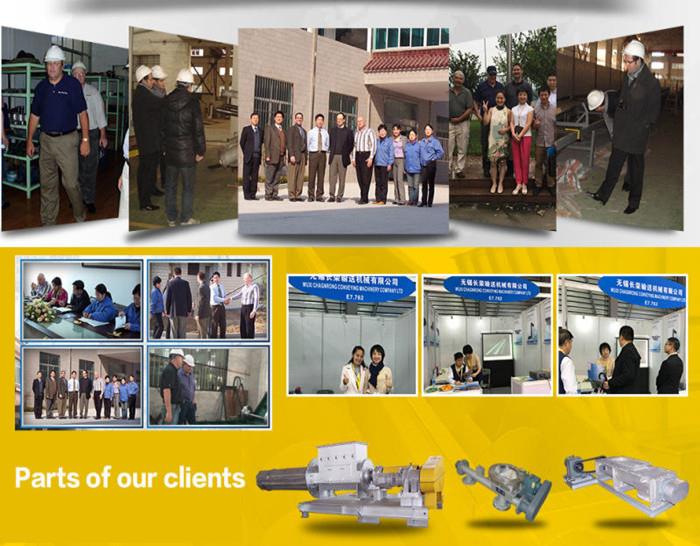
Wuxi Changrong has provided conveying equipments for many famous companies both at home and abroad. Such as Rockwool in Denmark, Saint-Gobain Group, Lanxess Shanghai ,BASF Shanghai ,BASF Nanjing ,Degussa ,Ingevity performance Material Zhuhai Company ,Invista Shanghai ,Dupont , Owenscorning, Mitsubishi Heavy , Japan SUMITOMO,Japan Kurita , etc. In China, North Sichuan Nitrocellulose Co., Ltd, Angel Yeast ,Sinopec, GEM Co., Ltd, Zhejiang Jiahua Group ,Huayou Cobalt, Haitian-Food, LEO KING ENVIRO.GROUP,ZIKE ENVIRONMENT, etc. Meanwhile, Wuxi Changrong export conveying equipments to Russia,Finland, Denmark, Singapore,New Zeland, Australia and other countries .

FAQ
Q: What is a conveyor system?
A: A conveyor system is a mechanical system that moves materials from one place to another. It consists of a loop of conveyor belt that is supported by a frame, rollers, and idlers, and is driven by an electric motor.
Q: What are the different types of conveyors?
A: There are several types of conveyors, including belt conveyors, roller conveyors, overhead conveyors, and vertical conveyors, among others. The type of conveyor used depends on the specific application and requirements.
Q: What are the advantages of using a conveyor system?
A: Conveyor systems offer several advantages, including increased efficiency, reduced labor costs, improved safety, and reduced damage to materials being transported. They can also handle a wide range of materials and sizes.
Q: What are the components of a conveyor system?
A: The main components of a conveyor system include the frame, rollers, belt, drives, idlers, loading and discharging areas, and control systems.
Q: How does a conveyor work?
A: A conveyor works by using a loop of conveyor belt, driven by an electric motor, to move items along a frame from one place to another. The conveyor system can be adjusted to suit the needs of the application, and includes safety features to ensure safe operation.
Q: What are the different types of conveyor belts?
A: There are several types of conveyor belts, including fabric belts, PVC belts, rubber belts, and steel cord belts, among others. The type of belt used depends on the specific application and requirements.
Q: What are the common problems with conveyor systems?
A: Common problems with conveyor systems include belt wear and tear, misalignment of rollers, motor failure, and jamming of materials. Regular maintenance and inspection can help prevent these issues.
Q: How often should a conveyor system be inspected and maintained?
A: Regular inspections and maintenance of the conveyor system are important to ensure that it operates smoothly and efficiently. The frequency of inspections and maintenance will depend on the specific application and usage.
Q: What are the safety features of a conveyor system?
A: Safety features of a conveyor system may include emergency stop buttons, safety switches, and other devices to ensure safe operation. It's important to follow safety guidelines when operating and maintaining the conveyor system.
Q: What are the benefits of automation in conveyor systems?
A: Automation in conveyor systems can offer several benefits, including increased efficiency, reduced labor costs, and improved accuracy and consistency in material handling.
Q: What is the difference between a live roller conveyor and a gravity roller conveyor?
A: A live roller conveyor is powered by an electric motor, while a gravity roller conveyor is not. Live roller conveyors are typically used for heavier or larger items, while gravity roller conveyors are better suited for lighter or smaller items.
Q: What are the factors to consider when selecting a conveyor system?
A: When selecting a conveyor system, it's important to consider the type of materials being transported, the distance and elevation of the transport, the speed and capacity required, the budget, and safety and durability of the system.
Q: What are some common applications of conveyor systems?
A: Conveyor systems are commonly used in manufacturing, warehousing, and distribution centers, as well as in airports, shipping ports, and other transportation facilities.
Q: Can conveyor systems be customized to meet specific requirements?
A: Yes, conveyor systems can be customized to meet specific requirements, such as material handling needs, speed and capacity, and safety and durability requirements.
Q: What is the life expectancy of a conveyor system?
A: The life expectancy of a conveyor system depends on several factors, including the type of materials being transported, the usage and maintenance, and the quality of the components used. With proper maintenance and care, a conveyor system can last for several years.
Q: What are the energy-efficient options for conveyor systems?
A: Energy-efficient options for conveyor systems may include using energy-efficient motors, optimizing the design of the conveyor system to reduce energy consumption, and using materials that are energy-efficient.
Q: What are the benefits of a modular conveyor system?
A: A modular conveyor system offers several benefits, including flexibility, scalability, and ease of maintenance and repair. It can also be customized to meet specific requirements.
Q: How often should a conveyor be serviced?
A: Weekly/monthly maintenance. On a weekly or monthly basis, maintenance tasks should focus on preventing common conveyor issues like belt mistracking, belt slippage, and material carry-back.
Q: How do I protect my conveyor belt?
A: Regular maintenance and cleaning. This includes inspecting and cleaning belts, rollers, and other components to prevent wear and tear that can lead to malfunctions. Conveyor systems should also be regularly lubricated to prevent friction, and any damaged parts should be replaced immediately.
Q: How do you increase conveyor belt life?
A: Improving conveyor belt life & performance: Wear liners. Installed inside the skirting system, wear liners provide a protective surface against the friction and abrasion caused by the conveyed bulk material. The wear liner also assists in managing the side-loading forces from reaching the skirting rubber seals as well.
Wuxi Changrong Conveying Machinery Co., Ltd. is one of the most professional conveyor manufacturers and suppliers in China. Welcome to get custom conveyor from our factory. For price consultation, contact our now.
Shaftless Spiral Conveyor Machine, Shaftless Screw Conveyor Machine, Shaftless Spiral Conveyors