

About Us
Wuxi Changrong Conveying Machinery Company locates qianzhou town where is nearly by lake Tai. Wuxi Changrong gets well developed: east is Xicheng expressway ,Yangtze Riverside expressway ,west is 312 National highway, Hu Ning expressway cross qianzhou town ( Yuqi exit is 1 kilo to Wuxi Changrong ).
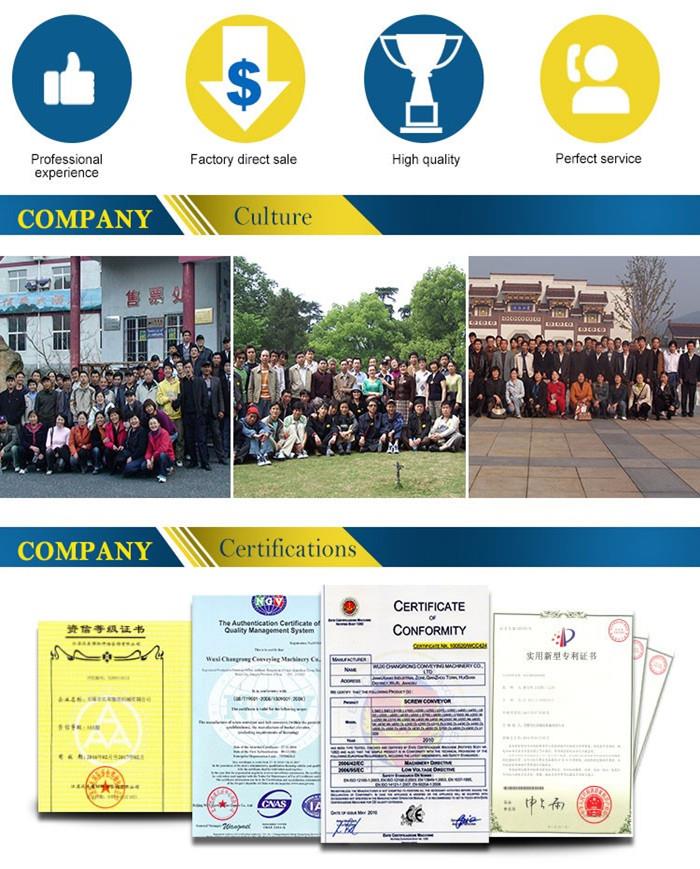
Wuxi Changrong has been engaged in development, design, manufacture of conveying equipment for various materials for more than thirty years. With a team engaged in professional design on all kinds of conveying equipment as well as a team of technical workers who are engaged in the production of various conveying equipments ,Wuxi Changrong always adhere the principle of “Accurately design, Exactly manufacturing ,Sincerely service and constantly perfecting “ for customers . Wuxi Changrong is the pointing manufacturer of China Chemical Industry Reconnaissance Design Association and one of the earliest enterprises in the field which passed ISO9001 Certification.Moreover ,Wuxi Changrong’s many products are qualified with CE certifications.
why choose us
Advanced equipment
Equipment based on the latest technological developments has higher efficiency, better performance and stronger reliability.
Professional team
Our professional team collaborate and communicate effectively with one another, and are committed to delivering high-quality results. They are capable of handling complex challenges and projects that require
Customized services
Our team of experts will work closely with you to understand your needs and will provide solutions that are tailored to meet your expectations.
Rich experience
Our company has many years of production work experience. The concept of customer-oriented and win-win cooperation makes the company more mature and stronger.
-

Double Shaftless Screw Conveyor
Double shaftless screw conveyors are divided into two types: screw conveyors and shaftless screw conveyors in terms of conveying form. Screw conveyors are suitable for conveying dry powder materials Add to Inquiry -
-
-
-
-
-
-
-
-
-
-


What is Screw Conveyor
A screw conveyor is a type of conveyor system that uses a helical screw blade to move material through a tube or trough. It is also known as an auger conveyor. The screw conveyor consists of a central shaft with a helical blade, or "flighting," that rotates within a fixed channel, known as a trough, to move free-flowing and non-abrasive materials.
The rotation of the screw blade creates a pushing action that moves the material along the length of the conveyor. Screw conveyors are commonly used for transporting materials such as powders, granules, and small chunks that are suitable for moving by a rotating helical blade.
Benefits of Screw Conveyor
Versatility
Screw conveyors can handle a variety of materials, such as powders, granules, and small chunks, making them suitable for a wide range of applications.
Efficiency
Screw conveyors are energy-efficient and can move materials quickly and efficiently, which can help reduce energy costs and improve productivity.
Easy to install and operate
Screw conveyors are relatively simple to install and operate, which can reduce maintenance costs and increase productivity.
Compact design
Screw conveyors have a compact design that allows them to fit into tight spaces and easily navigate around obstacles, making them ideal for use in confined spaces.
Customization
Screw conveyors can be customized to suit specific application requirements, such as varying lengths, diameters, and materials of construction, which makes them flexible and adaptable to different applications.
Durability
Screw conveyors are built with heavy-duty materials that can withstand harsh environments and abrasive materials, making them suitable for use in rugged industrial settings.
Types of Screw Conveyor
1
Standard screw conveyor: This is the most basic type of screw conveyor, consisting of a cylindrical housing and a helical screw blade that rotates within it. Standard screw conveyors are suitable for general material handling applications.
2
Vertical screw conveyor: Vertical screw conveyors are designed to move materials vertically, and are commonly used for lifting and discharging materials from storage bins or silos.
3
Inclined screw conveyor: Inclined screw conveyors are used to move materials at an angle, and are commonly used for loading and unloading materials from trucks or railcars, or for conveying materials to elevated processing areas.
4
Live bottom screw conveyor: Live bottom screw conveyors are designed to handle materials that tend to pack or cake, such as clay or coal. They consist of a perforated trough and a series of interlocking screws that rotate to move the material along the bottom of the conveyor.
5
Shaftless screw conveyor: Shaftless screw conveyors are designed for applications where the material is highly abrasive or sticky, such as ash or sludge. They consist of a cylindrical housing and a helical screw blade that is not attached to a central shaft, allowing for better material flow and reduced maintenance.
6
Screw auger conveyor: Screw auger conveyors are similar to standard screw conveyors, but are designed for applications where the material is more free-flowing, such as grain or wood chips. They typically have a larger diameter and a shorter pitch than standard screw conveyors.
7
Dual screw conveyor: Dual screw conveyors consist of two screws that rotate in opposite directions within the same housing. They are designed for applications where the material needs to be mixed or blended as it is conveyed.

Material of Screw Conveyor
The material of construction for a screw conveyor will depend on the specific application requirements and the properties of the material being conveyed. Here are some common materials of construction for screw conveyors:
Carbon steel: Carbon steel is the most common material of construction for screw conveyors due to its strength and low cost. It is suitable for most applications, but is not recommended for conveying materials that are highly corrosive or abrasive.
Stainless steel: Stainless steel is a more corrosion-resistant material that is commonly used for conveying materials that are highly corrosive, such as food and pharmaceutical products. It is also suitable for applications where cleanliness and hygiene are important.
Polyurethane: Polyurethane is a lightweight and durable material that is suitable for conveying materials that are abrasive or sticky, such as ash or sludge. It is also resistant to chemicals and oils.
PVC: PVC is a cost-effective and lightweight material that is suitable for conveying materials that are corrosive, such as waste water treatment applications. It is also suitable for conveying materials that are abrasive or sticky.
Aluminum: Aluminum is a lightweight and corrosion-resistant material that is suitable for conveying materials that are non-abrasive, such as grain or wood chips. It is also suitable for applications where weight is a concern.
Other materials: Other materials of construction may be used depending on the specific application requirements, such as ceramic, high-density polyethylene (HDPE), and specialty alloys.
The specific material of construction used for a screw conveyor will depend on the properties of the material being conveyed, as well as other factors such as cost, strength, and durability. It is important to choose the appropriate material of construction to ensure the long-term performance and reliability of the screw conveyor.
Application of Screw Conveyor
1.Food processing
Screw conveyors are commonly used in food processing plants for conveying food products, such as grains, fruits, vegetables, and meat. They are also used for mixing and blending ingredients, and for discharging waste materials.
2.Waste water treatment
Screw conveyors are used in waste water treatment plants for conveying sludge and other waste materials. They are also used for mixing and blending materials in treatment processes.
3.Power generation
Screw conveyors are used in power plants for conveying coal, ash, and other materials. They are also used for loading and unloading coal from railcars and trucks.
4.Chemical processing
Screw conveyors are used in chemical processing plants for conveying chemicals, such as powders, granules, and small chunks. They are also used for loading and unloading materials from storage tanks and silos.
5.Agriculture
Screw conveyors are used in agriculture for conveying grain, feed, and other materials. They are also used for loading and unloading grain from trucks and storage bins.
6.Mining
Screw conveyors are used in mining operations for conveying ore, coal, and other materials. They are also used for loading and unloading materials from trucks and railcars.
7.Manufacturing
Screw conveyors are used in manufacturing facilities for conveying materials, such as powders, granules, and small chunks, between processing machines and storage areas.
Process of Screw Conveyor
Design
The first step in the production process is to design the screw conveyor based on customer specifications and application requirements. Engineers use CAD software to create a detailed design of the conveyor, including the size, shape, and material of construction.
Manufacturing
Once the design is complete, manufacturers begin producing the components needed to build the conveyor. This includes cutting and shaping metal plates and bars to create the conveyor housing, shaft, and flights. Manufacturers may also produce other components, such as bearings, seals, and fasteners.
Assembly
After the components are produced, they are assembled into the completed conveyor. This involves installing the flights onto the shaft, which is then inserted into the housing. Bearings and seals are also installed to ensure smooth operation and prevent material leakage.
Testing
Once the conveyor is assembled, it undergoes testing to ensure it meets performance specifications and customer requirements. This may include running the conveyor at different speeds and loads, checking for material flow and leakage, and verifying the accuracy of the design.
Finishing
After testing is complete, the conveyor undergoes final finishing to ensure it is ready for shipment. This may include cleaning and painting the conveyor, applying labels and safety markings, and packaging the conveyor for transport.
Shipment
Once the conveyor is finished, it is shipped to the customer or stored for future use.
Components of Screw Conveyor
Screw blade
The screw blade is the heart of the screw conveyor, which is a helical-shaped blade that fits inside the U-shaped trough. The blade is responsible for moving the material along the length of the conveyor.

Shaft
The shaft is a long, cylindrical component that supports the screw blade and rotates within the U-shaped trough. The shaft is typically made of steel or other durable materials and is responsible for transferring the rotational energy from the motor to the screw blade.
U-shaped trough
The U-shaped trough is a casing that surrounds the screw blade and shaft. The trough is typically made of steel or other durable materials and is responsible for guiding the material along the length of the conveyor.
Drive assembly
The drive assembly includes the motor, reducer, and coupling, which are responsible for transferring the rotational energy from the motor to the shaft. The drive assembly is typically located at the end of the conveyor, where the material is loaded.
Head and tail screw
The head and tail screws are used to secure the ends of the conveyor and prevent material from escaping. The head screw is located at the discharge end of the conveyor, while the tail screw is located at the inlet end of the conveyor.
Sealing system
The sealing system is used to prevent material leakage and ensure that the conveyor operates efficiently. The sealing system typically includes gaskets, seals, and other components that create a tight seal between the conveyor and the surrounding environment.
How to Maintain Screw Conveyor
1.Regular inspection
Regularly inspect the conveyor for any signs of damage or wear and tear, such as cracks, dents, or missing screws. Check the conveyor components, such as the screw blade, shaft, and U-shaped trough, for any signs of damage or wear.
2.Cleaning
Clean the conveyor regularly to remove any buildup of material or dust. Use a brush or compressed air to clean the conveyor components and remove any debris or buildup.
3.Lubrication
Lubricate the conveyor components, such as the shaft and bearings, regularly to reduce friction and extend the life of the conveyor. Use a lubricant that is compatible with the conveyor material and application.
4.Tighten screws
Regularly check and tighten the screws that hold the conveyor components together to prevent any loose components from causing damage or reducing the efficiency of the conveyor.
5.Replace wear components
Replace any worn-out components, such as the screw blade or bearings, to ensure the conveyor operates smoothly and efficiently.
6.Maintain drive assembly
Regularly maintain the drive assembly, which includes the motor, reducer, and coupling, to ensure they are working properly and efficiently. Check the drive assembly for any signs of damage or wear and replace any worn-out components.
7.Record maintenance
Keep a record of the maintenance performed on the conveyor, including the date, type of maintenance, and any parts replaced. This can help identify any patterns or trends in maintenance needs and help schedule future maintenance.
Working Principle of Screw Conveyor
A screw conveyor is a type of material handling equipment that uses a helical screw blade to move material along a U-shaped trough. The working principle of a screw conveyor is simple and efficient. Here is a brief explanation of the working principle of a screw conveyor:
Rotation of the screw blade: The screw conveyor consists of a helical screw blade, which is mounted on a U-shaped trough. The blade is rotated using a motor, which is connected to the screw shaft through a reducer and coupling.
Material movement: As the screw blade rotates, it moves material along the length of the conveyor. The material is pushed along the trough by the action of the helical blade, which acts like a conveyor belt. The material is gradually pushed along the conveyor until it reaches the discharge end.
Trough design: The U-shaped trough of the conveyor is designed to guide the material along the length of the conveyor. The angle and pitch of the blade are optimized to ensure efficient material flow and prevent material from falling off the conveyor.
Drive assembly: The drive assembly, which includes the motor, reducer, and coupling, is responsible for transferring the rotational energy from the motor to the screw shaft. The reducer steps down the speed of the motor to the appropriate speed for the screw conveyor.
Load distribution: The conveyor is designed to distribute the load evenly along the length of the conveyor. This helps prevent any damage or excessive wear and tear on any particular part of the conveyor.
The working principle of a screw conveyor is based on the rotation of the helical screw blade, which moves material along the length of the U-shaped trough. The conveyor is designed to distribute the load evenly and prevent material from falling off the conveyor. Regular maintenance and inspection can help ensure the conveyor operates smoothly and efficiently.
How to Choose a Screw Conveyor
1.Material type and properties
The material type and properties, such as size, shape, density, and flowability, can affect the type of screw conveyor needed. Different materials may require different types of screws, shafts, and troughs to handle them efficiently.
2.Conveying distance
The distance the material needs to be conveyed will also affect the type of screw conveyor needed. Longer conveying distances may require a more powerful motor and larger diameter screws to ensure efficient material flow.
3.Capacity requirements
The amount of material that needs to be conveyed will also affect the type of screw conveyor needed. Higher capacity requirements may require a larger conveyor with more powerful motors and screws.
4.Space constraints
The available space for the conveyor installation will also affect the type of screw conveyor needed. If space is limited, a more compact conveyor design may be necessary.
5.Budget constraints
The budget available for the conveyor will also affect the type of screw conveyor chosen. It is important to balance the cost of the conveyor with the performance and efficiency requirements of the application.
6.Maintenance and service
The ease of maintenance and service of the conveyor should also be considered. A conveyor that is easy to clean and maintain can help reduce downtime and maintenance costs.
7.Safety considerations
The safety of the conveyor should also be considered, especially if the conveyor will be handling hazardous materials or operating in high-risk environments.
Our Factory
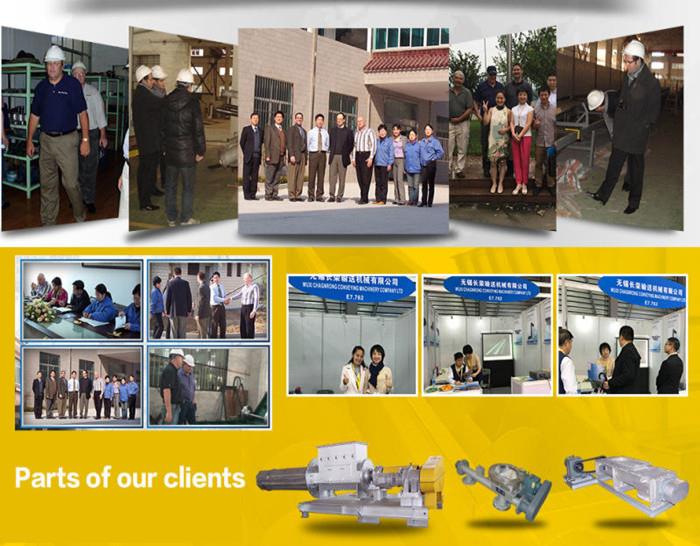
Wuxi Changrong has provided conveying equipments for many famous companies both at home and abroad. Such as Rockwool in Denmark, Saint-Gobain Group, Lanxess Shanghai ,BASF Shanghai ,BASF Nanjing ,Degussa ,Ingevity performance Material Zhuhai Company ,Invista Shanghai ,Dupont , Owenscorning, Mitsubishi Heavy , Japan SUMITOMO,Japan Kurita , etc. In China, North Sichuan Nitrocellulose Co., Ltd, Angel Yeast ,Sinopec, GEM Co., Ltd, Zhejiang Jiahua Group ,Huayou Cobalt, Haitian-Food, LEO KING ENVIRO.GROUP,ZIKE ENVIRONMENT, etc. Meanwhile, Wuxi Changrong export conveying equipments to Russia,Finland, Denmark, Singapore,New Zeland, Australia and other countries .

FAQ
Q: What is a screw conveyor?
A: A screw conveyor is a type of material handling equipment that uses a helical screw blade to move material along a U-shaped trough. It is commonly used in industrial applications for moving loose materials such as powders, granules, and pellets.
Q: How does a screw conveyor work?
A: A screw conveyor works by rotating a helical screw blade, which moves material along the length of the U-shaped trough. The rotation of the blade pushes the material along the conveyor until it reaches the discharge end.
Q: What are the different types of screw conveyors?
A: There are several types of screw conveyors, including standard screw conveyors, inclined screw conveyors, shaftless screw conveyors, and live bottom feeders. The type of screw conveyor needed depends on the specific application and material properties.
Q: What are the advantages of using a screw conveyor?
A: Screw conveyors are cost-effective, efficient, and easy to install and maintain. They are also versatile and can handle a variety of materials and applications.
Q: What materials can be moved with a screw conveyor?
A: Screw conveyors can handle a variety of materials, including powders, granules, pellets, and other loose materials. The specific material type and properties will affect the type of screw conveyor needed.
Q: How long can a screw conveyor be?
A: The length of a screw conveyor depends on the specific application and material properties. In general, standard screw conveyors can range in length from a few feet to over 50 feet.
Q: What is the capacity of a screw conveyor?
A: The capacity of a screw conveyor depends on the specific application and material properties. In general, the capacity of a screw conveyor can range from a few cubic feet per hour to several hundred cubic feet per hour.
Q: What is the maximum angle for an inclined screw conveyor?
A: The maximum angle for an inclined screw conveyor depends on the specific material properties and the angle of inclination. In general, inclined screw conveyors can be operated at angles up to 60 degrees.
Q: What are the maintenance requirements for a screw conveyor?
A: The maintenance requirements for a screw conveyor depend on the specific application and usage. Regular inspections, cleaning, lubrication, and replacement of worn-out components are necessary to ensure optimal performance and longevity.
Q: How often should a screw conveyor be cleaned?
A: The frequency of cleaning a screw conveyor depends on the specific application and usage. In general, cleaning should be performed regularly to remove any buildup of material or dust.
Q: What lubrication should be used for a screw conveyor?
A: The lubrication used for a screw conveyor depends on the specific material properties and application. It is important to use a lubricant that is compatible with the conveyor material and application.
Q: What are the safety considerations for a screw conveyor?
A: The safety considerations for a screw conveyor include proper installation, maintenance, and operation. It is important to follow the manufacturer's guidelines and recommendations to ensure the conveyor operates safely and efficiently.
Q: Can a screw conveyor handle wet or sticky materials?
A: Standard screw conveyors may not be suitable for handling wet or sticky materials. Shaftless screw conveyors or live bottom feeders may be a better option for handling these types of materials.
Q: What are the energy efficiency considerations for a screw conveyor?
A: The energy efficiency of a screw conveyor depends on several factors, including the material properties, conveyor design, and usage. It is important to choose the right conveyor for the specific application and to operate and maintain it properly to maximize energy efficiency.
Q: What is the speciality of screw conveyors?
A: Screw conveyors are used to convey bulk material from almost any position (vertical, horizontal, or at an incline) and are one of the most reliable methods of conveyance. The screw conveyor is composed of a pipe with a welded steel strip that is formed into a continuous helix. The helix is referred to as the flighting.
Q: What is the objective of screw conveyor?
A: The purpose of a screw conveyor is to transfer product from one point to the next. Screw conveyors are always controlled by being fed into the entrance by another conveyor or measuring device.
Q: What industries use screw conveyors?
A: To that end, screw conveyors can be found in a wide range of industries and applications, such as: construction, oil and gas, mining, chemical, pharmaceutical, plastic, food processing and agricultural.
Q: What is a screw conveyor used primarily for transporting?
A: The screw conveyor is mainly used to transport various bulk, powder or small block materials such as cement, grain, chemical fertilizer, etc. within a long distance.
Q: What is the maintenance of screw conveyor?
A: The bearings of the shaft screw conveyor must be monitored for wear. These are located on the outside of the equipment at the ends of the material loading and unloading unit. Bearings should be checked for good lubrication. They have a long life, but they are one of the first items that may need replacement.
Q: What is the difference between belt conveyor and screw conveyor?
A: Both belt conveyors and screw conveyors are capable of handling a wide range of materials. Screw conveyors, however, are generally not a fit for conveying materials that are long and/or stringy, as they are likely to become tangled and cause blockages as a result of the horizontal screw motion.
Wuxi Changrong Conveying Machinery Co., Ltd. is one of the most professional screw conveyor manufacturers and suppliers in China. Welcome to get custom screw conveyor from our factory. For price consultation, contact us now.
screw conveyor filter, OEM Pipe screw conveyor, high capacity screw conveyor