

About Us
Wuxi Changrong Conveying Machinery Company locates qianzhou town where is nearly by lake Tai. Wuxi Changrong gets well developed: east is Xicheng expressway ,Yangtze Riverside expressway ,west is 312 National highway, Hu Ning expressway cross qianzhou town ( Yuqi exit is 1 kilo to Wuxi Changrong ).
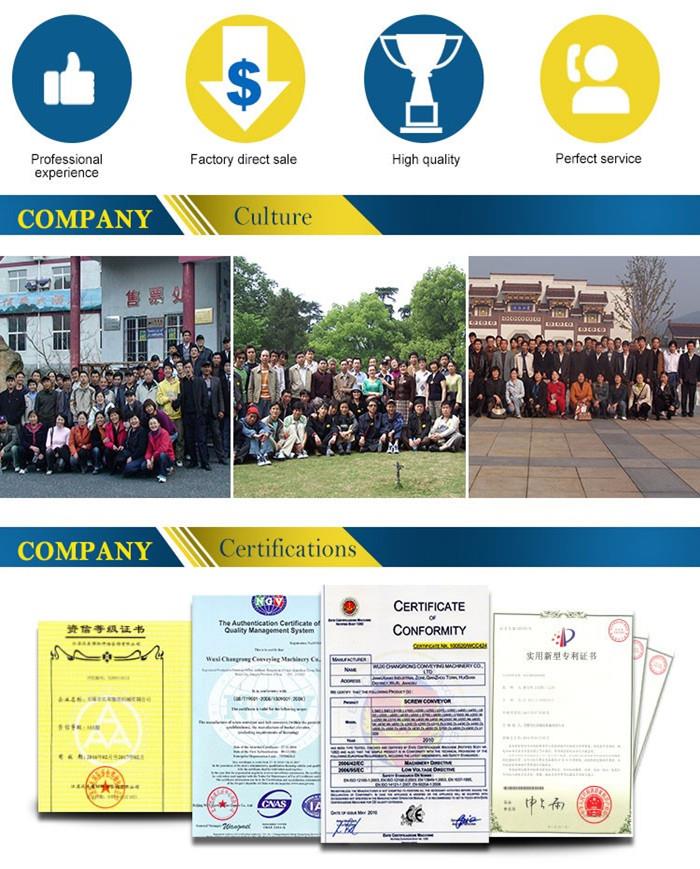
Wuxi Changrong has been engaged in development, design, manufacture of conveying equipment for various materials for more than thirty years. With a team engaged in professional design on all kinds of conveying equipment as well as a team of technical workers who are engaged in the production of various conveying equipments ,Wuxi Changrong always adhere the principle of “Accurately design, Exactly manufacturing ,Sincerely service and constantly perfecting “ for customers . Wuxi Changrong is the pointing manufacturer of China Chemical Industry Reconnaissance Design Association and one of the earliest enterprises in the field which passed ISO9001 Certification.Moreover ,Wuxi Changrong’s many products are qualified with CE certifications.
why choose us
Advanced equipment
Equipment based on the latest technological developments has higher efficiency, better performance and stronger reliability.
Professional team
Our professional team collaborate and communicate effectively with one another, and are committed to delivering high-quality results. They are capable of handling complex challenges and projects that require
Customized services
Our team of experts will work closely with you to understand your needs and will provide solutions that are tailored to meet your expectations.
Rich experience
Our company has many years of production work experience. The concept of customer-oriented and win-win cooperation makes the company more mature and stronger.


What is Arch-Breaker Machine
An arch-breaker machine is a heavy-duty piece of equipment that is used in demolition to break down large structures, such as buildings, bridges, and concrete structures. It is particularly useful for breaking through reinforced concrete and steel structures that are difficult to dismantle manually or with traditional demolition methods.
The machine typically consists of a powerful hydraulic breaker attached to an excavator or other heavy machinery. The hydraulic breaker is a hammer-like device that delivers powerful blows to the structure, causing it to break apart. The process can be repeated until the structure has been reduced to manageable pieces that can be cleared away.
Benefits of Arch-Breaker Machine
Efficiency
Arch-breaker machines can break down materials much faster than manual methods, significantly reducing the time required for demolition or rock breaking tasks.
Safety
By removing workers from the immediate area of demolition, the risk of injury is greatly reduced. This is especially important in environments where heavy materials or dangerous structures are involved.
Reduced noise
Although hydraulic breakers do produce noise, they can often be quieter than traditional methods like sledgehammers, which can be especially useful in urban or residential areas.
Versatility
Arch-breaker machines can be attached to a variety of carriers, such as excavators, backhoes, and skid steers, making them versatile tools for a range of demolition and rock breaking tasks.
Power
They provide a significant amount of force, which is essential for breaking down hard materials like concrete and rock.
Precision
Operators can control the force of the blows, allowing for more precise demolition and rock breaking, which can be important in maintaining the structural integrity of surrounding buildings or structures.
Reduced labor
The use of an arch-breaker machine reduces the need for manual labor, which can be physically demanding and labor-intensive.
Cost-effectiveness
Although the initial investment may be high, the efficiency and speed of the machine can lead to cost savings over time by reducing labor costs and increasing the speed of the demolition process.
Environmental impact
By reducing the amount of manual labor needed, arch-breaker machines can help reduce the environmental impact of demolition projects, as there is less waste and fewer emissions associated with manual methods.
Types of Arch-Breaker Machine
Fixed-head hydraulic breaker
This type of breaker has a fixed hydraulic cylinder that delivers a constant force to the breaker's tool, allowing for efficient breaking of materials.
Variable-force hydraulic breaker
This type of breaker has a hydraulic cylinder that can vary the force applied to the tool, allowing for more precise control during demolition and rock breaking tasks.
Diesel-hydraulic breaker
This type of breaker is powered by a diesel engine, which provides a high level of power and efficiency for breaking through tough materials.
Air-powered breaker
This type of breaker uses compressed air to drive the piston, which delivers force to the breaker's tool. Air-powered breakers are typically quieter than hydraulic breakers and can be used in environments where noise is a concern.
Pneumatic hammer
While not strictly a hydraulic breaker, pneumatic hammers also use pressurized air to drive a piston that delivers force to break apart materials. They are often used in construction and demolition tasks that require breaking through tough materials like concrete and rock.
Hydraulic rock hammer
This type of hammer is similar to a hydraulic breaker but is specifically designed for breaking rock. It typically has a smaller tool head and is used for tasks like rock excavation and trenching.
Hydraulic concrete cutter
This type of machine uses high-pressure water jets to cut through concrete, allowing for precise demolition and removal of concrete structures.
Hydraulic demolition shears
Also known as hydraulic rock cutters, these machines use hydraulic force to cut through steel and concrete, allowing for precise demolition and removal of materials.

Material of Arch-Breaker Machine
The materials used in the construction of arch-breaker machines, also known as hydraulic breakers, are chosen based on their ability to withstand high impact forces, resist abrasion, and provide structural integrity. Here are some of the key materials typically used in the manufacture of these machines:
●Steel: High-strength steel is commonly used for the frame, housing, and other structural components of arch-breaker machines. This material is chosen for its durability and ability to withstand the high-impact forces generated during operation.
●Hardfacing: The impact surfaces, such as the breaker's tool (also known as the chisel), are often coated with a hardfacing material to improve wear resistance and extend the service life of the tool. Hardfacing materials may include tungsten carbide or cast iron alloys.
●Hydraulic components: The hydraulic system of arch-breaker machines includes high-pressure hoses, valves, pumps, and cylinders. These components are typically made from steel, stainless steel, or other corrosion-resistant materials to withstand the high-pressure environment.
●Bearings and seals: Precision bearings and seals are used to ensure smooth operation and prevent leakage. Materials such as polyurethane, nitrile rubber, or Viton are commonly used for seals due to their resistance to abrasion and hydraulic fluids.
●Electrical components: Electronic controls and sensors used in the machine's operation are typically made from materials that can withstand vibration and environmental factors. Materials such as aluminum, stainless steel, and plastic are commonly used for electrical enclosures and connectors.
●Paint and coatings: To protect the machine from corrosion and extend its service life, the exterior of arch-breaker machines is often coated with a protective paint or powder coating. These coatings are designed to withstand the harsh environments where demolition and rock breaking tasks are performed.
The materials used in arch-breaker machines are carefully selected to ensure that they can withstand the extreme forces and harsh conditions associated with demolition and rock breaking tasks while maintaining the structural integrity, reliability, and longevity of the equipment.
Application of Arch-Breaker Machine
1.Demolition
They are extensively used for the controlled demolition of buildings, bridges, and other structures. The breaker's tool is used to break down concrete, asphalt, and reinforced steel structures.
2.Excavation
In construction and mining, arch-breaker machines are used to break up rock and soil in preparation for excavation work, such as trenching, road construction, and foundation digging.
3.Quarrying
They are employed in quarries to break down large rocks into smaller pieces that can be processed or transported.
4.Utility work
Arch-breaker machines are used in the installation and repair of utility lines, such as breaking through concrete slabs to access underground pipes or cables.
5.Landscape work
In landscaping and gardening, they are used to break up hardpan or compacted soil to prepare it for planting or to create flowerbeds and gardens.
6.Recycling
They play a role in the recycling industry by breaking up concrete, asphalt, and metal structures for recycling and reprocessing.
7.Road construction
Arch-breaker machines are used to remove old pavement layers and to break up road shoulders during road construction and maintenance work.
8.Industrial maintenance
In industrial settings, they are used to demolish or break up structures that have reached the end of their useful life or need to be removed for maintenance purposes.
9.Forestry
In forestry applications, arch-breaker machines are used for breaking up stumps and roots during the clearing of land for new plantings.
10.Disaster recovery
After natural disasters such as earthquakes, hurricanes, or floods, arch-breaker machines are used to remove debris and clear pathways for rescue and recovery operations.
Process of Arch-Breaker Machine
1.Design
The first step involves designing the machine using computer-aided design (CAD) software. Engineers create detailed drawings and specifications for the breaker's housing, hydraulic components, and impact mechanism.
2.Material selection
High-strength steel is chosen for the structural components due to its durability. Hardfacing materials like tungsten carbide are selected for the breaker's tool to provide abrasion resistance.
3.Fabrication
The steel components are cut to size using laser or plasma cutting machines. Then, they are bent and formed using press brakes or other metal forming equipment.
4.Welding
Components are welded together to form the housing and other structural parts of the breaker. Welding is typically done using automated welding machines for precision and consistency.
5.Hydraulic component manufacturing
The hydraulic components such as cylinders, valves, and pumps are manufactured separately. These components are precision-engineered to handle the high pressures and forces required by the breaker.
6.Assembly
The welded components are cleaned, inspected, and prepared for assembly. The hydraulic system is assembled, including the hoses, connectors, and control valves. The breaker's tool is attached to the impact mechanism, and the entire assembly is mounted on the carrier-specific adapter plate.
7.Testing
Once assembled, the breaker is subjected to rigorous testing. This includes hydraulic pressure testing, function testing, and impact tests to ensure that it meets the required specifications and performance standards.
8.Quality control
Throughout the production process, quality control measures are implemented to ensure that the machine meets the required standards. This can include non-destructive testing (NDT), visual inspections, and performance testing.
9.Painting and coating
After assembly and testing, the machine is cleaned and prepared for painting or coating. This is done to protect the machine from corrosion and to extend its service life.
10.Final inspection and packaging
Before shipment, the arch-breaker machine undergoes a final inspection to ensure that it meets all quality and performance criteria. It is then securely packaged for transport to the customer.
Components of Arch-Breaker Machine
Housing
This is the outer shell of the breaker, which provides structural support and protects the internal components. It is usually made of high-strength steel and is designed to withstand the impact forces generated during operation.
Impact mechanism
This component comprises the piston and cylinder arrangement that delivers the powerful blows to the breaker's tool. The piston travels rapidly within the cylinder under the influence of hydraulic pressure, transferring energy to the tool to fracture the material being worked on.
Tool (breaker hammer)
The tool, also known as the breaker hammer, is the part of the machine that actually comes into contact with the material to be broken. It is typically made of tough, wear-resistant materials like tungsten carbide to withstand the abrasive nature of the work.
Hydraulic system
This system powers the movement of the impact mechanism. It includes hydraulic hoses, connectors, control valves, and hydraulic fluid. The hydraulic system is designed to handle high pressures and flow rates to generate the necessary impact forces.
Carrier interface
This component allows the arch-breaker machine to be mounted onto a carrier machine such as an excavator, skid steer, or backhoe. It includes the mounting bracket, pins, and other hardware necessary to securely attach the breaker to the carrier.
Controls
Controls are provided to operate the breaker safely and efficiently. This can include a hydraulic control valve mounted on the carrier for operator control, as well as safety features like pressure relief valves to prevent damage from excessive hydraulic pressure.
Energy absorption system
Some breakers have an energy absorption system to reduce the shock and vibration transmitted to the carrier during operation. This can help extend the service life of both the breaker and the carrier machine.
Accessories
Depending on the specific application, various accessories may be used with the arch-breaker machine. These can include additional hydraulic lines, quick-change tool adapters, and specialized tools for specific breaking tasks.
How to Maintain Arch-Breaker Machine

Regular inspections
Perform visual inspections before and after each use to check for any visible damages or leaks. Inspect the tool, hydraulic hoses, connectors, and control valves for signs of wear or damage.
Lubrication
Apply lubricant to the moving parts of the breaker, such as the piston rod and the tool, to minimize friction and wear. Follow the manufacturer's recommendations for the type and amount of lubricant to use.

Cleaning
Clean the breaker after use to remove dust, dirt, and debris that can accumulate during operation. This helps to prevent corrosion and extends the life of the machine.

Check hydraulic fluid levels
Regularly check the hydraulic fluid levels and condition. Low fluid levels can cause damage due to air entrapment, while dirty or contaminated fluid can degrade the performance of the hydraulic system.
Replace filters
Replace the hydraulic filters as per the manufacturer's recommendations to maintain the cleanliness of the hydraulic fluid and prevent contamination.
Inspect and replace wear parts
Regularly inspect the tool and other wear parts for signs of wear or damage. Replace worn parts promptly to prevent further damage and ensure the machine's performance.
Check mounting bracket
Inspect the mounting bracket and hardware that connects the breaker to the carrier machine. Ensure that all connections are tight and secure to prevent any issues during operation.
Storage
When not in use, store the arch-breaker machine in a dry, clean area away from corrosive elements. Keep it covered to protect it from dust and debris.
Service records
Maintain service records to track maintenance activities, parts replacement, and any repairs performed. This helps in identifying any potential issues and planning for future maintenance requirements.
Working Principle of Arch-Breaker Machine
An Arch-Breaker machine is a type of rock breaking equipment used in the construction and mining industries to break large rocks into smaller pieces. The working principle of an Arch-Breaker machine is based on the principles of hydraulic pressure and mechanical force.
Here are the steps involved in the working principle of an Arch-Breaker machine:
Hydraulic cylinder: The Arch-Breaker machine uses a hydraulic cylinder to generate a large amount of force. The hydraulic cylinder contains a piston that moves back and forth within the cylinder. When hydraulic fluid is pumped into the cylinder, it causes the piston to move outward.
Rock gripper arm: The piston is connected to a rock gripper arm, which is a metal clamp that surrounds the rock to be broken. As the piston moves outward, it applies pressure to the rock gripper arm, which closes around the rock and holds it in place.
Hydraulic hammer: Once the rock is securely clamped in the rock gripper arm, a hydraulic hammer is used to apply force to the rock. The hydraulic hammer contains a piston that moves back and forth within a cylinder, striking the rock and breaking it into smaller pieces.
Cycle of operation: The Arch-Breaker machine continues to cycle through the process of clamping the rock, striking it with the hydraulic hammer, and releasing the broken pieces until the entire rock has been broken down into smaller pieces.
The Arch-Breaker machine is capable of breaking large rocks into smaller pieces quickly and efficiently, making it an essential tool for construction and mining operations. The use of hydraulic pressure and mechanical force allows the machine to apply a large amount of force to the rock without causing damage to the surrounding area.
How to Choose an Arch-Breaker Machine
1
Determine your needs: The first step is to identify the type of materials you need to cut or break and the dimensions of the materials. This will help you determine the size and capacity of the machine you require.
2
Machine type: Decide on the type of machine that best suits your needs. There are two main types of arch-breaker machines: manual and hydraulic. Manual machines are typically less expensive but require more effort to operate, while hydraulic machines are more expensive but offer faster and more efficient operation.
3
Cutting capacity: Check the machine's specifications to ensure that it can handle the thickness and material type you need to cut. The cutting capacity is usually specified in terms of the maximum thickness and material strength the machine can handle.
4
Machine quality: Look for machines from reputable manufacturers with a proven track record of quality and reliability. Check customer reviews and ratings to get an idea of the machine's performance and durability.
5
Safety features: Ensure that the machine has safety features such as emergency stop buttons, safety shields, and automatic shut-offs to prevent accidents and injuries.
6
Price and budget: Determine your budget and look for machines that offer the best value for money. Compare the features, specifications, and prices of different machines to find the best option within your budget.
7
Service and support: Consider the level of service and support offered by the manufacturer or supplier. Choose a manufacturer or supplier that offers good after-sales service, maintenance, and support.
8
Demo and testing: If possible, request a demo or testing of the machine to ensure that it meets your requirements and performs as expected.
Our Factory
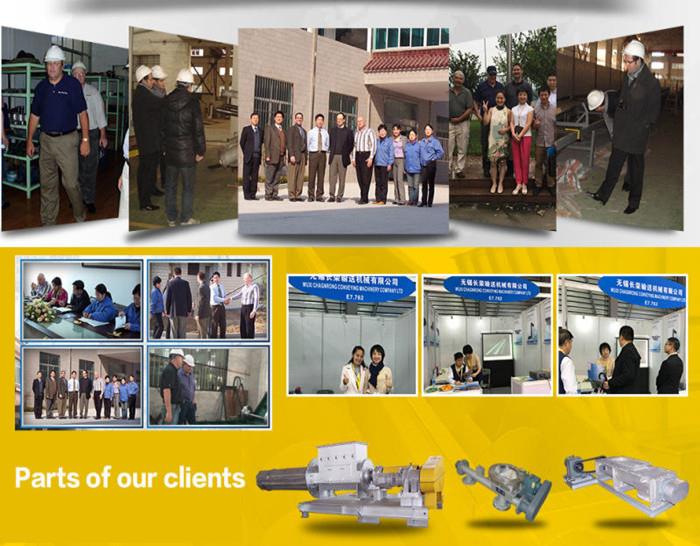
Wuxi Changrong has provided conveying equipments for many famous companies both at home and abroad. Such as Rockwool in Denmark, Saint-Gobain Group, Lanxess Shanghai ,BASF Shanghai ,BASF Nanjing ,Degussa ,Ingevity performance Material Zhuhai Company ,Invista Shanghai ,Dupont , Owenscorning, Mitsubishi Heavy , Japan SUMITOMO,Japan Kurita , etc. In China, North Sichuan Nitrocellulose Co., Ltd, Angel Yeast ,Sinopec, GEM Co., Ltd, Zhejiang Jiahua Group ,Huayou Cobalt, Haitian-Food, LEO KING ENVIRO.GROUP,ZIKE ENVIRONMENT, etc. Meanwhile, Wuxi Changrong export conveying equipments to Russia,Finland, Denmark, Singapore,New Zeland, Australia and other countries .

FAQ
Q: What is an arch-breaker machine?
A: An arch-breaker machine, also known as a hydraulic breaking or cutting machine, is a powerful tool used for cutting and breaking metal arches, beams, rods, and other materials quickly and efficiently. It uses hydraulic pressure to apply a significant amount of force, allowing for precise and controlled cutting.
Q: What are the main types of arch-breaker machines?
A: There are two main types of arch-breaker machines: manual and hydraulic. Manual machines are typically less expensive but require more effort to operate, while hydraulic machines are more expensive but offer faster and more efficient operation.
Q: What materials can an arch-breaker machine cut?
A: Arch-breaker machines can cut a wide range of materials, including steel, iron, aluminum, and other metals. The machine's cutting capacity will vary depending on the thickness and material type.
Q: How does an arch-breaker machine work?
A: An arch-breaker machine works by using hydraulic pressure to apply a significant amount of force to the material being cut. The machine's cutting tool is pressed against the material, and the hydraulic pressure is applied to cut through the material.
Q: What are the safety features of an arch-breaker machine?
A: Arch-breaker machines typically have safety features such as emergency stop buttons, safety shields, and automatic shut-offs to prevent accidents and injuries. It's important to always follow the manufacturer's safety guidelines when operating the machine.
Q: How do I choose the right arch-breaker machine for my needs?
A: When choosing an arch-breaker machine, consider factors such as the materials you need to cut, the thickness and material type, your budget, and the level of service and support offered by the manufacturer or supplier.
Q: What is the difference between a manual and hydraulic arch-breaker machine?
A: Manual arch-breaker machines are typically less expensive but require more effort to operate, while hydraulic machines are more expensive but offer faster and more efficient operation. Hydraulic machines use hydraulic pressure to apply a significant amount of force, allowing for precise and controlled cutting.
Q: Can an arch-breaker machine cut through any material?
A: No, an arch-breaker machine cannot cut through any material. The machine's cutting capacity will vary depending on the thickness and material type. It's important to check the machine's specifications to ensure that it can handle the materials you need to cut.
Q: What is the maintenance required for an arch-breaker machine?
A: The maintenance required for an arch-breaker machine will vary depending on the manufacturer and model. However, it's generally recommended to perform regular inspections and maintenance tasks, such as lubricating the moving parts and checking the hydraulic system for leaks.
Q: The maintenance required for an arch-breaker machine will vary depending on the manufacturer and model. However, it's generally recommended to perform regular inspections and maintenance tasks, such as lubricating the moving parts and checking the hydraulic system for leaks?.
A: While arch-breaker machines are primarily used for cutting metal, they can also be used for cutting other materials such as concrete and plastic. However, it's important to check the machine's specifications to ensure that it can handle the material you need to cut.
Q: What is the maximum thickness an arch-breaker machine can cut?
A: The maximum thickness an arch-breaker machine can cut will vary depending on the manufacturer and model. It's important to check the machine's specifications to ensure that it can handle the thickness of the materials you need to cut.
Q: What is the difference between a hydraulic and pneumatic arch-breaker machine?
A: A hydraulic arch-breaker machine uses hydraulic pressure to apply a significant amount of force, allowing for precise and controlled cutting. On the other hand, a pneumatic arch-breaker machine uses compressed air to power the cutting tool. Pneumatic machines are typically less expensive but may not offer the same level of precision and control as hydraulic machines.
Q: Can an arch-breaker machine be used in tight spaces?
A: Yes, an arch-breaker machine can be used in tight spaces. However, it's important to ensure that there is enough room for the machine to operate safely and efficiently.
Q: How much does an arch-breaker machine cost?
A: The cost of an arch-breaker machine will vary depending on the manufacturer and model. Manual machines are typically less expensive, while hydraulic machines are more expensive. It's important to consider your budget and the specific requirements of your application when choosing a machine.
Q: What is the maximum force an Arch-Breaker Machine can exert?
A: The maximum force an Arch-Breaker Machine can exert will depend on the specific model and size of the machine. However, some heavy-duty models can exert forces of up to 40,000 pounds per square inch (PSI) or more, allowing them to quickly and efficiently break through even the toughest materials.
Q: How much maintenance is required for an Arch-Breaker Machine?
A: The maintenance requirements for an Arch-Breaker Machine will vary depending on the specific model and usage. However, it is generally recommended to perform regular inspections and maintenance tasks, such as checking for hydraulic leaks, lubricating moving parts, and inspecting the breaker tool for wear or damage. This can help ensure optimal performance and prolong the life of the machine.
Q: How much do Arch-Breaker Machines typically weigh?
A: The weight of an Arch-Breaker Machine can vary depending on the size and type of machine. Mini-breakers typically weigh between 100 and 200 pounds, while heavy-duty breakers can weigh several tons. It is important to choose a machine that is appropriately sized for the task at hand to ensure safe and efficient operation.
Q: What safety precautions should be taken when using an Arch-Breaker Machine?
A: When using an Arch-Breaker Machine, it is important to follow proper safety procedures to minimize the risk of injury or damage. Some safety precautions include wearing appropriate personal protective equipment (PPE), such as gloves, safety glasses, and hearing protection; ensuring that the machine is properly secured and leveled before operation; and avoiding operation in areas with poor visibility or limited space.
Q: What are the most common applications for Arch-Breaker Machines?
A: Arch-Breaker Machines are used in a variety of applications, including demolition, construction, road maintenance, and mining. They are often used to break up concrete slabs, foundations, and walls during demolition projects, as well as to crush rock and other materials in construction and mining applications.
Q: What are the advantages of using an Arch-Breaker Machine?
A: Using an Arch-Breaker Machine has several advantages, including increased productivity, reduced manual labor, and improved safety. These machines can quickly and efficiently break up large amounts of material, allowing for faster project completion and reduced downtime. Additionally, using a machine to perform the work reduces the risk of injury to workers who might otherwise be required to handle the materials manually.
Wuxi Changrong Conveying Machinery Co., Ltd. is one of the most professional arch-breaker machine manufacturers and suppliers in China. Welcome to get custom arch-breaker machine from our factory. For price consultation, contact us now.
Arch breaking device, Arch-breaker Machine, Arch breaker