

About Us
Wuxi Changrong Conveying Machinery Company locates qianzhou town where is nearly by lake Tai. Wuxi Changrong gets well developed: east is Xicheng expressway ,Yangtze Riverside expressway ,west is 312 National highway, Hu Ning expressway cross qianzhou town ( Yuqi exit is 1 kilo to Wuxi Changrong ).
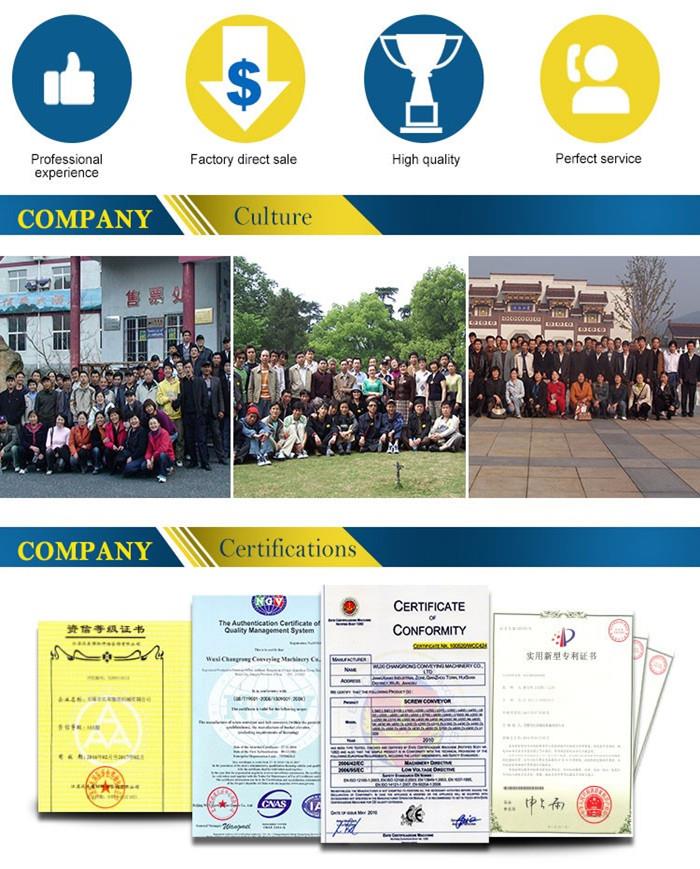
Wuxi Changrong has been engaged in development, design, manufacture of conveying equipment for various materials for more than thirty years. With a team engaged in professional design on all kinds of conveying equipment as well as a team of technical workers who are engaged in the production of various conveying equipments ,Wuxi Changrong always adhere the principle of “Accurately design, Exactly manufacturing ,Sincerely service and constantly perfecting “ for customers . Wuxi Changrong is the pointing manufacturer of China Chemical Industry Reconnaissance Design Association and one of the earliest enterprises in the field which passed ISO9001 Certification.Moreover ,Wuxi Changrong’s many products are qualified with CE certifications.
why choose us
Advanced equipment
Equipment based on the latest technological developments has higher efficiency, better performance and stronger reliability.
Professional team
Our professional team collaborate and communicate effectively with one another, and are committed to delivering high-quality results. They are capable of handling complex challenges and projects that require
Customized services
Our team of experts will work closely with you to understand your needs and will provide solutions that are tailored to meet your expectations.
Rich experience
Our company has many years of production work experience. The concept of customer-oriented and win-win cooperation makes the company more mature and stronger.
-

Food Grade En-Masse Conveyors Systems
MC type En-Masse Conveyor i ntroduction En-masse conveyor also can be called buried scraper conveyor or flight conveyor .Now it is widely used for bulk materials on metallurgy,building ,electricity Add to Inquiry -
-


What is Scraper Conveyor
A scraper conveyor is a type of material handling equipment used in bulk material handling applications. It consists of a series of scrapers that are mounted on a rotating shaft and enclosed in a trough. The scrapers move along the length of the trough, scraping material off the bottom and sides of the trough and moving it forward.
Scraper conveyors are commonly used in applications such as mining, quarrying, and aggregate processing where heavy, abrasive materials need to be moved over long distances. They are known for their durability and high throughput capacity, making them an ideal solution for many bulk material handling applications.
Benefits of Scraper Conveyor
High throughput capacity
Scraper conveyors can handle large volumes of material and are capable of moving heavy, abrasive materials over long distances.
Durability
Scraper conveyors are built with high-strength materials and are designed to withstand harsh operating conditions, making them a durable and reliable option for bulk material handling applications.
Reduced maintenance
Scraper conveyors have a simple and straightforward design that requires less maintenance than other types of conveyors. The scrapers are easily replaceable, and the conveyor can be easily disassembled for cleaning and maintenance.
Energy efficiency
Scraper conveyors are energy efficient and require less energy to operate than other types of conveyors. The scrapers use the force of gravity and the momentum of the material to move the material forward, reducing the amount of energy required to operate the conveyor.
Versatility
Scraper conveyors can be customized to suit specific application requirements, such as material type, conveyor length, and capacity. They can also be easily integrated with other material handling equipment, such as feeders and screens.
Reduced noise
Scraper conveyors operate at a lower noise level than other types of conveyors, making them a more suitable option for applications where noise reduction is important.
Types of Scraper Conveyor
Trough scraper conveyor
This type of scraper conveyor has a U-shaped trough with scrapers mounted on a rotating shaft. The scrapers rotate within the trough to move material forward. This type of conveyor is commonly used in applications such as mining and aggregate processing.
01
En-masse scraper conveyor
This type of scraper conveyor uses a series of interconnected scrapers to move material in a continuous flow. The scrapers are mounted on a rotating shaft and move material forward in a single stream. This type of conveyor is commonly used in applications such as food processing and manufacturing.
02
Vertical scraper conveyor
This type of scraper conveyor is designed to move material vertically. The scraper conveyor has a vertical shaft with scrapers mounted on the shaft. The scrapers rotate within the conveyor to move material upward. This type of conveyor is commonly used in applications such as waste management and recycling.
03
Live bottom scraper conveyor
This type of scraper conveyor has a perforated conveyor bed with scrapers mounted underneath. The scrapers move material forward by pushing against the perforated bed. This type of conveyor is commonly used in applications such as chemical processing and food manufacturing.
04
Belt type scraper conveyor
This type of scraper conveyor uses a rubber or plastic belt with scrapers mounted on the bottom of the belt. The belt moves material forward by pushing against the bottom of the belt. This type of conveyor is commonly used in applications such as packaging and assembly lines.
05
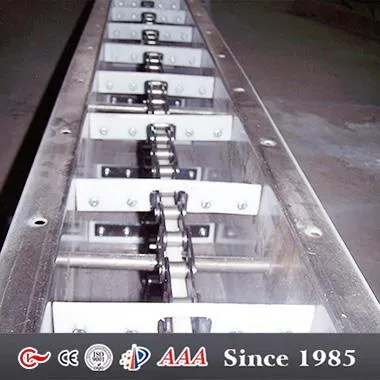
Material of Scraper Conveyor
The material used to construct scraper conveyors depends on the specific application requirements and the properties of the material being conveyed. Here are some of the common materials used to construct scraper conveyors:
Steel: Steel is the most commonly used material for scraper conveyors due to its strength, durability, and resistance to abrasion. Carbon steel and stainless steel are the most commonly used types of steel in scraper conveyor construction.
Polyurethane (PU): Polyurethane is a popular material for scraper conveyors due to its resistance to abrasion, impact, and chemicals. PU scrapers are often used in applications where the material being conveyed is sticky or has a high moisture content.
Polyvinyl chloride (PVC): PVC is a popular material for scraper conveyors due to its resistance to corrosion, impact, and chemicals. PVC scrapers are often used in applications where the material being conveyed is highly abrasive or corrosive.
Nylon: Nylon is a popular material for scraper conveyors due to its resistance to abrasion, impact, and chemicals. Nylon scrapers are often used in applications where the material being conveyed is sticky or has a high moisture content.
Rubber: Rubber is a popular material for scraper conveyors due to its resistance to abrasion, impact, and chemicals. Rubber scrapers are often used in applications where the material being conveyed is sticky or has a high moisture content.
The material used to construct scraper conveyors will depend on the specific application requirements, the properties of the material being conveyed, and the operating environment. The type of material selected will affect the durability, resistance to abrasion and chemicals, and overall performance of the scraper conveyor.
Application of Scraper Conveyor
1.Mining
Scraper conveyors are commonly used in mining applications for the transportation of ores, coal, and other mining materials. They are used to transport materials from the mining face to the processing plant or to the surface.
2.Aggregate processing
Scraper conveyors are used in aggregate processing applications such as quarries and gravel pits for the transportation of aggregates, sand, and gravel. They are used to transport materials from the pit or quarry to the processing plant.
3.Food processing
Scraper conveyors are used in food processing applications for the transportation of food products such as meat, poultry, and bakery products. They are used to transport materials from the processing area to the packaging area.
4.Chemical processing
Scraper conveyors are used in chemical processing applications for the transportation of chemicals and other hazardous materials. They are used to transport materials from the reaction area to the storage or packaging area.
5.Waste management
Scraper conveyors are used in waste management applications for the transportation of waste materials such as municipal solid waste, construction and demolition waste, and industrial waste. They are used to transport materials from the waste source to the disposal or recycling facility.
Process of Scraper Conveyor
1
Material selection: The first step in the production process is to select the materials for the scraper conveyor. This includes selecting the material for the conveyor frame, scraper blades, and drive components. The materials selected will depend on the specific application requirements and the properties of the material being conveyed.
2
Fabrication: The next step in the production process is to fabricate the various components of the scraper conveyor. This includes cutting and shaping the metal components, machining the drive components, and forming the scraper blades. The fabrication process will depend on the specific materials selected and the design of the scraper conveyor.
3
Assembly: Once the various components of the scraper conveyor are fabricated, they are assembled together to form the complete conveyor. This includes installing the scraper blades on the conveyor frame, assembling the drive components, and connecting the conveyor to the power source.
4
Testing: After the scraper conveyor is assembled, it is tested to ensure that it meets the required performance specifications. This includes testing the conveyor's throughput capacity, drive components, and scraper blades. The conveyor is also tested for safety to ensure that it meets all applicable safety standards.
5
Finishing touches: Finally, any finishing touches are added to the scraper conveyor, such as painting or applying protective coatings. The conveyor is then packaged for shipment and transported to the customer.
Components of Scraper Conveyor
Conveyor frame
The conveyor frame provides the structural support for the scraper conveyor and houses the other components. It is typically made of steel or other durable materials and can be customized to suit the specific application requirements.
Scraper blades
Scraper blades are the key component of the scraper conveyor that actually moves the material. They are typically made of high-strength steel or other durable materials and are designed to fit securely onto the conveyor frame.
Drive components
The drive components of a scraper conveyor are responsible for powering the scraper blades and moving the material. This typically includes a motor, reducer, and chain drive system. The drive components are carefully selected and matched to ensure optimal performance and reliability.
Return rollers
Return rollers are located at the bottom of the conveyor frame and help guide the scraper blades back to the top of the conveyor for another pass. They are typically made of high-strength steel or other durable materials and are designed to withstand the abrasive forces of the moving material.
Idlers
Idlers are used to support the conveyor belt and maintain proper tension. They are typically made of high-strength steel or other durable materials and are designed to support the weight of the moving material.
Control system
The control system of a scraper conveyor is responsible for monitoring and controlling the operation of the conveyor. This can include sensors, switches, and controllers that allow the operator to start, stop, and adjust the conveyor as needed.
How to Maintain Scraper Conveyor
1.Regular inspections
Regular inspections of the scraper conveyor are important to identify any potential issues before they become significant problems. Inspections should include checking the condition of the scraper blades, drive components, and conveyor frame, as well as any other components.
2.Lubrication
Lubrication is important to reduce friction and wear on the moving parts of the scraper conveyor. It is important to use the correct lubricant and to apply it according to the manufacturer's recommendations.
3.Cleaning
Regular cleaning of the scraper conveyor can help prevent buildup of materials and reduce the risk of blockages or other issues. Cleaning should include removing any debris or materials from the conveyor and keeping the area around the conveyor free of clutter.
4.Tension adjustments
It is important to maintain the proper tension in the conveyor belt to ensure that it operates smoothly and efficiently. Adjustments to the tension may be necessary over time as the conveyor is used.
5.Blade replacements
Scraper blades can become worn over time and may need to be replaced. It is important to replace worn blades promptly to ensure optimal performance and prevent damage to other components.
6.Drive component maintenance
Regular maintenance of the drive components, including the motor, reducer, and chain drive system, can help ensure optimal performance and extend the life of the scraper conveyor.
Working Principle of Scraper Conveyor
Scraper conveyors are a type of conveyor system that use a series of scrapers to move materials along a conveying path. The working principle of a scraper conveyor is relatively simple and can be described in the following steps:
Material loading: The material to be conveyed is loaded onto the conveyor at the loading end. The material may be in the form of chunks, powders, or other loose materials, and is typically loaded onto the conveyor through a loading chute or other mechanism.
Scraper movement: The scraper conveyor uses a series of scrapers that are mounted on the conveyor frame to move the material along the conveying path. The scrapers are typically made of high-strength steel or other durable materials and are designed to fit securely onto the conveyor frame.
Material movement: As the scraper conveyor moves, the scrapers come into contact with the material and scrape it along the conveying path. The scraper blades are typically angled to help guide the material along the conveyor and prevent it from falling off the edges.
Material discharge: The material is conveyed along the scraper conveyor until it reaches the discharge end, where it is discharged from the conveyor and into a collection bin or other container. The discharge end of the scraper conveyor may include a discharge chute or other mechanism to help guide the material into the collection bin.
The working principle of a scraper conveyor is based on the use of scrapers to move materials along a conveying path. The scraper blades are designed to securely grip the material and move it along the conveyor until it is discharged at the other end. Scraper conveyors are commonly used in a variety of applications, including mining, agriculture, and manufacturing, to move materials efficiently and effectively.
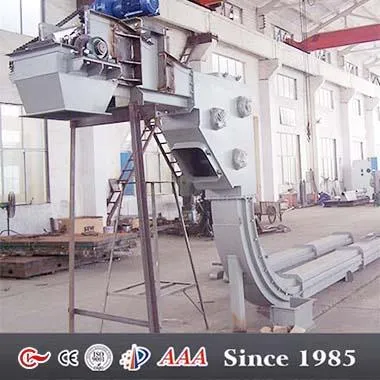
How to Choose Scraper Conveyor
Material type and size
The type and size of the material you need to convey will impact the type of scraper conveyor you need. Different materials may require different types of scraper blades or conveyor designs to ensure efficient and effective conveyance.
Conveying distance
The distance the material needs to be conveyed will also impact your choice of scraper conveyor. Longer conveying distances may require a more powerful motor and additional support components to ensure smooth and reliable operation.
Conveying speed
The speed at which the material needs to be conveyed will also impact your choice of scraper conveyor. Faster conveying speeds may require a more powerful motor and more frequent blade replacement to ensure efficient and effective conveyance.
Budget
Your budget will also impact your choice of scraper conveyor. More expensive models may offer additional features and benefits, but it's important to balance these against your specific needs and budget constraints.
Manufacturer reputation
It's important to choose a reputable manufacturer of scraper conveyors to ensure quality, reliability, and support. Look for manufacturers with a proven track record of providing high-quality products and excellent customer support.
Customization
Some applications may require customized scraper conveyors to meet specific requirements. Be sure to work with a manufacturer that offers customization options to ensure that the scraper conveyor meets your specific needs.
Our Factory
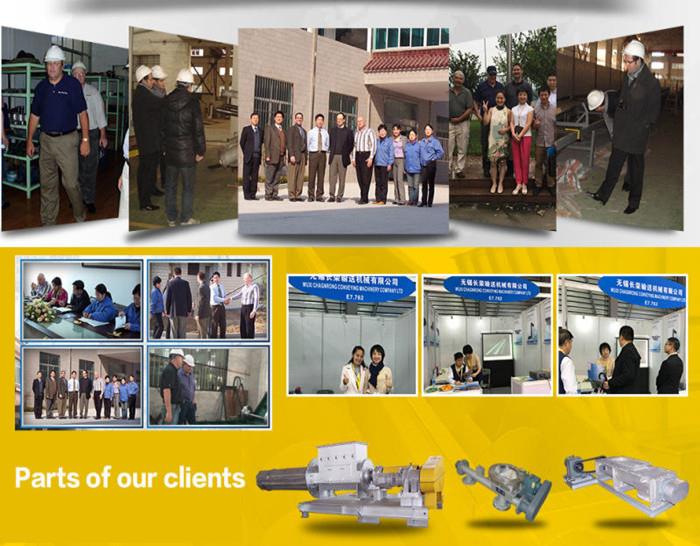
Wuxi Changrong has provided conveying equipments for many famous companies both at home and abroad. Such as Rockwool in Denmark, Saint-Gobain Group, Lanxess Shanghai ,BASF Shanghai ,BASF Nanjing ,Degussa ,Ingevity performance Material Zhuhai Company ,Invista Shanghai ,Dupont , Owenscorning, Mitsubishi Heavy , Japan SUMITOMO,Japan Kurita , etc. In China, North Sichuan Nitrocellulose Co., Ltd, Angel Yeast ,Sinopec, GEM Co., Ltd, Zhejiang Jiahua Group ,Huayou Cobalt, Haitian-Food, LEO KING ENVIRO.GROUP,ZIKE ENVIRONMENT, etc. Meanwhile, Wuxi Changrong export conveying equipments to Russia,Finland, Denmark, Singapore,New Zeland, Australia and other countries .

FAQ
Q: What is a scraper conveyor?
A: A scraper conveyor is a type of conveyor system that uses a series of scrapers to move materials along a conveying path.
Q: How does a scraper conveyor work?
A: A scraper conveyor works by using a series of scrapers that are mounted on the conveyor frame to move the material along the conveying path. The scraper blades are typically angled to help guide the material along the conveyor and prevent it from falling off the edges.
Q: What are the benefits of using a scraper conveyor?
A: Scraper conveyors offer several benefits, including high capacity, versatility, and the ability to handle a wide range of materials. They are commonly used in mining, agriculture, and manufacturing applications.
Q: What are the different types of scraper conveyors?
A: There are several types of scraper conveyors, including chain conveyors, belt conveyors, and roller conveyors. The type of scraper conveyor used will depend on the specific application and material being conveyed.
Q: What are the common applications of scraper conveyors?
A: Scraper conveyors are commonly used in mining, agriculture, and manufacturing applications to move materials efficiently and effectively.
Q: What are the maintenance requirements for scraper conveyors?
A: Maintenance requirements for scraper conveyors include regular inspections, lubrication, cleaning, and blade replacements as needed. It's important to follow the manufacturer's recommendations for maintenance to ensure optimal performance and reliability.
Q: What are the safety considerations for using scraper conveyors?
A: Safety considerations for using scraper conveyors include ensuring proper guarding and safety equipment is in place, following proper startup and shutdown procedures, and providing proper training for operators and maintenance personnel.
Q: How do I choose the right scraper conveyor for my application?
A: Choosing the right scraper conveyor requires careful consideration of several factors, including the type and size of the material to be conveyed, conveying distance, conveying speed, budget, manufacturer reputation, and customization options.
Q: What is the typical lifespan of a scraper conveyor?
A: The lifespan of a scraper conveyor can vary depending on the specific application and usage, but with proper maintenance and care, a scraper conveyor can last for many years.
Q: Can scraper conveyors handle abrasive materials?
A: Yes, scraper conveyors can handle abrasive materials, but it's important to choose the right type of scraper blades and materials to ensure durability and long-lasting performance.
Q: How much do scraper conveyors cost?
A: The cost of a scraper conveyor can vary depending on the specific model, manufacturer, and customization options. It's important to consider the total cost of ownership, including maintenance and replacement costs, when evaluating the cost of a scraper conveyor.
Q: Can scraper conveyors be used in outdoor applications?
A: Yes, scraper conveyors can be used in outdoor applications, but it's important to consider factors such as weather conditions and protection from the elements when selecting and installing the conveyor.
Q: What are the energy requirements for running a scraper conveyor?
A: The energy requirements for running a scraper conveyor will depend on the specific model and application. It's important to consult with the manufacturer to determine the energy requirements and any potential energy-saving measures that can be taken.
Q: How do I troubleshoot issues with my scraper conveyor?
A: Troubleshooting issues with a scraper conveyor can involve checking for common problems such as blade wear, motor failure, and conveyor chain breakdowns. It's important to consult with the manufacturer or a qualified technician for assistance in troubleshooting and resolving issues.
Q: Can scraper conveyors be used in food processing applications?
A: Yes, scraper conveyors can be used in food processing applications, but it's important to choose the right type of materials and designs to ensure compliance with food safety regulations and standards.
Q: What is a flight conveyor or scraper?
A: A scraper flight conveyor consists of a series of metal, wood, or plastic flights attached at uniform intervals to one or two strands of endless chain which moves the flights along in a trough, the chain or chains passing around sprockets at the ends of the trough.
Q: What are the different types of conveyor scrapers?
A: Different Types of Conveyor Scrapers? Conveyor belt scrapers are usually split into two different purposes: primary and secondary. As the name suggests, the primary scraper is the first scraper in the system and is usually responsible for the majority of the cleaning.
Q: What is a submerged scraper conveyor?
A: Submerged Scraper Chain Conveyors are designed to extinguish, cool, and transfer ash, slag, and other combustion remnants in a dust-free manner. Their gas-tight design prevents vapors and particles from escaping while also successfully blocking the entry of outside air, which can disrupt combustion operations.
Q: What is the main purpose of a scraper?
A: Scrapers, also called wheel tractor scrapers, are commonly used to scrape and level surfaces. These heavy-duty earthmoving machines can also haul earth and materials, such as dirt and gravel, more than just a short distance—they can move it from one job site to another.
Q: Which side of the conveyor system is the scraper located?
A: The scraper should be applied where the belt is flat. The best place for this is at the head pulley where the drive is connected. Often this primary scraper is mounted at a 3 o'clock position relative to the pulley shaft. A secondary scraper is used on the return side of the belt where it leaves the discharge pulley.
Wuxi Changrong Conveying Machinery Co., Ltd. is one of the most professional scraper conveyor manufacturers and suppliers in China. Welcome to get custom scraper conveyor from our factory. For price consultation, contact us now.
scraper conveyor for cohesive materials, scraper conveyor with heat resistance, scraper conveyor repair