

When it comes to handling various materials in industrial settings, auger feeders are a popular choice due to their simplicity, reliability, and efficiency. However, a common question that arises is whether auger feeders can handle sticky materials. As a leading supplier of auger feeders, I've encountered this query numerous times, and in this blog post, I'll delve into this topic in detail.
Understanding Auger Feeders
Before we discuss the handling of sticky materials, let's first understand what auger feeders are. An auger feeder, also known as a screw feeder, is a device that uses a rotating helical screw blade, called an auger, to move materials from one point to another. The auger is typically housed in a tube or trough, and as it rotates, it pushes the material along the axis of the tube.
Auger feeders are widely used in a variety of industries, including food processing, chemical manufacturing, agriculture, and mining. They can handle a wide range of materials, from fine powders to large chunks, and can be designed to operate in different environments, such as high temperatures, corrosive atmospheres, and dusty conditions.
Challenges of Handling Sticky Materials
Sticky materials, such as wet powders, pastes, and viscous liquids, present unique challenges for auger feeders. These materials tend to adhere to the surfaces of the auger and the housing, causing blockages, reduced flow rates, and increased wear and tear on the equipment. Additionally, sticky materials can be difficult to discharge evenly, leading to inconsistent feeding and potential quality issues in the final product.
Some of the common problems associated with handling sticky materials in auger feeders include:
- Build-up: Sticky materials can accumulate on the auger and the housing, reducing the clearance between the auger and the walls and causing the feeder to jam.
- Bridge formation: Sticky materials can form bridges or arches inside the hopper, preventing the material from flowing freely into the auger.
- Uneven feeding: Sticky materials may not flow evenly through the auger, resulting in inconsistent feeding rates and potential variations in the final product.
- Wear and tear: The constant friction between the sticky material and the auger and housing can cause excessive wear and tear on the equipment, reducing its lifespan and increasing maintenance costs.
Solutions for Handling Sticky Materials
Despite the challenges, there are several solutions available to help auger feeders handle sticky materials effectively. These solutions involve modifications to the design and operation of the feeder, as well as the use of specialized materials and coatings.
Design Modifications
- Smooth surfaces: Using smooth surfaces on the auger and the housing can reduce the adhesion of sticky materials. Polished stainless steel or other non-stick materials can be used to minimize build-up and improve the flow of the material.
- Larger clearances: Increasing the clearance between the auger and the housing can prevent blockages and reduce the risk of material build-up. This can be achieved by using a larger diameter auger or by increasing the size of the housing.
- Special auger designs: Certain auger designs, such as variable pitch augers or interrupted flight augers, can help to break up sticky materials and improve their flow. These designs can create a more turbulent flow pattern, preventing the material from sticking together and promoting better discharge.
- Hopper agitation: Adding a hopper agitator or vibrator can help to prevent bridge formation and ensure a consistent flow of material into the auger. The agitator can be mechanical, pneumatic, or hydraulic, and can be designed to operate continuously or intermittently.
Material Selection
- Non-stick coatings: Applying a non-stick coating to the auger and the housing can reduce the adhesion of sticky materials and make them easier to clean. Teflon, ceramic, or other low-friction coatings can be used to improve the flow of the material and prevent build-up.
- Corrosion-resistant materials: Using corrosion-resistant materials, such as stainless steel or aluminum, can help to prevent the corrosion and degradation of the feeder caused by sticky materials. These materials are also easier to clean and maintain, reducing the risk of contamination.
Operational Considerations
- Proper feeding rate: Adjusting the feeding rate of the auger feeder to match the flow characteristics of the sticky material can help to prevent blockages and ensure a consistent flow. Overfeeding the feeder can cause the material to back up and stick together, while underfeeding can result in uneven feeding and reduced efficiency.
- Regular cleaning and maintenance: Regularly cleaning the auger feeder and removing any built-up material can help to prevent blockages and ensure the proper operation of the equipment. This can be done using a variety of cleaning methods, such as brushing, blowing, or washing.
- Temperature control: Controlling the temperature of the sticky material can help to reduce its viscosity and improve its flow. Heating or cooling the material can be achieved using a variety of methods, such as steam jackets, electric heaters, or refrigeration units.
Our Auger Feeders for Sticky Materials
As a supplier of auger feeders, we understand the challenges of handling sticky materials and have developed a range of solutions to meet the needs of our customers. Our auger feeders are designed with smooth surfaces, larger clearances, and special auger designs to minimize the adhesion of sticky materials and ensure a consistent flow. We also offer a variety of non-stick coatings and corrosion-resistant materials to improve the performance and durability of our feeders.
In addition to our standard auger feeders, we also offer custom-designed solutions to meet the specific requirements of our customers. Our team of engineers and technicians has extensive experience in designing and manufacturing auger feeders for a wide range of applications, including the handling of sticky materials. We can work with you to understand your needs and develop a solution that is tailored to your specific requirements.

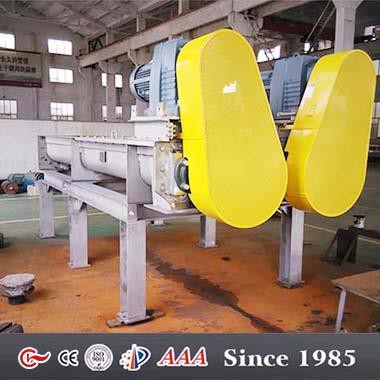
If you're interested in learning more about our auger feeders for sticky materials, or if you have any questions or concerns, please don't hesitate to contact us. We'd be happy to discuss your needs and provide you with a customized solution that meets your requirements.
Related Products
In addition to our auger feeders, we also offer a range of related products that can be used in conjunction with our feeders to improve the handling of sticky materials. These products include Screw Conveyors with Hopper Volumetric Feeder, Bulk Storage Silos, and Small Cement Silo. These products can help to store, transport, and feed sticky materials more efficiently, reducing the risk of blockages and improving the overall performance of your system.
Conclusion
In conclusion, while handling sticky materials can be a challenge for auger feeders, there are several solutions available to help overcome these challenges. By making modifications to the design and operation of the feeder, using specialized materials and coatings, and following proper maintenance procedures, auger feeders can effectively handle sticky materials and provide reliable and consistent feeding.
As a supplier of auger feeders, we're committed to providing our customers with high-quality products and solutions that meet their specific needs. If you're looking for an auger feeder that can handle sticky materials, please contact us to learn more about our products and services. We'd be happy to work with you to develop a customized solution that meets your requirements and helps you achieve your production goals.
References
- "Screw Feeders: Principles and Practice" by R. M. Johanson
- "Bulk Solids Handling and Storage" by J. M. Carson and M. J. Mumford
- "Materials Handling Handbook" by C. M. White and A. P. S. Selvaraj