

What is the maximum temperature that a sludge mixer can withstand?
As a supplier of sludge mixers, I often encounter inquiries from customers regarding the maximum temperature these machines can endure. Understanding this parameter is crucial as it directly impacts the performance, longevity, and safety of the equipment in various industrial applications.
Factors Influencing Temperature Resistance
The maximum temperature a sludge mixer can withstand is determined by several factors. Firstly, the materials used in its construction play a pivotal role. Most sludge mixers are made from metals such as stainless steel or carbon steel. Stainless steel, known for its excellent corrosion resistance, can generally tolerate higher temperatures compared to carbon steel. For instance, some high - grade stainless steels used in our sludge mixers can withstand temperatures up to around 800 - 1000 degrees Celsius in short - term exposures. However, during normal continuous operation, a more conservative range of 400 - 600 degrees Celsius is often recommended to ensure the integrity of the material and to prevent structural degradation.
Carbon steel mixers, on the other hand, are more commonly used due to their lower cost. But their temperature resistance is relatively lower. Continuous exposure to temperatures above 400 degrees Celsius can cause carbon steel to lose its mechanical strength, leading to warping, cracking, or other forms of damage.
Another factor is the type of seals and gaskets used in the mixer. These components are essential for preventing leakage of the sludge and maintaining the internal pressure of the mixer. Seals made from rubber or plastic materials typically have a much lower temperature limit. Silicone rubber seals can usually withstand temperatures up to around 200 - 250 degrees Celsius, while fluorocarbon rubber seals can handle slightly higher temperatures, up to approximately 300 - 350 degrees Celsius. When the temperature exceeds the limit of these seals, they can harden, crack, or melt, resulting in leaks and potential safety hazards.
The design of the mixer also affects its temperature resistance. Mixers with a well - designed cooling system can dissipate heat more effectively and thus tolerate higher temperatures. For example, some of our advanced sludge mixers are equipped with water - cooled jackets. These jackets circulate water around the mixing chamber, absorbing heat and preventing the internal temperature from rising too high. This allows the mixer to operate at temperatures that would otherwise be too extreme for a non - cooled design.
Industrial Applications and Temperature Requirements
In different industrial sectors, the temperature requirements for sludge mixers vary significantly. In the wastewater treatment industry, sludge is often at relatively low temperatures, usually ranging from ambient temperature (around 20 - 30 degrees Celsius) up to 50 - 60 degrees Celsius. This is because the treatment processes are mainly carried out under normal environmental conditions, and the heat generated during mixing is usually dissipated quickly. In such applications, standard sludge mixers with common materials and seals can easily meet the temperature requirements.
In the chemical industry, however, the situation is quite different. Some chemical processes involve the mixing of hot sludge or chemical substances at high temperatures. For example, in the production of certain polymers, the sludge may need to be mixed at temperatures as high as 200 - 300 degrees Celsius. In these cases, special high - temperature - resistant materials and seals must be used in the sludge mixers. Our company offers customized solutions for such high - temperature chemical applications, ensuring that the mixers can operate safely and efficiently under extreme conditions.
In the food processing industry, the temperature of the sludge (such as food waste or by - products) is also an important consideration. While most food processing operations are carried out at relatively low to moderate temperatures, some processes may involve the use of hot water or steam for cleaning or processing. This means that the sludge mixers used in this industry need to be able to withstand temperatures up to around 100 - 150 degrees Celsius without deteriorating. Our Conveyor Screw Coffee Screw Ribbon Mixer for Coffee System is designed to meet these specific temperature requirements in the food and beverage sector, ensuring hygienic and efficient mixing.
Testing and Certification
To accurately determine the maximum temperature a sludge mixer can withstand, thorough testing is required. Our company conducts a series of tests on each type of sludge mixer before it is released to the market. These tests include heating the mixer to gradually increasing temperatures while monitoring its performance, such as the torque required for mixing, the vibration of the machine, and the integrity of the seals and other components.

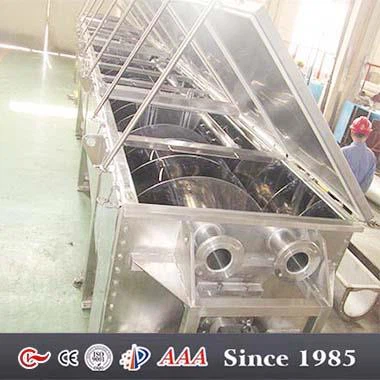
We also ensure that our mixers meet relevant international standards and certifications for temperature resistance. For example, in some countries, there are regulations regarding the maximum operating temperature of industrial equipment to ensure safety. Our Sludge Mixer Mixing Screw Conveyors comply with these standards, giving our customers peace of mind when using our products in high - temperature environments.
Conclusion
In conclusion, the maximum temperature that a sludge mixer can withstand depends on multiple factors, including the construction materials, seals, design, and the specific industrial application. Our company, as a professional sludge mixer supplier, offers a wide range of mixers to meet different temperature requirements. Whether you need a standard mixer for low - temperature wastewater treatment or a customized high - temperature mixer for chemical processes, we have the right solution for you.
If you are interested in our sludge mixers or have any questions about the temperature resistance or other performance parameters, please feel free to contact us for a detailed consultation. Our team of experts is ready to provide you with professional advice and help you select the most suitable mixer for your specific needs.
References
- ASM Handbook Volume 2: Properties and Selection: Nonferrous Alloys and Special - Purpose Materials.
- ASTM International Standards related to industrial equipment temperature resistance.
- Chemical Engineering Handbook for Industrial Mixing Processes.