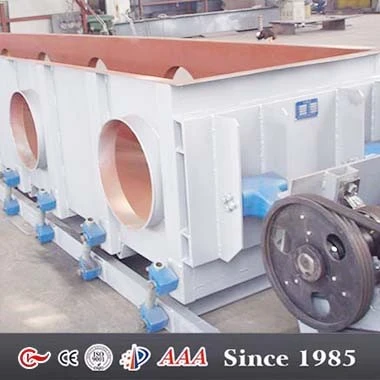
The properties of the conveyed materials: including the particle size, shape, density, temperature, humidity, viscosity, corrosiveness, etc. For example, for high-temperature materials, it is necessary to select a high-temperature resistant vibrating conveyor; for corrosive materials, the material of the conveyor should be corrosion-resistant.
Transport volume requirements: Clearly define the amount of material that needs to be transported per unit time to ensure that the conveying capacity of the conveyor can meet production needs. Too much transport volume may cause equipment overload, while too little transport volume may cause waste of resources.
Conveying distance and inclination: Determine the length and inclination of the conveyor according to the actual application scenario. If the conveying distance is too long, you may need to choose a conveyor with a larger excitation force, or consider a multi-section connection method. Generally, a vibrating conveyor is suitable for horizontal or slightly raised angle (less than 10°) conveying. If you need to convey granular materials upward, you should choose a special vertical vibrating conveyor.
Space constraints: Consider the size of the space where the conveyor will be installed and select the right conveyor type and size to ensure it can be installed and operate properly in the limited space. For example, a tubular vibrating conveyor may be more space-efficient than a trough vibrating conveyor.
Process requirements: If screening, dehydration, cooling, drying and other process operations are required during the conveying process, a vibrating conveyor with corresponding functions must be selected, or the equipment must be modifiable to add these functions.
Working environment: Understand the working environment of the conveyor, such as whether it is open-air, ambient temperature, humidity conditions, dust pollution, chemical activity or flammable and explosive gases, etc. If working in a harsh environment, special protective measures may be required or the conveyor material suitable for the environment may be selected.
Dust prevention requirements: For some occasions with high dust prevention requirements, it is necessary to choose a conveyor with good sealing performance, or add a sealing device to the conveyor.
Types of vibrating conveyors: Common types of vibrating conveyors include trough vibrating conveyors, tube vibrating conveyors, and high-temperature resistant vibrating conveyors. Trough vibrating conveyors are suitable for short-distance and mid-distance transportation of various materials; tube vibrating conveyors can be used to horizontally transport powder and granular materials in closed circular tubes; high-temperature resistant vibrating conveyors are mainly used to transport high-temperature materials.
Trough type vibrating conveyor: With a vibrating motor as the vibration source, the material is thrown upward and moved forward. The motor can be installed on the upper side, lower side or both sides. The conveyor length can reach 20 meters. The multi-machine soft connection can be extended as needed, and the conveyor can be tilted upward ≤10°.
Tubular vibrating conveyor: used to convey powder and granular materials horizontally at a controlled rate in a closed circular tube. Several sections of conveying tubes can be connected for synchronous conveying, and multi-point feeding and discharging can be achieved. It has a sealed structure and a conveying length of up to 60-70 meters. Motor or electromagnetic drive can be selected according to requirements.
High temperature resistant vibrating conveyor: mainly used for conveying high temperature materials with a temperature not exceeding 300 degrees Celsius, and the conveying length can reach 20 meters.
Drive mode: The drive modes of vibrating conveyors include electromagnetic, inertial, and eccentric connecting rod. Electromagnetic conveyors have higher vibration frequencies and shorter conveying distances; inertial conveyors are divided into single-mass and double-mass resonance conveyors according to the different inertial vibrators, among which double-mass resonance conveyors can achieve long-distance conveying.
Equipment stability and reliability: Understand whether the structural design of the equipment is reasonable, whether it runs smoothly, as well as the manufacturing quality and brand reputation of the equipment.
Convenience of maintenance and servicing: Choosing a conveyor with a simple structure and easy maintenance can reduce the subsequent maintenance costs and workload.
Cost budget: Under the premise of meeting the transportation requirements, choose cost-effective equipment based on the budget.
When selecting a vibrating conveyor, it is recommended to fully communicate with the conveyor manufacturer or supplier and provide detailed information such as material characteristics, conveying requirements and working environment so that they can recommend the most suitable vibrating conveyor model and specifications. If possible, you can also refer to successful cases in similar application scenarios, or conduct field visits and comparisons of equipment from different manufacturers. In addition, for some special conveying tasks, customized design may be required to ensure that the conveyor fully meets actual needs.
If you want to know how to choose a vibrating conveyor equipment, you can consult our customer service staff, we will serve you wholeheartedly 24 hours a day!