

Hey there! As a supplier of screw feeders, I've been getting a lot of questions lately about what exactly the screw in a screw feeder does. So, I thought I'd take a few minutes to break it down for you.
First off, let's talk about what a screw feeder is. In simple terms, it's a device used to move bulk materials from one place to another. It's commonly used in industries like agriculture, food processing, pharmaceuticals, and manufacturing. The screw feeder consists of a screw (also known as an auger) housed in a tube or trough. The screw rotates, and as it does, it moves the material along the length of the feeder.
So, what's the function of that screw? Well, there are several important functions that the screw serves in a screw feeder.
1. Material Conveyance
The primary function of the screw in a screw feeder is to convey the material. When the screw rotates, it acts like a conveyor belt for the bulk material. The shape of the screw's flight (the spiral part) pushes the material forward. As the screw turns, each rotation moves a specific volume of material along the trough. This is great for moving materials over a relatively short distance in a controlled manner.
For example, in a food processing plant, a screw feeder can be used to move grains from a storage bin to a processing machine. The screw ensures that the grains are delivered steadily and at a consistent rate, which is crucial for maintaining the quality of the final product.
2. Metering
Another important function of the screw is metering. Metering means controlling the flow rate of the material. By adjusting the speed of the screw rotation, you can control how much material is fed through the feeder per unit of time. This is really useful in applications where you need to add a precise amount of a particular ingredient.
Let's say you're making a chemical compound, and you need to add a specific amount of a powder additive. A screw feeder with a well - calibrated screw can accurately meter the powder, ensuring that the chemical reaction proceeds as planned. The screw's design, such as the pitch (the distance between the threads of the spiral) and the diameter, also affects the metering accuracy. A finer pitch screw can provide more precise metering for smaller flow rates.
3. Mixing
In some cases, the screw in a screw feeder can also be used for mixing. If you have multiple materials that need to be combined, a specially designed screw can blend them as they are being conveyed. The rotation of the screw causes the materials to tumble and mix together.
For instance, in an animal feed production facility, different types of grains, vitamins, and minerals can be fed into a screw feeder. The screw will mix these ingredients thoroughly as it moves them towards the next stage of the production process. This helps to ensure that each batch of animal feed has a consistent nutrient composition.
4. Breaking Up Clumps
Bulk materials often form clumps during storage or handling. The screw in a screw feeder can help break up these clumps. As the material moves along the screw, the mechanical action of the rotating screw can break apart the clumps into smaller particles.
In a mining operation, for example, ore that has been stored in a bin may form large clumps. A screw feeder can be used to break up these clumps as the ore is being transported to a crusher or other processing equipment. This improves the efficiency of the downstream processes.
5. Preventing Backflow
The screw design also helps to prevent backflow of the material. The continuous spiral shape of the screw creates a kind of barrier that stops the material from flowing back in the opposite direction. This is important in applications where you need to maintain a unidirectional flow of the material.
In a pharmaceutical manufacturing plant, when you're feeding powders into a tablet - making machine, you don't want the powder to flow back into the storage bin. The screw in the feeder ensures that the powder moves only towards the machine, maintaining a clean and efficient production process.
Now, depending on your specific needs, there are different types of screw feeders available. If you're looking for a more advanced option, you might want to check out our Twin Screw Feeder Feed Conveyor System. This system uses two screws working in tandem, which can provide even better control over the material flow and mixing.

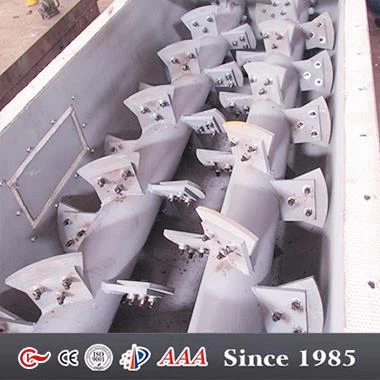
On the other hand, if you have a smaller - scale operation, our Small Auger Feeders Screw Feeders could be the perfect fit. They are compact and efficient, ideal for applications where space is limited.
We understand that every customer has unique requirements when it comes to screw feeders. That's why we offer a wide range of customization options. Whether you need a specific screw design, a particular size of the feeder, or a special material for the construction, we can work with you to meet your needs.
If you're in the market for a screw feeder and want to learn more about how our products can benefit your business, we'd love to hear from you. Just reach out to us, and we can have a detailed discussion about your requirements. Our team of experts is always ready to help you find the best solution for your material handling needs.
In conclusion, the screw in a screw feeder plays a vital role in material conveyance, metering, mixing, breaking up clumps, and preventing backflow. It's a simple yet powerful component that can significantly improve the efficiency and accuracy of your bulk material handling processes. So, if you're looking to upgrade your material handling system, consider investing in a high - quality screw feeder from us.
References
- "Bulk Material Handling Handbook"
- Industry research reports on screw feeders and material handling equipment.