

As a supplier of custom mixers, one of the most common questions we receive from clients is about the accuracy of our mixing equipment. In this blog post, I'll delve into the factors that affect the mixing accuracy of our custom mixers and explain how we ensure high - precision mixing for our customers.
Understanding Mixing Accuracy
Mixing accuracy refers to how well a mixer can achieve a homogeneous blend of different materials within a specified tolerance. In various industries, such as food, pharmaceuticals, chemicals, and construction, accurate mixing is crucial. For example, in the pharmaceutical industry, inaccurate mixing can lead to inconsistent dosages in medications, which can have serious health implications. In the food industry, uneven mixing can result in variations in taste, texture, and quality of the final product.
Factors Affecting Mixing Accuracy
1. Mixer Design
The design of a mixer plays a fundamental role in its mixing accuracy. Our custom mixers are engineered with advanced geometries and configurations to optimize the mixing process. For instance, the shape of the mixing chamber can influence how materials flow and interact. A well - designed chamber ensures that all materials are evenly exposed to the mixing elements.
We also use different types of mixing blades or agitators depending on the application. For example, paddle - type agitators are suitable for gentle mixing of powders and pastes, while high - speed impellers are used for more intense mixing of liquids. The arrangement and speed of these agitators can be precisely adjusted to achieve the desired mixing accuracy.
2. Material Properties
The properties of the materials being mixed have a significant impact on mixing accuracy. Factors such as particle size, density, viscosity, and flowability all need to be considered. For example, if you are mixing materials with very different particle sizes, it can be challenging to achieve a uniform blend. In such cases, our custom mixers are equipped with features to handle these differences, such as multiple mixing stages or special sieving mechanisms.
Materials with high viscosity require more energy and a different mixing approach compared to low - viscosity fluids. Our engineers take these material properties into account during the design process to ensure that the mixer is tailored to the specific requirements of the materials.
3. Operating Conditions
The operating conditions, including mixing time, speed, and temperature, also affect mixing accuracy. Mixing for too short a time may result in an incomplete blend, while over - mixing can cause degradation of the materials. Our custom mixers are equipped with advanced control systems that allow for precise adjustment of these operating parameters.
Temperature can also impact the mixing process, especially for materials that are sensitive to heat. For example, in the production of certain polymers, maintaining a specific temperature range is essential for proper mixing. Our mixers can be designed with heating or cooling systems to control the temperature during the mixing process.
Ensuring High - Precision Mixing
1. Advanced Manufacturing Techniques
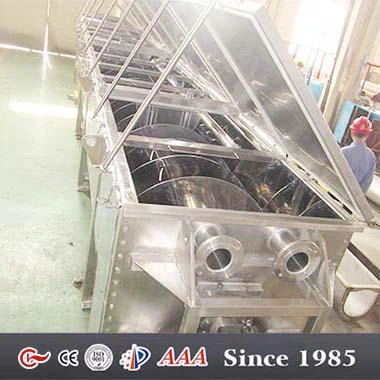
We use state - of - the - art manufacturing techniques to produce our custom mixers. Computer - Numerical - Control (CNC) machining ensures that all components are fabricated with high precision, which is essential for the overall performance of the mixer. This precision manufacturing reduces the chances of mechanical errors that could affect mixing accuracy.

2. Quality Control
Quality control is a critical aspect of our production process. Each custom mixer undergoes a series of rigorous tests before it is shipped to the customer. We use advanced testing equipment, such as spectroscopy and microscopy, to analyze the homogeneity of the mixed materials. This allows us to verify that the mixer meets the specified mixing accuracy requirements.
3. Customization
One of the key advantages of our custom mixers is the ability to customize them according to the specific needs of the customer. We work closely with our clients to understand their requirements, including the type of materials to be mixed, the desired mixing accuracy, and the production volume. Based on this information, we design and build a mixer that is optimized for their application.
Real - World Applications
1. Sludge Mixing
In the wastewater treatment industry, accurate mixing of sludge is essential for effective treatment processes. Our Sludge Mixer Mixing Screw Conveyors are designed to handle the high - viscosity and abrasive nature of sludge. These mixers ensure that chemicals are evenly distributed in the sludge, improving the efficiency of the treatment process.
2. Coffee Mixing
In the coffee industry, achieving a consistent flavor profile is crucial. Our Conveyor Screw Coffee Screw Ribbon Mixer for Coffee System is specifically designed to mix different coffee blends accurately. The gentle mixing action of these mixers preserves the aroma and flavor of the coffee beans, resulting in a high - quality final product.
Conclusion
The accuracy of our custom mixers is a result of a combination of factors, including advanced design, consideration of material properties, precise control of operating conditions, and strict quality control measures. We are committed to providing our customers with mixers that offer the highest level of mixing accuracy for their specific applications.
If you are in need of a custom mixer and want to discuss your requirements in detail, we invite you to reach out to us. Our team of experts is ready to assist you in finding the perfect solution for your mixing needs. Whether you are in the food, pharmaceutical, chemical, or any other industry, we have the experience and expertise to deliver a mixer that meets your expectations.
References
- Perry, R. H., & Green, D. W. (1997). Perry's Chemical Engineers' Handbook. McGraw - Hill.
- Paul, E. L., Atiemo - Obeng, V. A., & Kresta, S. M. (2004). Handbook of Industrial Mixing: Science and Practice. Wiley.