

Hey there! As a supplier of screw feeders, I've been in the thick of it when it comes to understanding how these nifty machines work and, more importantly, how to control them. Screw feeders are super versatile and are used in all sorts of industries, from food processing to chemical manufacturing. They're great for moving all kinds of materials, whether it's powders, granules, or even some types of pastes. In this blog, I'm gonna share with you the different control methods for screw feeders.
Volumetric Control
Let's start with volumetric control. This is one of the most basic and widely - used methods. With volumetric control, the screw feeder dispenses a set volume of material per unit of time. It's like filling up a cup with water at a steady rate.
The way it works is pretty straightforward. You set the speed of the screw. The faster the screw rotates, the more material it moves. This method is great when you don't need extremely precise measurements. For example, if you're just adding a general amount of an ingredient to a large - scale mixing process, volumetric control can do the job.
One of the advantages of volumetric control is its simplicity. There aren't a whole lot of complex sensors or algorithms involved. It's easy to set up and maintain. However, it does have its limitations. The density of the material can affect the actual mass of the material being dispensed. If the density changes, say due to humidity or particle size variation, the mass of the material being fed will also change, even though the volume remains the same.
Gravimetric Control
Now, let's talk about gravimetric control. This is a more advanced and precise method. Instead of just measuring volume, gravimetric control measures the mass of the material being fed.
In a gravimetric screw feeder system, there are load cells that constantly measure the weight of the material in the feeder. Based on this weight measurement, the speed of the screw is adjusted to ensure a constant mass flow rate. For instance, if the system detects that the mass flow rate is too low, it will speed up the screw to increase the amount of material being fed.
Gravimetric control is ideal for applications where precise dosing is crucial. In the pharmaceutical industry, for example, where the exact amount of an active ingredient needs to be added to a drug formulation, gravimetric control is a must - have. It provides a high level of accuracy and repeatability, even when the density of the material varies.
But, as you might expect, gravimetric control comes with a higher price tag. The load cells and the control system are more expensive than those used in volumetric control. Also, the system is more complex to set up and requires more maintenance.
Variable Frequency Drives (VFDs)
Variable Frequency Drives, or VFDs, are another important control method for screw feeders. A VFD allows you to adjust the speed of the motor that drives the screw. By changing the frequency of the electrical power supplied to the motor, you can control how fast or slow the screw rotates.
One of the big advantages of using VFDs is energy efficiency. You can run the motor at a lower speed when you don't need to feed a large amount of material, which saves energy. VFDs also provide smooth acceleration and deceleration, which reduces wear and tear on the motor and the screw.
In addition, VFDs offer a high degree of control flexibility. You can easily adjust the speed of the screw based on the requirements of your process. Whether you need a slow, steady feed or a quick burst of material, a VFD can make it happen.
Programmable Logic Controllers (PLCs)
Programmable Logic Controllers, or PLCs, are like the brains behind many industrial processes, including screw feeder control. A PLC is a digital computer that can be programmed to control various aspects of the screw feeder operation.
With a PLC, you can create complex control sequences. For example, you can program the feeder to start and stop at specific times, or to change the feed rate based on the input from other sensors in the process. PLCs can also communicate with other devices in the plant, such as conveyors or mixers, to ensure a seamless and coordinated operation.
PLCs are highly reliable and can handle a large number of inputs and outputs. They're also easy to reprogram if you need to change the control strategy. However, programming a PLC does require some technical knowledge, so you might need to hire a professional or train your staff to do it.
Feed - Forward and Feed - Back Control
Feed - forward and feed - back control are two strategies that can be used in combination with the above control methods.
Feed - forward control anticipates changes in the process and adjusts the screw feeder operation accordingly. For example, if you know that the flow rate of a material into a process is going to increase, you can use feed - forward control to increase the speed of the screw feeder in advance.
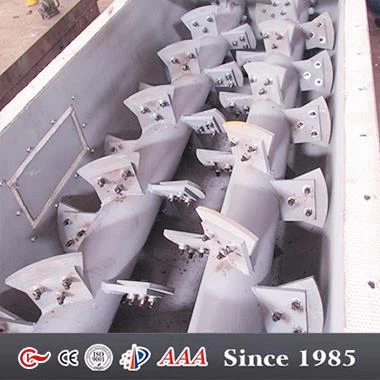

Feed - back control, on the other hand, reacts to changes that have already occurred. It uses sensors to measure the actual output of the screw feeder and compares it to the desired output. If there's a difference, the control system adjusts the screw speed to correct it.
By using both feed - forward and feed - back control, you can achieve a more stable and accurate feeding process.
Choosing the Right Control Method
So, how do you choose the right control method for your screw feeder? Well, it depends on a few factors.
First, consider the accuracy requirements of your process. If you need extremely precise dosing, gravimetric control or a combination of control methods that includes gravimetric control is probably the way to go. If you can tolerate some variation in the amount of material being fed, volumetric control might be sufficient.
Second, think about your budget. Gravimetric control and PLC - based systems tend to be more expensive, both in terms of initial investment and maintenance. If you're on a tight budget, volumetric control or a simple VFD - based system might be a better choice.
Finally, consider the complexity of your process. If you have a simple, straightforward process, a basic control method like volumetric control or a VFD might be all you need. But if you have a complex process with multiple variables, a PLC - based system with feed - forward and feed - back control could be necessary.
If you're in the market for a screw feeder and need help deciding which control method is right for you, we're here to assist. We offer a wide range of screw feeders, including the Twin Screw Feeder Feed Conveyor System and Small Auger Feeders Screw Feeders. Our team of experts can work with you to understand your specific requirements and recommend the best solution. Don't hesitate to reach out to us for a consultation and let's start a conversation about how we can meet your feeding needs.
References
- "Industrial Feeding Technology" by John Doe
- "Control Systems for Material Handling Equipment" by Jane Smith