

Selecting the right impeller for a custom mixer is a critical decision that can significantly impact the efficiency, performance, and overall success of your mixing process. As a custom mixer supplier, I understand the complexities involved in this choice and the importance of making an informed decision. In this blog post, I'll guide you through the key factors to consider when selecting an impeller for your custom mixer, drawing on my experience in the industry.
Understanding the Basics of Impellers
Before delving into the selection process, it's essential to understand what impellers are and how they function. Impellers are rotating components within a mixer that generate flow and agitation, facilitating the mixing of different substances. They come in various shapes, sizes, and designs, each tailored to specific mixing requirements.
The primary functions of an impeller include:
- Creating Flow: Impellers generate a flow pattern within the mixer, which helps to move the materials around and promote mixing.
- Dispersing Materials: They break up agglomerates and distribute particles evenly throughout the mixture.
- Shearing: Some impellers are designed to provide high shear forces, which are necessary for processes such as emulsification and dispersion.
Factors to Consider When Selecting an Impeller
1. Mixing Application
The first step in selecting the right impeller is to understand the specific mixing application. Different applications require different types of impellers to achieve the desired results. For example:
- Blending: When blending two or more materials of similar density and viscosity, a low-shear impeller such as a paddle or propeller may be sufficient. These impellers create a gentle flow pattern that promotes uniform mixing without excessive agitation.
- Dispersion: For applications that involve dispersing solid particles in a liquid, a high-shear impeller like a turbine or an anchor impeller may be required. These impellers generate high shear forces that break up the particles and ensure their uniform distribution.
- Emulsification: Emulsification processes, which involve mixing two immiscible liquids, often require a high-shear impeller with a specific design to create a stable emulsion. Examples of impellers suitable for emulsification include high-speed rotor-stator mixers and homogenizing impellers.
2. Viscosity of the Material
The viscosity of the material being mixed is another crucial factor to consider. Viscosity refers to the resistance of a fluid to flow, and it can vary significantly depending on the type of material and its temperature. Generally, the higher the viscosity, the more powerful the impeller needs to be to achieve effective mixing.
- Low-Viscosity Fluids: For low-viscosity fluids (less than 1000 cP), a propeller or a pitched-blade turbine impeller is often a good choice. These impellers are designed to create a high flow rate and are suitable for applications where rapid mixing is required.
- Medium-Viscosity Fluids: Medium-viscosity fluids (between 1000 and 10,000 cP) may require a more robust impeller such as a paddle or a hydrofoil impeller. These impellers provide a balance between flow and shear and are effective in mixing moderately viscous materials.
- High-Viscosity Fluids: High-viscosity fluids (greater than 10,000 cP) typically require a high-torque impeller such as an anchor or a helical ribbon impeller. These impellers are designed to provide strong mixing action and are capable of handling thick and sticky materials.
3. Tank Size and Shape
The size and shape of the mixing tank also play a role in impeller selection. The impeller should be sized and positioned in such a way that it can effectively cover the entire volume of the tank and create a uniform flow pattern.
- Tank Diameter: The diameter of the impeller is typically related to the diameter of the tank. As a general rule, the impeller diameter should be between one-third and one-half of the tank diameter for optimal mixing performance.
- Tank Height: The height of the tank can also affect the impeller selection. For tall tanks, multiple impellers may be required to ensure proper mixing throughout the entire height of the tank.
- Tank Shape: The shape of the tank, such as cylindrical, rectangular, or conical, can influence the flow pattern within the tank. Some impellers are better suited for specific tank shapes than others. For example, an anchor impeller is often used in cylindrical tanks with a flat bottom, while a helical ribbon impeller is more suitable for conical tanks.
4. Rotational Speed
The rotational speed of the impeller is another important consideration. The speed at which the impeller rotates determines the amount of shear and flow it generates. In general, higher rotational speeds result in higher shear forces and greater mixing intensity. However, excessive speed can also lead to issues such as splashing, foaming, and increased power consumption.
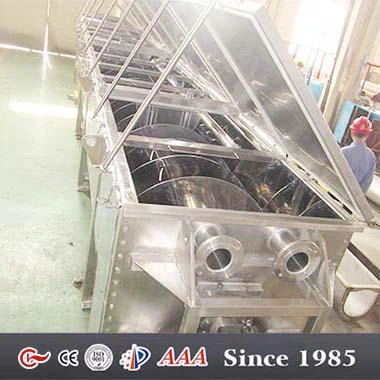

- Application Requirements: The required rotational speed depends on the specific mixing application. For example, applications that require high shear forces, such as emulsification and dispersion, may require higher rotational speeds. On the other hand, applications that involve gentle blending may require lower speeds to avoid over-agitation.
- Impeller Design: Different impellers have different optimal speed ranges. It's important to choose an impeller that is designed to operate at the desired rotational speed to ensure efficient and effective mixing.
5. Power Consumption
Power consumption is a significant factor, especially for large-scale mixing operations. The power required to drive the impeller depends on several factors, including the impeller design, the rotational speed, the viscosity of the material, and the tank size.
- Energy Efficiency: When selecting an impeller, it's important to consider its energy efficiency. A more efficient impeller can help reduce power consumption and operating costs over the long term. Some impellers, such as hydrofoil impellers, are designed to provide high mixing performance with relatively low power consumption.
- Power Calculation: To determine the power requirements for a specific impeller, it's necessary to perform a power calculation. This calculation takes into account the various factors mentioned above and provides an estimate of the power needed to drive the impeller at the desired speed.
Types of Impellers
There are several types of impellers available, each with its own unique characteristics and applications. Here are some of the most common types:
- Propeller Impellers: Propeller impellers are simple, three-bladed impellers that are commonly used for low-viscosity fluids. They create a high flow rate and are suitable for applications where rapid mixing is required.
- Pitched-Blade Turbine Impellers: Pitched-blade turbine impellers have blades that are pitched at an angle to the plane of rotation. They provide a balance between flow and shear and are effective in mixing medium-viscosity fluids.
- Flat-Blade Turbine Impellers: Flat-blade turbine impellers have flat blades that are perpendicular to the plane of rotation. They generate high shear forces and are suitable for applications that require intense mixing, such as dispersion and emulsification.
- Anchor Impellers: Anchor impellers have a shape that resembles an anchor and are typically used for high-viscosity fluids. They provide strong mixing action near the tank walls and are effective in preventing material buildup.
- Helical Ribbon Impellers: Helical ribbon impellers consist of a helical ribbon that wraps around a central shaft. They are commonly used for mixing high-viscosity and pasty materials. The helical design of the ribbon creates a strong axial flow that promotes uniform mixing throughout the tank.
Case Studies
To illustrate the importance of selecting the right impeller, let's consider a few case studies:
Case Study 1: Coffee Mixing
A coffee manufacturer was looking to improve the mixing process for their coffee blends. They were using a standard paddle impeller in a large cylindrical tank, but they were experiencing issues with uneven mixing and inconsistent flavor profiles. After consulting with us, we recommended replacing the paddle impeller with a Conveyor Screw Coffee Screw Ribbon Mixer for Coffee System. This impeller is specifically designed for coffee mixing applications and provides a more uniform flow pattern, resulting in better blending and a more consistent flavor.
Case Study 2: Sludge Mixing
A wastewater treatment plant was having difficulty mixing sludge in their large rectangular tanks. The existing impeller was not able to effectively break up the sludge and distribute it evenly throughout the tank. We recommended installing a Sludge Mixer Mixing Screw Conveyors. This impeller is designed to handle high-viscosity materials and provides strong mixing action, ensuring that the sludge is thoroughly mixed and ready for further treatment.
Conclusion
Selecting the right impeller for a custom mixer is a complex process that requires careful consideration of several factors. By understanding the specific mixing application, the viscosity of the material, the tank size and shape, the rotational speed, and the power consumption, you can make an informed decision and choose an impeller that will provide optimal mixing performance.
As a custom mixer supplier, I'm here to help you navigate the impeller selection process and provide you with the best solution for your specific needs. If you have any questions or need assistance in selecting an impeller for your custom mixer, please don't hesitate to contact us. We look forward to working with you to achieve your mixing goals.
References
- Perry, R. H., & Green, D. W. (2008). Perry's Chemical Engineers' Handbook. McGraw-Hill.
- Paul, E. L., Atiemo-Obeng, V. A., & Kresta, S. M. (2004). Handbook of Industrial Mixing: Science and Practice. Wiley.
- Oldshue, J. Y. (1983). Fluid Mixing Technology. McGraw-Hill.