

Hey there! As a supplier of mass conveyors, I often get asked this question: "How long does it take to repair a mass conveyor?" Well, the answer isn't as straightforward as you might think. There are a bunch of factors that can influence the repair time, and I'm gonna break them down for you in this blog.
First off, let's talk about what a mass conveyor is. A mass conveyor is a crucial piece of equipment in many industries, especially those involved in bulk material handling. It's designed to move large quantities of materials like grains, minerals, and chemicals from one place to another. You can learn more about Vibration Conveyor Mass Conveyor and Mass Conveyor for Bulk Material Handling on our website.
Now, back to the repair time. One of the biggest factors is the type of damage. Minor issues, like a loose belt or a small crack in the housing, can usually be fixed pretty quickly. In most cases, a simple repair like this might take only a few hours. Our technicians can easily access the problem area, make the necessary adjustments or replacements, and get the conveyor up and running again in no time.
But what if the damage is more severe? For example, if the motor fails or the frame is severely damaged, the repair time can increase significantly. A motor replacement might take a full day or even longer. This is because motors are complex components, and replacing them involves not only removing the old one but also ensuring that the new motor is properly installed and calibrated. The alignment has to be just right, and all the electrical connections need to be checked to make sure there are no issues.

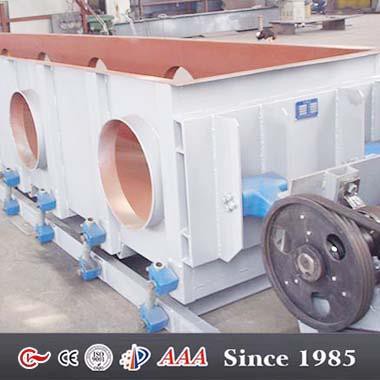
The frame is another critical part of the mass conveyor. If it's damaged, it can affect the overall stability and performance of the conveyor. Repairing a damaged frame might involve welding, straightening, or even replacing large sections of the frame. This kind of work is time - consuming and requires specialized skills and equipment. Depending on the extent of the damage, it could take several days to complete the repair.
Another factor that affects repair time is the availability of parts. If we have the required parts in stock, it can speed up the repair process. We always try to keep a good inventory of common parts to minimize downtime for our customers. However, if a part is not in stock, we have to order it. The lead time for ordering parts can vary widely. Sometimes, it might take just a couple of days, but in other cases, especially for custom - made or hard - to - find parts, it could take weeks. And until the part arrives, the repair work can't be completed.
The complexity of the conveyor system also plays a role. Some mass conveyors are relatively simple, with basic components and straightforward designs. These are usually easier and quicker to repair. On the other hand, more advanced conveyor systems with multiple belts, sensors, and control systems can be a real headache to fix. Troubleshooting the problem in a complex system can take a long time. Our technicians have to carefully analyze the system, test different components, and figure out where the issue lies. Once they've identified the problem, the repair process itself might also be more involved due to the complexity of the system.
The location of the conveyor is yet another consideration. If the conveyor is located in a hard - to - reach area, it can add to the repair time. For example, if it's in a confined space or at a high elevation, our technicians might need to use special equipment like scaffolding or cranes to access the conveyor. This setup takes time, and it also adds an extra layer of safety precautions that need to be followed.
Now, let's talk about preventive maintenance. Regular preventive maintenance can actually reduce the overall repair time. When we perform routine maintenance on a mass conveyor, we can catch small problems before they turn into big ones. For example, we can check the belt tension, lubricate the moving parts, and inspect the electrical connections. By doing this on a regular basis, we can prevent major breakdowns and keep the conveyor in good working condition. This means that when a repair is needed, it's likely to be a minor one that can be fixed quickly.
We also offer on - site repair services. This is a great option for our customers because it means we can start the repair process right away. Our technicians can bring all the necessary tools and equipment to the customer's location and get to work immediately. This saves time that would otherwise be spent on transporting the conveyor to a repair facility.
In some cases, we might recommend a complete overhaul of the mass conveyor instead of just a repair. An overhaul involves disassembling the entire conveyor, inspecting every component, and replacing any parts that are worn out or damaged. This is a more comprehensive approach, and it can take several weeks to complete. However, an overhaul can significantly extend the lifespan of the conveyor and improve its performance.
So, to sum it up, the time it takes to repair a mass conveyor can range from a few hours for minor repairs to several weeks for major overhauls. It all depends on the type of damage, the availability of parts, the complexity of the system, the location of the conveyor, and whether preventive maintenance has been carried out.
If you're in need of a mass conveyor or have an existing one that needs repair, don't hesitate to reach out to us. We have a team of experienced technicians who are ready to help you get your conveyor back in top shape. Whether it's a quick fix or a major overhaul, we're committed to providing high - quality service and minimizing downtime for your business. Contact us today to discuss your needs and get a quote for the repair or purchase of a mass conveyor.
References
- Industry standards for conveyor repair and maintenance
- Experience and case studies from our own repair projects