

Hey there! As a mixer price supplier, I've been in the thick of the mixer market for quite a while. One question that often pops up is how a brand's market share affects the mixer price. Let's dig into this topic and see what's really going on.
First off, let's talk about what market share actually means. In simple terms, a brand's market share is the percentage of total sales in a particular market that a brand holds. For example, if there are 100 mixers sold in a month in a specific region, and Brand A sells 20 of them, then Brand A has a 20% market share.
Now, how does this market share thing impact the price of mixers? Well, there are a few ways to look at it.
High Market Share Brands and Their Pricing Power
Brands with a high market share usually have more pricing power. When a brand dominates the market, it has a large customer base that trusts its products. This trust allows the brand to charge a premium for its mixers. For instance, if a well - known brand like Brand X has a 60% market share in the mixer market, they can set their prices higher because consumers are willing to pay more for the perceived quality and reliability.
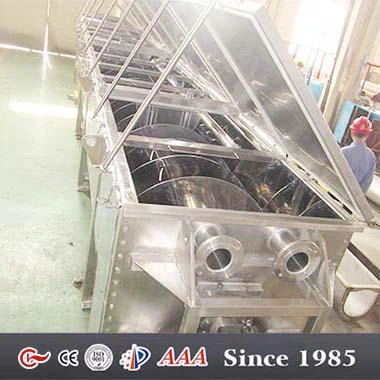
These high - market - share brands often invest a lot in research and development, marketing, and customer service. They use the revenue from their high - priced products to maintain and improve their position in the market. Take Sludge Mixer Mixing Screw Conveyors as an example. A well - established brand that offers this type of mixer can price it higher due to its brand reputation and the quality assurance it provides.
Another reason high - market - share brands can charge more is economies of scale. Since they produce a large volume of mixers, they can spread their fixed costs over a greater number of units. This reduces the cost per unit, allowing them to make a healthy profit even at a higher price point.

Low Market Share Brands and Competitive Pricing
On the other hand, brands with a low market share have to be more competitive with their pricing. They are trying to break into the market and gain customers from the established brands. A brand with only a 5% market share, let's say Brand Y, will likely price its mixers lower to attract price - sensitive customers.
These low - market - share brands often focus on niche markets or offer unique features at a lower cost. For example, Conveyor Screw Coffee Screw Ribbon Mixer for Coffee System might be offered by a smaller brand at a more affordable price to target coffee shops and small - scale coffee producers.
Low - market - share brands also use price as a marketing tool. By offering a lower price, they hope to entice customers to try their products. Once customers are satisfied with the performance, they might become loyal customers, helping the brand increase its market share over time.
Market Share Changes and Pricing Adjustments
The market share of a brand is not static; it can change over time. When a brand's market share increases, it might gradually increase its prices. As more customers start buying its mixers, the brand can afford to invest more in quality improvement and innovation, which justifies a price hike.
Conversely, if a brand's market share is declining, it may have to lower its prices to stay competitive. For example, if a new competitor enters the market with a better - priced or more innovative mixer, an established brand might see its market share drop. In response, it will likely reduce its prices to regain customers.
Impact on My Business as a Mixer Price Supplier
As a mixer price supplier, I have to take into account the market share of different brands when setting my prices. I work with both high - market - share and low - market - share brands, and I need to find a balance.
For high - market - share brands, I know that their products come with a certain premium. But I also need to make sure that the prices are still attractive to my customers. I often negotiate with these brands to get the best possible prices for my clients while maintaining a reasonable profit margin for myself.
With low - market - share brands, I see an opportunity to offer more affordable options to my customers. I can promote these brands by highlighting their unique features and cost - effectiveness. This helps me expand my customer base and increase my sales volume.
Consumer Behavior and Market Share - Price Relationship
Consumers play a crucial role in this market share - price relationship. Some consumers are brand - loyal and are willing to pay more for a well - known brand. They believe that a high - market - share brand offers better quality and reliability. On the other hand, there are price - sensitive consumers who are more likely to choose a lower - priced mixer from a less - known brand.
As a supplier, I need to understand my customers' preferences. I can offer a range of mixers from different brands to cater to both types of consumers. This way, I can satisfy a wider customer base and increase my chances of making sales.
Future Trends in Market Share and Pricing
Looking ahead, the relationship between market share and mixer price is likely to become more complex. With the rise of e - commerce and globalization, new brands are entering the market more easily. This increased competition will put pressure on both high - and low - market - share brands to adjust their pricing strategies.
Technology is also playing a big role. As new and more advanced mixer technologies emerge, brands will need to invest in innovation to stay relevant. High - market - share brands may use their resources to develop cutting - edge mixers and charge a premium for them. Low - market - share brands, on the other hand, may focus on providing cost - effective solutions using existing technologies.
Conclusion
In conclusion, a brand's market share has a significant impact on the mixer price. High - market - share brands can charge more due to their brand reputation, economies of scale, and investment in quality. Low - market - share brands, on the other hand, use competitive pricing to break into the market and gain customers.
As a mixer price supplier, I'm constantly navigating this complex relationship to offer the best products at the right prices to my customers. If you're in the market for a mixer, whether it's a Sludge Mixer Mixing Screw Conveyors or a Conveyor Screw Coffee Screw Ribbon Mixer for Coffee System, I'd love to help you find the perfect one. Feel free to reach out and start a conversation about your mixer needs, and we can discuss the best options available.
References
- Kotler, P., & Armstrong, G. (2010). Principles of Marketing. Pearson Prentice Hall.
- Shapiro, B. P., & Varian, H. R. (1999). Information Rules: A Strategic Guide to the Network Economy. Harvard Business School Press.