

Hey there! I'm a supplier of drag conveyors, and I'm super stoked to spill the beans on how these nifty machines work. Drag conveyors are pretty cool pieces of equipment that are used in a whole bunch of industries to move all sorts of materials. Whether it's grains, powders, or even small parts, a drag conveyor can get the job done.
The Basics of a Drag Conveyor
Let's start with the basic components of a drag conveyor. At its core, a drag conveyor consists of a trough, a chain or belt, and a series of flights or paddles. The trough is like a long, narrow channel where the material is going to be transported. It's usually made of metal or some other sturdy material to withstand the weight and abrasion of the material being moved.
The chain or belt is what does the actual pulling. It runs along the bottom of the trough and is powered by a motor. The flights or paddles are attached to the chain or belt at regular intervals. These flights are what push the material along the trough. As the chain or belt moves, the flights scoop up the material and carry it forward.
How the Material is Moved
So, how exactly does the material get from one end of the trough to the other? Well, it all starts with the loading point. That's where the material is fed into the trough. It could be from a hopper, a silo, or some other source. Once the material is in the trough, the flights on the chain or belt start to do their thing.
As the chain or belt moves, the flights push the material forward. The material is essentially dragged along the trough by the flights. This is why it's called a drag conveyor. The key here is that the material forms a sort of "plug" in the trough. The flights push against this plug, and the friction between the material and the trough helps to keep the plug moving forward.
One of the great things about drag conveyors is that they can move material in different directions. You can have a horizontal drag conveyor that moves material straight across, or you can have an inclined or vertical drag conveyor that moves material up or down. The design of the conveyor can be adjusted to suit the specific needs of the application.
Advantages of Using a Drag Conveyor
There are several reasons why drag conveyors are so popular in various industries. First of all, they're really versatile. They can handle a wide range of materials, from fine powders to large chunks. This makes them suitable for use in industries like agriculture, food processing, mining, and manufacturing.
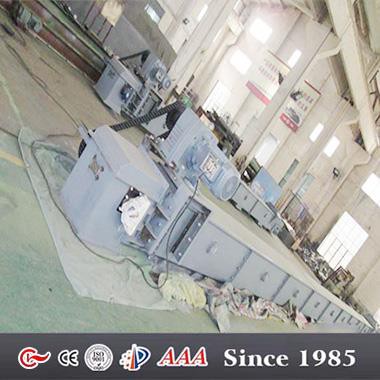

Another advantage is that drag conveyors are relatively simple in design. They don't have a lot of complex moving parts, which means they're easier to maintain and less likely to break down. This can save a lot of time and money in the long run.
Drag conveyors are also very efficient. They can move material at a consistent rate, which helps to keep the production process running smoothly. And because they can be customized to fit the specific requirements of the application, they can be a great solution for even the most challenging material handling tasks.
Applications of Drag Conveyors
Let's take a look at some of the common applications of drag conveyors. One of the most well - known applications is in the agricultural industry. Grain Drag Conveyor Drag Chain Conveyor are used to move grains from storage bins to processing equipment or to transport them to trucks for shipping. They're ideal for this application because they can handle the large volumes of grain efficiently and gently, without damaging the kernels.
In the food processing industry, drag conveyors are used to move ingredients, finished products, and even waste materials. They can be designed to meet strict hygiene standards, which is crucial in this industry. For example, they can be made with stainless steel components that are easy to clean and sanitize.
In the mining industry, drag conveyors are used to move coal, ore, and other minerals. They can handle the heavy and abrasive materials that are commonly found in mining operations. The robust design of the conveyor ensures that it can withstand the harsh conditions and the high volumes of material being moved.
Maintenance and Troubleshooting
Like any piece of equipment, drag conveyors need regular maintenance to keep them running smoothly. One of the most important things is to keep the chain or belt properly tensioned. If the chain or belt is too loose, it can slip or come off the sprockets, which can cause the conveyor to stop working. On the other hand, if it's too tight, it can put extra stress on the motor and other components, leading to premature wear and tear.
It's also important to keep the trough clean. Over time, material can build up in the trough, which can reduce the efficiency of the conveyor. Regular cleaning can help to prevent this from happening.
If you run into any problems with your drag conveyor, there are a few things you can check. First, make sure the motor is running properly. Check the power supply and look for any signs of overheating or unusual noises. If the conveyor isn't moving the material as it should, check the chain or belt for damage or blockages. Sometimes, a simple blockage can be the cause of the problem.
Conclusion
Well, that's a pretty good overview of how a drag conveyor works. As you can see, it's a simple yet effective piece of equipment that has a wide range of applications. Whether you're in the agricultural, food processing, mining, or any other industry, a drag conveyor could be the solution to your material handling needs.
If you're interested in learning more about our drag conveyors or if you have a specific application in mind, don't hesitate to reach out. We're here to help you find the right conveyor for your needs and to provide you with all the support you need to keep it running smoothly.
References
- Conveyor Handbook, Industry Press
- Material Handling Equipment: Principles and Applications, Academic Publishing