

In the realm of industrial material handling, the question of whether a mass conveyor can handle different types of materials is both crucial and complex. As a supplier of mass conveyors, I've witnessed firsthand the diverse needs of industries and the capabilities of our equipment in meeting those demands.
Understanding Mass Conveyors
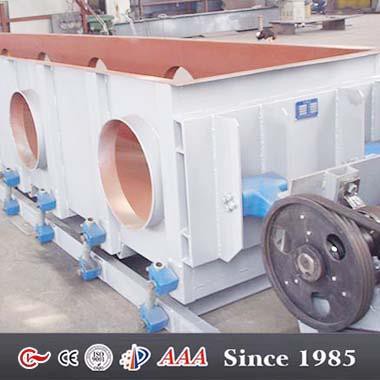
Mass conveyors, also known as vibration conveyors, are designed to move bulk materials efficiently. They operate on the principle of vibration, which allows materials to be transported along a trough or channel. The basic design consists of a trough, a vibration mechanism, and a support structure. The vibration mechanism generates a controlled vibration that causes the material to move forward in a smooth and continuous manner.
One of the key advantages of mass conveyors is their ability to handle a wide range of materials. Unlike some other types of conveyors that are specialized for specific materials, mass conveyors can be adapted to handle various types of bulk solids, including powders, granules, and even small pieces of irregularly shaped materials.
Handling Different Material Characteristics
Powders
Powders are among the most challenging materials to handle due to their fine particle size and tendency to flow differently depending on factors such as moisture content and particle shape. Mass conveyors can effectively handle powders by adjusting the vibration frequency and amplitude. A higher frequency and lower amplitude vibration can be used to prevent the powder from compacting and ensure a smooth flow. Additionally, the trough design can be optimized to minimize dust generation and prevent powder from sticking to the conveyor surfaces.
For example, in the pharmaceutical industry, mass conveyors are used to transport fine powders during the manufacturing process. The ability to handle these powders without contamination or loss is essential for maintaining product quality. Our Mass Conveyor for Bulk Material Handling is specifically designed to meet the strict requirements of the pharmaceutical industry, with features such as smooth surfaces and easy cleaning to prevent cross - contamination.
Granules
Granules are larger than powders and generally have better flow properties. However, they can still pose challenges, especially if they are abrasive or have a tendency to segregate. Mass conveyors can handle granules by adjusting the vibration parameters to match the granule size and density. A lower frequency and higher amplitude vibration can be used to move larger granules more effectively.
In the food industry, mass conveyors are commonly used to transport granules such as grains, sugar, and salt. The conveyor's ability to handle these materials gently without damaging the granules is crucial for maintaining product integrity. Our Vibration Conveyor Mass Conveyor is designed with a gentle vibration mechanism that ensures the safe and efficient transport of granules.
Irregularly Shaped Materials
Irregularly shaped materials, such as chunks of ore or pieces of scrap metal, can be difficult to handle with traditional conveyors. Mass conveyors, however, can adapt to these materials due to their flexible trough design and the nature of the vibration. The vibration allows the irregularly shaped materials to move along the trough without getting stuck or causing blockages.
In the mining and recycling industries, mass conveyors are used to transport large quantities of irregularly shaped materials. The conveyor's ability to handle these materials continuously and efficiently is essential for the overall productivity of the operations.
Factors Affecting Material Handling
Material Density
The density of the material has a significant impact on the performance of a mass conveyor. Heavier materials require more energy to move, and the vibration parameters need to be adjusted accordingly. A higher amplitude and lower frequency vibration may be necessary to move dense materials.
Moisture Content
Moisture can affect the flow properties of materials. Wet materials may be more sticky and difficult to move, while dry materials may generate more dust. Mass conveyors can be designed with features such as heating elements or dust collection systems to address these issues.
Abrasiveness
Abrasive materials can wear down the conveyor components over time. To handle abrasive materials, mass conveyors can be equipped with wear - resistant liners on the trough surfaces. These liners can significantly extend the lifespan of the conveyor and reduce maintenance costs.
Customization for Different Materials
One of the strengths of our mass conveyors is their high degree of customization. We understand that different industries and applications have unique requirements, and we work closely with our customers to design conveyors that are tailored to their specific needs.
For example, if a customer needs to handle a highly corrosive material, we can use corrosion - resistant materials in the construction of the conveyor. If the material requires a specific temperature range during transport, we can incorporate heating or cooling systems into the conveyor design.
Case Studies
Let's take a look at some real - world examples of how our mass conveyors have been used to handle different types of materials.

Chemical Industry
A chemical company needed to transport a variety of powders and granules during their manufacturing process. The materials had different densities, flow properties, and chemical compositions. We designed a customized mass conveyor with adjustable vibration parameters and a special trough coating to prevent chemical reactions. The conveyor has been operating smoothly for several years, providing reliable and efficient material handling for the company.
Recycling Industry
A recycling facility needed to handle large volumes of irregularly shaped scrap metal. The existing conveyor system was prone to blockages and frequent breakdowns. We installed a mass conveyor with a robust design and a high - amplitude vibration mechanism. The new conveyor has significantly improved the throughput of the recycling facility and reduced maintenance costs.
Conclusion
In conclusion, a mass conveyor can indeed handle different types of materials. Through careful design, adjustment of vibration parameters, and customization, mass conveyors can meet the diverse needs of various industries. As a supplier, we are committed to providing high - quality, reliable, and customized mass conveyors that can handle any material challenge.
If you are looking for a mass conveyor solution for your specific material handling needs, we invite you to contact us for a consultation. Our team of experts will work with you to understand your requirements and design the perfect conveyor for your application.
References
- "Bulk Material Handling Handbook" by Klaus Schwerdtfeger
- "Vibration Conveying Technology" by various industry experts