

Hey there! As a supplier of CEMA conveyors, I often get asked if these conveyors can be used in hazardous environments. It's a super important question, especially considering the safety risks involved in such settings. So, let's dig into this topic and find out if CEMA conveyors are up to the task.
First off, what exactly is a CEMA conveyor? CEMA stands for Conveyor Equipment Manufacturers Association. These conveyors are designed according to the standards set by this association, which ensures a certain level of quality and performance. They come in various types, like belt conveyors, screw conveyors, and more. Each type has its own unique features and is suitable for different applications.
Now, let's talk about hazardous environments. These can include places with explosive gases, flammable dust, or corrosive substances. The main concern when using any equipment in such areas is safety. We need to make sure that the conveyor doesn't spark, generate heat, or release any substances that could cause an explosion or fire.
So, can a CEMA conveyor be used in a hazardous environment? The answer is yes, but with some important considerations.
Design and Construction
One of the key factors is the design and construction of the conveyor. For example, in an environment with explosive gases, the conveyor needs to be designed to prevent the ignition of these gases. This might involve using explosion-proof motors, electrical components, and enclosures. The conveyor should also be properly grounded to prevent static electricity buildup, which could potentially cause a spark.
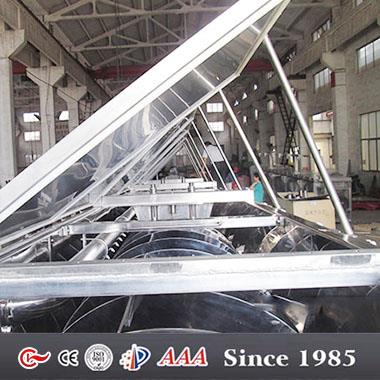
When it comes to screw conveyors, which are a popular type of CEMA conveyor, they need to be made from materials that can withstand the harsh conditions of a hazardous environment. For instance, if the environment is corrosive, the conveyor should be made from corrosion-resistant materials like stainless steel.

Safety Features
Another important aspect is the safety features of the conveyor. Many CEMA conveyors come with built-in safety features such as emergency stop buttons, overload protection, and belt alignment sensors. These features are even more crucial in a hazardous environment. For example, an emergency stop button can quickly shut down the conveyor in case of an emergency, preventing further damage or danger.
Maintenance and Inspection
Regular maintenance and inspection are also essential when using a CEMA conveyor in a hazardous environment. The conveyor should be inspected regularly for any signs of wear and tear, damage, or malfunction. Any issues should be addressed immediately to ensure the safe operation of the conveyor.
Compliance with Standards
In addition to the CEMA standards, the conveyor also needs to comply with other relevant safety standards for hazardous environments. For example, in the United States, the National Fire Protection Association (NFPA) has standards for electrical equipment in hazardous locations. The conveyor should be designed and installed in accordance with these standards to ensure compliance.
Examples of CEMA Conveyors in Hazardous Environments
Let's take a look at some examples of how CEMA conveyors can be used in hazardous environments.
- Mining Industry: In mines, there are often flammable dusts and gases. CEMA belt conveyors can be used to transport materials such as coal or ore. These conveyors are designed with explosion-proof components and proper ventilation systems to prevent the accumulation of flammable substances.
- Chemical Industry: The chemical industry often deals with corrosive substances. CEMA screw conveyors made from stainless steel can be used to transport chemicals safely. These conveyors are designed to prevent leaks and spills, which could be dangerous in a chemical environment.
Our Products
As a supplier of CEMA conveyors, we offer a wide range of products that are suitable for hazardous environments. For example, our Food Grade U Trough Screw Conveyor for Powder Feeding System is made from high-quality materials and can be customized to meet the specific requirements of a hazardous environment. It has a sealed design to prevent the leakage of powder, which is important in an environment where dust could be a hazard.
We also have Portable Conveyor Systems that are easy to move and install. These conveyors are designed with safety in mind and can be used in various hazardous environments such as construction sites or warehouses.
And our Screw Conveyor Equipment is built to last. It comes with a range of safety features and can be made from different materials depending on the needs of the environment.
Conclusion
In conclusion, a CEMA conveyor can definitely be used in a hazardous environment, but it requires careful consideration of design, construction, safety features, maintenance, and compliance with standards. As a supplier, we are committed to providing high-quality conveyors that meet the safety requirements of our customers in hazardous environments.
If you're in the market for a CEMA conveyor for a hazardous environment, don't hesitate to reach out. We have a team of experts who can help you choose the right conveyor for your specific needs. Whether you're in the mining, chemical, or any other industry, we've got you covered.
References
- Conveyor Equipment Manufacturers Association (CEMA) standards
- National Fire Protection Association (NFPA) standards for hazardous locations