

When using a hollow shaft cooling conveyor, the following environmental factors must be considered to ensure stable operation and cooling effect:
1. Ambient temperature and humidity
The ambient temperature directly affects the heat dissipation efficiency of the cooling medium. If the ambient temperature is too high, the cooling medium (such as water or coolant) will have difficulty in absorbing heat and dissipating it through the system, which may lead to a decrease in cooling capacity. For example, in high-temperature environments in summer, additional refrigeration equipment or increased cooling medium circulation volume are required to avoid equipment overheating due to excessive ambient heat load.
Humidity may affect material properties and equipment corrosion risks. In high humidity environments, metal hollow shafts and conveyor belts are prone to rust, so corrosion-resistant materials (such as stainless steel) or enhanced surface protection are required. If the material is highly hygroscopic (such as food or chemical powders), it is also necessary to control moisture condensation during the cooling process to prevent the material from agglomerating or deteriorating.
2. Dust and pollutants
Dust commonly seen in industrial scenarios (such as metal processing debris and mineral powder) may enter the cooling channel of the hollow shaft or the gap of the conveyor belt, blocking the pipeline or aggravating mechanical wear. A dust cover or negative pressure dust suction device must be installed at the entrance of the equipment, and the cooling medium filtration system must be cleaned regularly to prevent impurities from affecting the cooling efficiency. For high-dust environments, the sealing design of bearings and transmission components must also be strengthened to prevent dust intrusion from causing equipment failure.
3. Ventilation and heat dissipation conditions
The ventilation conditions around the equipment directly affect its heat dissipation capacity. If it is installed in a closed or poorly ventilated space, the heat dissipation efficiency of the cooling medium circulation system will be significantly reduced, which may cause the cooling medium temperature to continue to rise and fail to achieve the expected cooling effect. Therefore, it is necessary to ensure that there is enough ventilation space around the equipment, or configure a forced exhaust system (such as a fan, cooling fan) to accelerate air circulation and assist the system in heat dissipation.
4. Corrosive gas or liquid
In highly corrosive environments such as chemical and metallurgical industries, the cooling medium or surrounding gas may contain acidic or alkaline substances (such as sulfides and salt spray), and long-term contact will corrode the inner wall of the hollow shaft, conveyor belt and metal structure. It is necessary to select corrosion-resistant materials (such as titanium alloys and fluoroplastics) or coat the surface of the equipment (such as epoxy resin and chrome plating), and regularly check the sealing of the cooling system to prevent safety hazards caused by medium leakage.
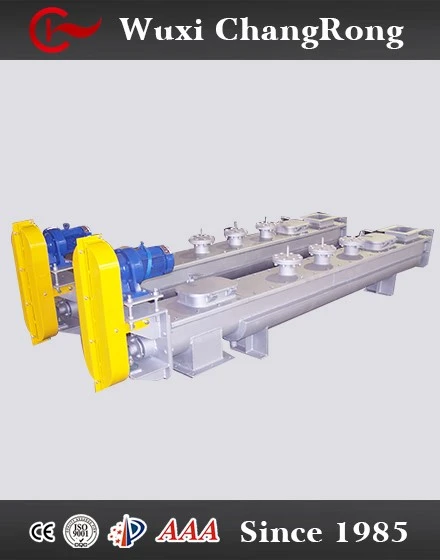
5. Vibration and installation stability
Environmental vibration may cause the cooling pipe interface to loosen, the conveyor belt to deviate, or the hollow shaft to deform, affecting the cooling uniformity and equipment life. During installation, ensure that the equipment base is firm (such as using shock-absorbing pads, concrete foundation), and perform anti-vibration design on the transmission parts (such as gears, couplings). For high-frequency vibration environments (such as those near large machinery), it is necessary to add flexible connecting pipes to reduce the impact of vibration on the cooling system.
VI. Energy supply and emission requirements
The circulation of cooling media (such as water pumps and refrigerators) requires a stable power supply, and the stability of power supply in the environment needs to be evaluated to avoid voltage fluctuations affecting equipment operation. In addition, some industries have environmental protection requirements for cooling medium emissions (such as wastewater temperature and pollutant concentration), and corresponding treatment systems (such as heat exchangers and filtration devices) need to be configured to ensure that emissions meet standards and avoid environmental pollution.
Summarize
Environmental factors are directly related to the performance and reliability of hollow shaft cooling conveyors. Through targeted design (such as corrosion-resistant materials, dust-proof structures), dynamic monitoring (such as temperature sensors, dust concentration monitoring) and adaptive adjustment (such as ventilation systems, cooling parameter adjustments), we can effectively cope with complex environmental challenges and ensure efficient and safe operation of the equipment.
If you have any questions or need more details about Flexible Material Slitting Machine , feel free to contact us, we will serve you wholeheartedly!
If you want to know what environmental factors need to be considered when using the Hollow Shaft Cooling Conveyor systems, you can contact Changrong 's professional technicians and we will do our best to help you!