

When to use a continuous screw feeder? This is a common question that many customers in the industry often ask. As a reputable supplier of screw feeders, I'm here to shed light on this topic and provide you with valuable insights to help you make an informed decision.
Understanding the Basics of Continuous Screw Feeders
A continuous screw feeder, also known as an auger feeder, is a mechanical device used to transport and meter bulk materials at a consistent rate. It consists of a rotating screw blade inside a tube or trough, which moves the material along the axis of the screw. These feeders are widely used in various industries, including food processing, pharmaceuticals, chemicals, and mining, due to their simplicity, reliability, and ability to handle a wide range of materials.
Key Factors Influencing the Use of Continuous Screw Feeders
Material Characteristics
One of the primary factors to consider when deciding whether to use a continuous screw feeder is the characteristics of the material being handled. Screw feeders are well-suited for handling free-flowing and granular materials, such as grains, powders, and pellets. The screw design allows for efficient conveyance of these materials without causing excessive degradation or segregation.
However, if the material is sticky, cohesive, or has a high moisture content, it may pose challenges for a continuous screw feeder. In such cases, special screw designs or additional features may be required to prevent material build-up and ensure smooth flow. For instance, using a variable pitch screw or a self-cleaning screw can help mitigate issues associated with sticky materials.
Feed Rate and Accuracy Requirements
The required feed rate and accuracy are crucial considerations when selecting a screw feeder. Continuous screw feeders are capable of providing a consistent feed rate over a wide range, making them suitable for applications where a steady supply of material is needed. They can be easily adjusted to achieve different feed rates by changing the speed of the screw or the pitch of the blade.
For applications that demand high accuracy in material dosing, such as in pharmaceutical manufacturing or chemical blending, the choice of a continuous screw feeder becomes even more critical. High-precision screw feeders can be equipped with advanced control systems, such as variable frequency drives and load cells, to ensure precise and repeatable feeding.
Process Requirements
The overall process requirements play a significant role in determining whether a continuous screw feeder is the right choice. In continuous processes, where materials need to be fed continuously into a production line, screw feeders are an ideal solution. They can be integrated seamlessly with other processing equipment, such as mixers, conveyors, and reactors, to ensure a smooth and efficient operation.
In batch processes, on the other hand, the use of a continuous screw feeder may need to be carefully evaluated. While they can still be used to feed materials into a batch system, additional considerations may be required to ensure proper batch control and material handling. For example, using a hopper with level sensors to control the amount of material fed into the batch can help maintain consistent batch quality.
Specific Applications Where Continuous Screw Feeders Excel
Food Processing Industry
In the food processing industry, continuous screw feeders are used extensively for handling ingredients such as flour, sugar, cereals, and spices. They provide a reliable and hygienic way to transport and meter these materials, ensuring consistent product quality and production efficiency. For example, in a bread-making process, a screw feeder can be used to accurately dose flour into the mixer, ensuring the right dough consistency.
Pharmaceutical Industry
The pharmaceutical industry requires precise and contamination-free material handling. Continuous screw feeders are well-suited for this industry, as they can be designed to meet strict sanitary standards. They are used for feeding active pharmaceutical ingredients (APIs), excipients, and other powders into various processing equipment, such as tablet presses and capsule fillers.
Chemical Industry
In the chemical industry, screw feeders are used for handling a wide range of chemicals, including powders, granules, and flakes. They can be made from corrosion-resistant materials to ensure long-term durability and prevent chemical reactions. For instance, in a chemical blending process, a screw feeder can be used to accurately mix different chemicals in the right proportions.
Mining and Aggregate Industry
In the mining and aggregate industry, continuous screw feeders are used for transporting and metering bulk materials such as coal, ore, and sand. They can handle large volumes of material and are designed to withstand harsh operating conditions. For example, in a coal-fired power plant, a screw feeder can be used to feed coal into the boiler at a consistent rate.
Comparing Continuous Screw Feeders with Other Feeding Options
While continuous screw feeders offer many advantages, it's important to compare them with other feeding options to determine the most suitable solution for your specific application.
Belt Feeders
Belt feeders are commonly used for handling large quantities of bulk materials over long distances. They are suitable for materials that are not easily conveyed by a screw, such as large chunks or irregularly shaped particles. However, belt feeders may not provide the same level of accuracy in material dosing as continuous screw feeders, and they require more maintenance due to the moving belt.

Vibratory Feeders
Vibratory feeders use vibrations to move materials. They are suitable for handling small, light, and free-flowing materials. Vibratory feeders can provide a high feed rate, but they may not be as effective for handling cohesive or sticky materials. Additionally, they can generate significant noise and require a stable mounting surface.
Exploring Different Types of Screw Feeders
As a screw feeder supplier, we offer a variety of screw feeders to meet the diverse needs of our customers. Two popular types are the Twin Screw Feeder Feed Conveyor System Twin Screw Feeder Feed Conveyor System and the Small Auger Feeders Screw Feeders Small Auger Feeders Screw Feeders.
Twin Screw Feeders
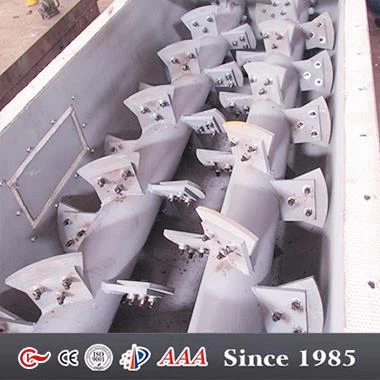
Twin screw feeders consist of two parallel screws that rotate in opposite directions. This design provides a more positive and efficient feeding action, especially for difficult-to-handle materials. Twin screw feeders are often used in applications where high accuracy and a controlled feed rate are required, such as in the pharmaceutical and chemical industries.
Small Auger Feeders
Small auger feeders are compact and suitable for applications with limited space or low feed rate requirements. They are commonly used in laboratory settings or small-scale production lines. These feeders are easy to install and maintain, making them a cost-effective solution for many applications.
Making the Right Choice
When considering whether to use a continuous screw feeder, it's essential to take into account all the factors discussed above. Conduct a thorough analysis of your material characteristics, feed rate and accuracy requirements, and overall process needs. If you're still unsure which type of feeder is best for your application, our team of experts is here to help.
As a screw feeder supplier, we have the experience and expertise to recommend the most suitable solution for your specific requirements. We offer high-quality screw feeders that are designed and manufactured to the highest standards, ensuring reliable performance and long service life.
Contact Us for Purchasing and Discussion
If you're interested in learning more about our continuous screw feeders or would like to discuss your specific application, please don't hesitate to get in touch with us. We're committed to providing you with the best products and services to meet your needs. Whether you're a small business or a large corporation, we have the right solution for you. Let's work together to optimize your production process and achieve your goals.
References
- Smith, J. (2019). Handbook of Bulk Materials Handling. Wiley.
- Brown, M. (2020). Feeding and Conveying Equipment in Industrial Processes. Elsevier.
- Johnson, R. (2021). Screw Feeders: Design and Application. Chemical Engineering Publications.