

Yo, folks! I'm an owner of a drag conveyor supplier, and I'm stoked to chat with you about what materials a drag conveyor can handle. Drag conveyors are pretty versatile machines, and they've got a wide range of applications in different industries. In this blog post, I'll break down some of the most common materials that these bad boys can deal with.
Powdery Materials
Let's start with powdery stuff. Materials like cement, flour, sugar, and various types of chemicals are often in powder form in industrial settings. Drag conveyors are great for moving these powders because they can operate in a sealed environment. This helps to prevent dust from escaping into the air, which is not only good for the environment but also for the health of workers.
For instance, in a cement plant, a drag conveyor can efficiently move cement powder from the storage silos to the loading area. The enclosed design of the conveyor keeps the fine cement dust from spreading, and it can handle the continuous flow of this heavy powder without much hassle. The chain and flight design of the drag conveyor allows it to push the powder along the trough, ensuring a smooth and consistent transfer.
Granular Materials
Granular materials are another big category that drag conveyors excel at handling. Grains, fertilizers, and plastic pellets are all examples of granular materials. These materials are usually free - flowing, but they can also be abrasive or have different degrees of moisture content.
Grain is a prime example. Grain Drag Conveyor Drag Chain Conveyor can be used in farms, grain elevators, and food processing plants. The conveyor can move large quantities of wheat, corn, or rice from one location to another. The adjustable speed and the ability to incline the conveyor make it suitable for different setups. Whether it's moving grain from a storage bin to a processing machine or from a truck to a storage facility, a drag conveyor can do the job.

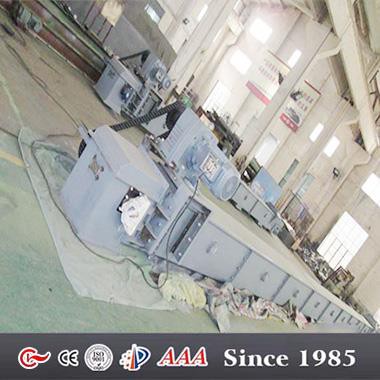
Fertilizers also vary in size and shape, but a well - designed drag conveyor can handle them all. The durability of the conveyor's components is crucial here because fertilizers can be corrosive. Special coatings and materials can be used to ensure the conveyor lasts a long time and operates smoothly.
Bulk Solids
Bulk solids are a bit different from powdery and granular materials. They are larger in size and can include things like wood chips, coal, and crushed stones. Drag conveyors are capable of moving these bulk solids over long distances and can even handle changes in elevation.
In a coal - fired power plant, a drag conveyor can transfer coal from the unloading area to the coal storage bunker and then to the boilers. The heavy - duty design of the drag conveyor can withstand the weight and abrasiveness of the coal. The chain and flight assembly is strong enough to push the coal along the trough, and the conveyor can be customized to fit the specific layout of the power plant.
Wood chips are another example. In the paper - making industry, drag conveyors are used to move wood chips from the storage yard to the processing equipment. The conveyor needs to be able to handle irregularly shaped wood chips and ensure a continuous flow to keep the production line running smoothly.
Sludges and Pastes
You might not think that sludges and pastes can be moved by a drag conveyor, but they can! In wastewater treatment plants, for example, sludge is a by - product that needs to be removed and transported. Drag conveyors can handle the thick and sticky nature of sludge.
The design of the conveyor can be adjusted to deal with the high viscosity of the sludge. Special flights can be used to prevent the sludge from sticking to the conveyor components, and the conveyor can be operated at a slow speed to ensure a steady flow. Similarly, in the food industry, pastes like tomato paste or peanut butter can also be transported using drag conveyors with the right modifications.
Factors Affecting Material Handling
Now, there are a few factors that affect how well a drag conveyor can handle different materials. First off, the material's properties play a huge role. Density, particle size, moisture content, and abrasiveness all matter. If a material is too dense or abrasive, it can put more strain on the conveyor's components. So, we need to choose the right materials for the chain, flight, and trough to ensure long - term performance.
The conveyor's design is also important. The speed at which the conveyor operates, the size of the trough, and the type of chain and flight arrangement all impact its ability to handle different materials. For example, a slower speed might be better for moving sticky materials, while a high - speed conveyor could be used for free - flowing granular materials.
Customization for Specific Materials
As a drag conveyor supplier, we understand that different customers have different needs. That's why we offer customization options for our conveyors. If you're dealing with a unique material, we can work with you to design a conveyor that's just right for your application.
We can use different types of chains, such as roller chains or welded chains, depending on the load requirements and the nature of the material. The flights can be made in different shapes and sizes to optimize the movement of the material. We can also choose the right trough material, whether it's stainless steel for a food - grade application or a heavy - duty carbon steel for handling abrasive materials.
Conclusion
So, to sum it up, drag conveyors are super versatile machines that can handle a wide range of materials, from powdery substances to bulk solids, sludges, and pastes. Their ability to operate in different conditions and be customized makes them a great choice for many industries.
If you're in the market for a drag conveyor to handle your specific materials, don't hesitate to reach out to us. We're here to help you find the perfect solution for your business needs. Whether you need a small, simple conveyor or a large, complex system, we've got the expertise and experience to make it happen. Just let us know what materials you're dealing with and what your requirements are, and we'll work with you to get the job done.
References
- Perry, R. H., & Green, D. W. (1997). Perry's Chemical Engineers' Handbook. McGraw - Hill.
- CEMA (Conveyor Equipment Manufacturers Association) standards for drag conveyors.