

Hey there! As a supplier of mass conveyors, I often get asked about the minimum width of a mass conveyor. It's a crucial question, especially when you're trying to figure out the most efficient and cost - effective solution for your bulk material handling needs.
Let's start by understanding what a mass conveyor is. A mass conveyor is a type of equipment used to move large quantities of bulk materials, like grains, minerals, or powders. It works by using vibration to transport the material along its length. You can check out more about Vibration Conveyor Mass Conveyor on our website.
The minimum width of a mass conveyor depends on several factors. First off, the type of material you're transporting plays a huge role. If you're dealing with fine powders, they tend to spread out more easily compared to larger granular materials. For fine powders, a wider conveyor might be needed to prevent spillage and ensure smooth flow. On the other hand, larger granular materials can be moved on a relatively narrower conveyor.
Another important factor is the flow rate. If you need to move a large amount of material in a short period, you'll likely need a wider conveyor. A narrow conveyor might not be able to handle the high volume, leading to blockages and inefficiencies. For example, in a mining operation where tons of ore need to be transported every hour, a wider mass conveyor is essential. You can find more details about Mass Conveyor for Bulk Material Handling to understand how different flow rates impact conveyor width.
The shape of the conveyor trough also affects the minimum width. Some conveyors have U - shaped troughs, while others have flat - bottomed ones. U - shaped troughs are great for containing the material and can sometimes allow for a narrower overall width because they keep the material more centered. Flat - bottomed troughs, however, might require a wider width to ensure the material doesn't spill over the sides.

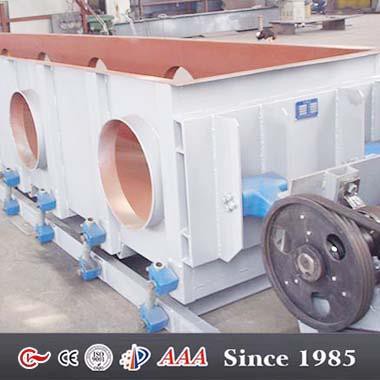
The vibration frequency and amplitude of the conveyor are also significant. Higher vibration frequencies can move the material more quickly, which might allow for a narrower conveyor in some cases. But if the amplitude is too high, it could cause the material to bounce around and potentially spill off a narrow conveyor. So, finding the right balance between frequency and amplitude is crucial when determining the minimum width.
Now, let's talk about some practical minimum width guidelines. For small - scale operations, like in a food processing plant where you're moving small amounts of grains or powders, a minimum width of around 12 inches (30.5 cm) might be sufficient. This width can handle the flow rate and prevent spillage for these low - volume applications.
In medium - scale industrial settings, such as a chemical plant moving bulk chemicals, a minimum width of 24 inches (61 cm) is often a good starting point. This width can accommodate a moderate flow rate and is suitable for a variety of bulk materials.
For large - scale mining or heavy - industry applications, the minimum width can go up to 48 inches (122 cm) or more. These conveyors need to handle massive amounts of material, and a wider width ensures that the material can be transported efficiently without any major issues.
It's important to note that these are just general guidelines. Every application is unique, and you need to consider all the factors we've discussed to determine the exact minimum width for your specific needs.
When you're choosing a mass conveyor, it's not just about the minimum width. You also need to think about the length, the type of drive system, and the overall durability of the conveyor. A well - designed conveyor should be able to handle your material smoothly, with minimal maintenance requirements.
We, as a mass conveyor supplier, have years of experience in designing and manufacturing conveyors for a wide range of industries. We can help you analyze your specific requirements and come up with the best solution for your bulk material handling needs. Whether you need a narrow conveyor for a small - scale operation or a wide one for a large - scale industrial application, we've got you covered.
If you're interested in learning more about our mass conveyors or want to discuss your project in detail, we'd love to hear from you. Just reach out, and our team of experts will be happy to assist you in finding the perfect mass conveyor for your business.
References
- Bulk Material Handling Handbook
- Industrial Conveyor Design and Application Manual