

Hey there! I'm a supplier of mixers, and today I wanna chat with you about what a mixer is. You might think, "Well, it's just a thing that mixes stuff, right?" Yeah, that's the basic idea, but there's a whole lot more to it.
So, at its core, a mixer is a machine designed to combine different materials together. These materials can be solids, liquids, or even a combination of both. The goal is to create a homogeneous mixture where all the components are evenly distributed. This is super important in a ton of industries, from food and beverage to construction and chemical manufacturing.
Let's start with the different types of mixers out there. One of the most common types is the paddle mixer. It's pretty simple in design. It has a set of paddles attached to a rotating shaft. As the shaft spins, the paddles move through the materials, pushing and pulling them to mix them up. Paddle mixers are great for mixing dry powders, like flour in a bakery or cement in a construction site. They're also used for mixing thick pastes, like certain types of adhesives.
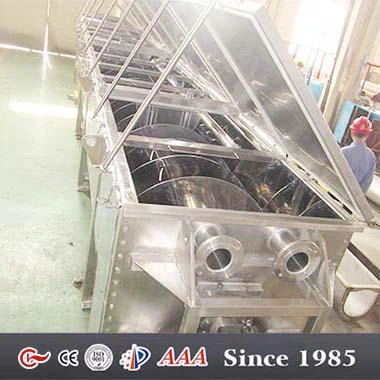
Then there's the ribbon mixer. This type has a long, helical ribbon that rotates inside a trough. The ribbon moves the materials in a circular motion, creating a gentle yet effective mixing action. Ribbon mixers are often used for mixing dry ingredients, but they can also handle semi - solid materials. They're popular in the food industry for mixing things like spices, and in the chemical industry for blending powders and granules.
Now, if you're dealing with really tough mixing jobs, you might want to look into a high - shear mixer. These bad boys are designed to break down particles and disperse them evenly in a liquid. They work by creating a high - velocity flow of the material, which generates intense shear forces. High - shear mixers are used in industries like cosmetics, where they're used to mix oil and water - based ingredients to create creams and lotions, and in the pharmaceutical industry for making suspensions and emulsions.
As a mixer supplier, I know that choosing the right mixer for your specific needs is crucial. You gotta consider things like the type of materials you're mixing, the volume of production, and the level of mixing required. For example, if you're running a small coffee roasting business and you need to mix different types of coffee beans, a Conveyor Screw Coffee Screw Ribbon Mixer for Coffee System might be just what you need. It's designed to gently mix the beans without damaging them, ensuring a consistent flavor profile in every batch.
On the other hand, if you're in the wastewater treatment industry and you need to mix sludge, a Sludge Mixer Mixing Screw Conveyors is the way to go. These mixers are built to handle the thick, viscous nature of sludge and ensure that it's properly mixed with other treatment chemicals.
Another important factor to consider is the power and energy consumption of the mixer. You don't want a mixer that guzzles electricity like there's no tomorrow. Modern mixers are designed to be more energy - efficient, which not only saves you money in the long run but also helps the environment.
Maintenance is also a big deal. A good mixer should be easy to clean and maintain. You don't want to spend hours taking apart and putting back together a mixer just to keep it in good working condition. Look for mixers that have accessible parts and are made from durable materials.
One of the trends I'm seeing in the mixer industry is the use of automation. More and more companies are looking for mixers that can be integrated into automated production lines. This allows for greater control over the mixing process, reduces the need for manual labor, and improves the overall efficiency of the production.
When it comes to the cost of a mixer, it can vary widely depending on the type, size, and features. But remember, it's not just about the upfront cost. You also need to think about the long - term value. A high - quality mixer might cost more initially, but it'll last longer, require less maintenance, and give you better mixing results.
So, if you're in the market for a mixer, whether it's for a small - scale operation or a large industrial plant, I'm here to help. I've got a wide range of mixers to suit different needs and budgets. And I can provide you with all the information you need to make an informed decision.
If you're interested in learning more about our mixers or have any questions about which mixer would be best for your business, don't hesitate to reach out. We can have a detailed discussion about your requirements and find the perfect mixer solution for you. Let's start a conversation and see how we can take your mixing process to the next level.

References
- General knowledge of mixer technology and industry trends from years of experience in the mixer supply business.