

Hey there! As a supplier of mass conveyors, I've had the privilege of diving deep into the world of these amazing machines. Today, I'm gonna share with you the multi - stage operation features of a mass conveyor.
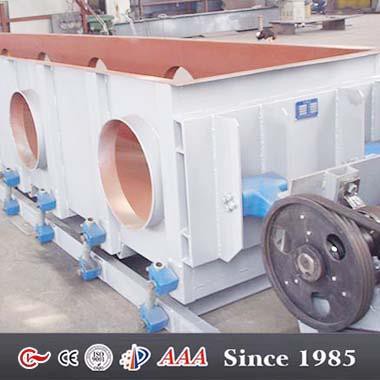
First off, let's understand what a mass conveyor is. It's a key piece of equipment in industries that deal with bulk materials. Whether it's mining, agriculture, or food processing, mass conveyors are used to move large volumes of materials from one place to another. You can check out more about Vibration Conveyor Mass Conveyor and Mass Conveyor for Bulk Material Handling on our website.
Loading Stage
The first stage of a mass conveyor's operation is the loading stage. This is where the bulk material is introduced to the conveyor. There are different ways to load materials onto the conveyor, depending on the type of material and the application.
For granular materials like grains or sand, hoppers are commonly used. The hopper is designed to store the material and feed it onto the conveyor at a controlled rate. This ensures that the conveyor isn't overloaded and that the material is evenly distributed across the belt or trough.
In some cases, where the material is in a more liquid or semi - liquid state, pumps or chutes may be used for loading. The goal here is to get the material onto the conveyor smoothly without causing any spills or blockages.
One of the important features of the loading stage is the ability to adjust the feed rate. This is crucial because different processes may require different amounts of material to be moved. Our mass conveyors are equipped with adjustable feed mechanisms that allow operators to fine - tune the amount of material being loaded.
Transport Stage
Once the material is loaded onto the conveyor, it enters the transport stage. This is the stage where the conveyor moves the material from the loading point to the discharge point.
The transport stage is characterized by the conveyor's ability to move the material over long distances and at different speeds. Our mass conveyors can be designed to operate at various speeds, depending on the requirements of the application. For example, in a high - volume production environment, a faster conveyor speed may be needed to keep up with the production rate.
Another important aspect of the transport stage is the conveyor's ability to handle different types of materials. Some materials may be abrasive, while others may be sticky. Our conveyors are built with special belts or troughs that can withstand the wear and tear caused by abrasive materials. For sticky materials, we use coatings or surface treatments to prevent the material from sticking to the conveyor.
The transport stage also involves the use of various components to ensure the smooth movement of the material. These components include rollers, idlers, and drive units. The rollers and idlers support the belt or trough and help to reduce friction, which in turn reduces energy consumption. The drive units provide the power needed to move the conveyor.
Discharge Stage
The discharge stage is the final stage of the mass conveyor's operation. This is where the material is unloaded from the conveyor and deposited at the desired location.
There are different types of discharge methods, depending on the application. One common method is the end - discharge, where the material is simply allowed to fall off the end of the conveyor. This is suitable for applications where the material can be dropped directly into a storage bin or another processing unit.
In some cases, side - discharge may be required. This is achieved using special discharge chutes or diverters. Side - discharge is useful when the material needs to be distributed to multiple locations or when there are space constraints at the end of the conveyor.
Our mass conveyors are designed with easy - to - clean discharge mechanisms. This is important because it helps to prevent the buildup of material, which can lead to blockages and reduced efficiency. We also offer discharge options that can be adjusted to control the flow of material during the discharge process.
Control and Monitoring Stage
In addition to the three main stages of operation, modern mass conveyors also have a control and monitoring stage. This stage is crucial for ensuring the safe and efficient operation of the conveyor.
We use advanced control systems that allow operators to monitor and adjust the conveyor's operation in real - time. These control systems can be programmed to perform various functions, such as starting and stopping the conveyor, adjusting the speed, and monitoring the temperature and vibration levels.
Monitoring sensors are installed at various points along the conveyor to detect any potential problems. For example, sensors can detect if the belt is slipping, if there is a blockage in the trough, or if the motor is overheating. If a problem is detected, the control system can automatically shut down the conveyor to prevent damage.
Maintenance and Safety Features
Throughout the multi - stage operation of a mass conveyor, maintenance and safety are of utmost importance. Our mass conveyors are designed with easy - access panels and inspection ports, which make it easier for maintenance personnel to perform routine checks and repairs.
We also incorporate safety features such as emergency stop buttons, guards, and interlocks. These features are designed to protect operators from potential hazards, such as moving parts and falling materials.
Regular maintenance is essential to keep the conveyor running smoothly. Our team provides detailed maintenance schedules and guidelines to ensure that the conveyor is properly maintained. This includes tasks such as lubricating the moving parts, checking the belt tension, and inspecting the electrical components.

Why Choose Our Mass Conveyors
As a supplier of mass conveyors, we take pride in offering high - quality products with excellent multi - stage operation features. Our conveyors are built to last, with durable materials and advanced engineering.
We understand that every customer's needs are different, which is why we offer customized solutions. Whether you need a conveyor for a small - scale operation or a large - scale industrial application, we can design and build a conveyor that meets your specific requirements.
If you're in the market for a mass conveyor, I encourage you to get in touch with us. We'd be more than happy to discuss your needs and provide you with a detailed quote. Our team of experts is always on hand to answer any questions you may have and to guide you through the selection process.
In conclusion, the multi - stage operation of a mass conveyor is a complex but well - coordinated process. From loading to discharge, each stage plays a crucial role in ensuring the efficient movement of bulk materials. Our mass conveyors are designed to optimize each stage of the operation, providing reliable and cost - effective solutions for a wide range of industries.
References
- Conveyor Handbook, Industry Standard Publication
- Bulk Material Handling: Theory and Practice, Academic Textbook