

As a supplier of custom mixers, I've witnessed firsthand the significance of achieving optimal mixing quality. A well - mixed product not only meets the desired standards but also enhances the efficiency and productivity of various industries. In this blog, I'll delve into the key factors that affect the mixing quality of a custom mixer.
Equipment Design
The design of the mixer is the cornerstone of achieving high - quality mixing. There are several aspects of the design that play a crucial role.
Mixing Chamber Geometry
The shape and size of the mixing chamber have a direct impact on the flow pattern of the materials. A properly designed chamber can ensure that all materials are uniformly exposed to the mixing action. For example, a cylindrical chamber with a carefully calculated diameter - to - height ratio can promote a more consistent flow of materials, reducing the likelihood of dead zones where materials remain unmixed. Some mixers are designed with conical bottoms, which can facilitate the discharge of materials and also contribute to better mixing by creating a unique flow pattern within the chamber.
Agitator Type and Configuration
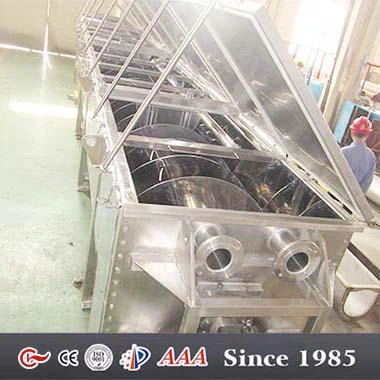
The agitator is the heart of the mixer. Different types of agitators, such as paddle, ribbon, and helical agitators, have distinct mixing characteristics. Paddle agitators are suitable for gentle mixing of viscous materials, while ribbon agitators are effective for blending dry powders and granular materials. The configuration of the agitator, including the number of blades, their pitch, and the rotation speed, also affects the mixing quality. A well - designed agitator should be able to generate sufficient shear forces to break up agglomerates and distribute the materials evenly. For instance, in a Sludge Mixer Mixing Screw Conveyors, the screw conveyor - based agitator is designed to handle the high - viscosity sludge and ensure proper mixing.
Material of Construction
The material of the mixer's components can influence the mixing quality in several ways. It should be compatible with the materials being mixed to prevent contamination. For example, when mixing food products, the mixer should be made of food - grade materials. Additionally, the surface finish of the mixing chamber and agitator can affect the adhesion of materials. A smooth surface finish reduces the likelihood of material buildup, ensuring that the mixing process remains consistent over time.
Material Properties
The characteristics of the materials being mixed are another set of critical factors.
Particle Size and Distribution
The particle size and its distribution in a mixture can significantly impact the mixing quality. Materials with a wide range of particle sizes may require more intensive mixing to achieve uniformity. Fine particles tend to agglomerate, and the mixer needs to have enough shear force to break these agglomerates. For example, in a Conveyor Screw Coffee Screw Ribbon Mixer for Coffee System, the different particle sizes of coffee beans and additives need to be evenly mixed. If the particle size distribution is not properly managed, it can lead to inconsistent flavor and quality in the final coffee product.
Density and Viscosity
The density and viscosity of the materials play a vital role in the mixing process. Materials with different densities may tend to separate during mixing, especially if the mixing forces are not sufficient. High - viscosity materials require more powerful agitators to ensure proper blending. For example, when mixing heavy - duty adhesives, a mixer with a high - torque agitator is necessary to overcome the resistance of the viscous material and achieve a homogeneous mixture.
Chemical Reactivity
If the materials being mixed are chemically reactive, the mixing process needs to be carefully controlled. The mixer should be designed to prevent premature reactions or ensure that the reactions occur in a controlled manner. For example, in the production of certain polymers, the mixing process needs to be precisely regulated to control the reaction rate and achieve the desired polymer properties.
Operating Conditions
The way the mixer is operated also has a significant impact on the mixing quality.

Mixing Time
Determining the appropriate mixing time is crucial. Too short a mixing time may result in an incomplete mixture, while an excessive mixing time can lead to over - mixing, which may damage the materials or consume unnecessary energy. The optimal mixing time depends on the equipment design, material properties, and the desired level of homogeneity. It often requires some trial - and - error to find the ideal mixing time for a specific application.
Rotation Speed
The rotation speed of the agitator affects the shear forces and the flow pattern within the mixer. A higher rotation speed generally generates more shear forces, which can be beneficial for breaking up agglomerates and achieving better mixing. However, too high a speed can also cause excessive heat generation, which may be detrimental to heat - sensitive materials. Therefore, the rotation speed needs to be carefully adjusted according to the material properties and the mixing requirements.
Loading Capacity
Overloading or under - loading the mixer can both affect the mixing quality. An overloaded mixer may not be able to provide sufficient agitation to all the materials, leading to uneven mixing. On the other hand, an under - loaded mixer may not operate at its optimal efficiency, resulting in a waste of energy. It is essential to follow the manufacturer's recommendations regarding the loading capacity of the mixer.
Maintenance and Calibration
Regular maintenance and calibration of the mixer are essential for maintaining high - quality mixing.
Component Wear
The components of the mixer, such as the agitator blades and seals, can wear out over time. Worn - out components can reduce the mixing efficiency and quality. For example, a damaged agitator blade may not generate the required shear forces, leading to poor mixing. Regular inspection and replacement of worn components are necessary to ensure the proper functioning of the mixer.
Calibration
Calibration of the mixer's sensors and controls is crucial for accurate operation. Incorrectly calibrated sensors can lead to inaccurate measurement of parameters such as temperature, rotation speed, and mixing time. This can result in inconsistent mixing quality. Regular calibration ensures that the mixer operates within the specified parameters and produces consistent results.
In conclusion, achieving high - quality mixing in a custom mixer is a complex process that involves multiple factors. From the equipment design, material properties, operating conditions, to maintenance and calibration, each aspect needs to be carefully considered and optimized. As a custom mixer supplier, I'm committed to providing our customers with mixers that are designed to meet their specific requirements and ensure excellent mixing quality.
If you're in the market for a custom mixer and want to discuss your specific needs, I encourage you to reach out. We can work together to find the best solution for your mixing requirements and help you achieve the highest level of mixing quality.
References
- Perry, R. H., & Green, D. W. (1997). Perry's Chemical Engineers' Handbook. McGraw - Hill.
- McCarthy, M. J. (2007). Food Properties Handbook. CRC Press.