

As a seasoned supplier of screw feeders, I've witnessed firsthand the critical role that discharge end designs play in the overall performance and efficiency of these essential industrial components. Screw feeders are widely used across various industries to convey, meter, and control the flow of bulk materials, from powders and granules to pellets and flakes. The design of the discharge end is crucial as it directly impacts the material flow rate, accuracy, and the integrity of the conveyed material. In this blog, I'll explore some of the most common discharge end designs for screw feeders and discuss their applications, advantages, and limitations.
Open Discharge End
The open discharge end is perhaps the simplest and most straightforward design for screw feeders. As the name suggests, this design features an open outlet at the end of the screw conveyor, allowing the material to flow freely out of the feeder. This design is commonly used in applications where a high flow rate is required, and precise metering is not necessary.

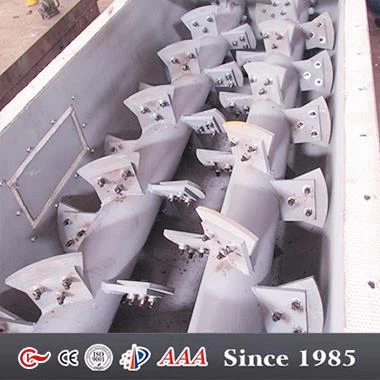
One of the primary advantages of the open discharge end is its simplicity and low cost. It requires minimal maintenance and is easy to clean, making it ideal for applications where frequent product changes or cleaning are required. Additionally, the open design allows for easy access to the interior of the feeder, which can be beneficial for inspection and maintenance purposes.
However, the open discharge end also has some limitations. Since the material flows freely out of the feeder, it can be difficult to control the flow rate accurately. This can lead to inconsistent feeding and potential issues with downstream processing equipment. Additionally, the open design may not be suitable for applications where dust containment or material segregation is a concern.
Diverter Gate Discharge End
A diverter gate discharge end is designed to provide greater control over the material flow by allowing the operator to divert the flow of material to different locations. This design typically consists of a gate or valve that can be opened or closed to direct the material flow to one or more discharge points.
The main advantage of a diverter gate discharge end is its flexibility. It allows for easy switching between different discharge locations, which can be useful in applications where multiple processing lines or storage bins are used. Additionally, the diverter gate can be used to control the flow rate by adjusting the opening size, providing a greater degree of accuracy compared to an open discharge end.
However, diverter gates can be more complex and expensive than open discharge ends. They require additional maintenance and may be prone to mechanical failures if not properly designed and installed. Additionally, the presence of the gate can create a potential blockage point, especially in applications where the material has a high tendency to bridge or pack.
Slide Gate Discharge End
A slide gate discharge end is similar to a diverter gate, but it operates by sliding a gate horizontally across the discharge opening to control the material flow. This design is commonly used in applications where a precise and adjustable flow rate is required.
The main advantage of a slide gate discharge end is its ability to provide accurate and repeatable flow control. The slide gate can be adjusted to open or close the discharge opening to a specific size, allowing for precise metering of the material. Additionally, the slide gate design is relatively simple and easy to maintain, making it a popular choice for many industrial applications.
However, slide gates can also be prone to wear and tear, especially in applications where the material is abrasive or has a high moisture content. Over time, the gate may become difficult to operate or may develop leaks, which can affect the accuracy of the flow control. Additionally, the slide gate design may not be suitable for applications where a high flow rate is required, as the gate can restrict the material flow if not properly sized.
Rotary Valve Discharge End
A rotary valve discharge end is a more sophisticated design that uses a rotating valve to control the material flow. The rotary valve consists of a rotor with multiple vanes that rotate within a housing, allowing the material to flow through the valve in a controlled manner.
One of the primary advantages of a rotary valve discharge end is its ability to provide a consistent and accurate flow rate. The rotating vanes of the valve create a seal between the feeder and the downstream equipment, preventing air leakage and ensuring that the material is discharged at a constant rate. Additionally, the rotary valve can be used to control the flow rate by adjusting the speed of the rotor, providing a high degree of flexibility and precision.
Another advantage of the rotary valve discharge end is its ability to handle a wide range of materials, including powders, granules, and pellets. The design of the valve allows it to handle materials with different flow characteristics, making it suitable for a variety of industrial applications.
However, rotary valves can be more expensive and complex than other discharge end designs. They require regular maintenance and calibration to ensure optimal performance, and they may be prone to mechanical failures if not properly designed and installed. Additionally, the presence of the valve can create a potential blockage point, especially in applications where the material has a high tendency to bridge or pack.
Conclusion
In conclusion, the choice of discharge end design for a screw feeder depends on several factors, including the type of material being conveyed, the required flow rate, the level of accuracy needed, and the specific requirements of the application. As a supplier of screw feeders, I understand the importance of selecting the right discharge end design to ensure optimal performance and efficiency.
At our company, we offer a wide range of screw feeders with different discharge end designs to meet the diverse needs of our customers. Whether you need a simple open discharge end for high-volume applications or a more sophisticated rotary valve discharge end for precise metering, we have the expertise and experience to provide you with the right solution.
If you're interested in learning more about our screw feeders and the different discharge end designs available, please visit our website at Twin Screw Feeder Feed Conveyor System and Small Auger Feeders Screw Feeders. Our team of experts is always available to answer your questions and help you select the right screw feeder for your application. Contact us today to start the conversation about your specific requirements and explore how our screw feeders can enhance your industrial processes.
References
- "Screw Conveyors Handbook," by Chemical Engineering
- "Bulk Solids Handling Handbook," by Chris Schrage