

Hey there! As a supplier of drag conveyors, I've seen firsthand how crucial it is to select the right materials for these workhorses in the chemical industry. Drag conveyors are used to move all sorts of chemical substances, from powders and granules to liquids and slurries. Picking the wrong materials can lead to all kinds of problems, like corrosion, wear and tear, and even safety hazards. So, in this blog, I'm gonna share some tips on how to choose the right materials for a drag conveyor in the chemical industry.
Understanding the Chemical Environment
The first step in selecting the right materials for a drag conveyor is to understand the chemical environment in which it will operate. Chemicals can be pretty harsh, and they can react with different materials in different ways. For example, some chemicals are highly corrosive, while others are abrasive. Some might be reactive with certain metals, and others might cause stress cracking in plastics.
You need to know the specific chemicals that the conveyor will be handling, including their concentration, temperature, and pH level. This info will help you determine which materials are resistant to the chemicals and can withstand the operating conditions. For instance, if you're dealing with a highly corrosive acid, you'll want to avoid using materials like carbon steel, which can rust and corrode quickly. Instead, you might consider using stainless steel or a plastic like polypropylene, which are more resistant to acids.
Types of Materials for Drag Conveyors
There are several types of materials commonly used in drag conveyors, each with its own advantages and disadvantages. Let's take a look at some of the most popular ones:
Metals
- Carbon Steel: This is a widely used material for drag conveyors because it's strong, durable, and relatively inexpensive. However, it's not very resistant to corrosion, so it's not suitable for handling corrosive chemicals. If you use carbon steel in a corrosive environment, you'll need to apply a protective coating, like paint or galvanizing, to prevent rusting.
- Stainless Steel: Stainless steel is a great choice for chemical applications because it's highly resistant to corrosion. It contains chromium, which forms a thin, protective layer on the surface of the metal that prevents rust and corrosion. There are different grades of stainless steel, each with different levels of corrosion resistance. For example, 304 stainless steel is suitable for most general chemical applications, while 316 stainless steel is more resistant to chloride-containing chemicals, like saltwater.
- Aluminum: Aluminum is lightweight, strong, and corrosion-resistant. It's also a good conductor of heat, which can be an advantage in some chemical processes. However, aluminum is not as strong as steel, so it might not be suitable for heavy-duty applications. It's also more expensive than carbon steel.
Plastics
- Polypropylene: Polypropylene is a popular plastic material for drag conveyors because it's lightweight, strong, and resistant to many chemicals. It's also relatively inexpensive and easy to fabricate. Polypropylene is commonly used in applications where corrosion resistance is important, such as handling acids, alkalis, and solvents.
- Polyethylene: Polyethylene is another plastic material that's often used in drag conveyors. It's similar to polypropylene in terms of its chemical resistance, but it's more flexible and has better impact resistance. Polyethylene is commonly used in applications where the conveyor needs to handle abrasive materials or where there's a risk of impact damage.
- Polytetrafluoroethylene (PTFE): PTFE, also known as Teflon, is a high-performance plastic material that's extremely resistant to chemicals, heat, and friction. It has a very low coefficient of friction, which means that materials can slide easily along the conveyor surface. PTFE is commonly used in applications where there's a need for a non-stick surface, such as handling sticky or viscous chemicals.
Ceramics
Ceramics are hard, brittle materials that are highly resistant to wear, corrosion, and heat. They're commonly used in applications where there's a need for high abrasion resistance, such as handling abrasive powders or granules. Ceramics can be used as lining materials for the conveyor trough or as components, like sprockets and bearings. However, ceramics are also expensive and can be difficult to fabricate and install.
Considerations for Material Selection
When choosing the materials for a drag conveyor in the chemical industry, there are several other factors to consider besides chemical resistance. Here are some of the key considerations:
Wear Resistance
If the conveyor will be handling abrasive materials, like sand or gravel, you'll need to choose materials that are highly wear-resistant. Metals like stainless steel and hardened carbon steel are good choices for wear resistance, as are ceramics and some plastics. You might also consider using a lining material, like rubber or polyurethane, to protect the conveyor trough from wear.
Temperature Resistance
The operating temperature of the chemical process can also affect the choice of materials. Some materials, like plastics, have a limited temperature range and can deform or melt at high temperatures. Metals, on the other hand, can withstand higher temperatures, but they might lose their strength or become brittle at extreme temperatures. You'll need to choose materials that can withstand the temperature range of the chemical process without losing their properties.

Cost
Cost is always a factor when choosing materials for a drag conveyor. You'll need to balance the cost of the materials with their performance and durability. While some materials, like ceramics and PTFE, are more expensive, they might offer better performance and longer service life, which can save you money in the long run. On the other hand, if the application doesn't require high-performance materials, you might be able to get away with using less expensive materials, like carbon steel or polypropylene.
Maintenance
The maintenance requirements of the materials are also important to consider. Some materials, like stainless steel, are relatively low-maintenance and can be easily cleaned and sanitized. Others, like carbon steel, might require regular maintenance, such as painting or coating, to prevent corrosion. You'll need to choose materials that are easy to maintain and that won't require a lot of downtime for repairs or replacements.
Conclusion
Selecting the right materials for a drag conveyor in the chemical industry is a critical decision that can have a big impact on the performance and reliability of the conveyor. By understanding the chemical environment, considering the types of materials available, and taking into account factors like wear resistance, temperature resistance, cost, and maintenance, you can choose the materials that are best suited for your application.
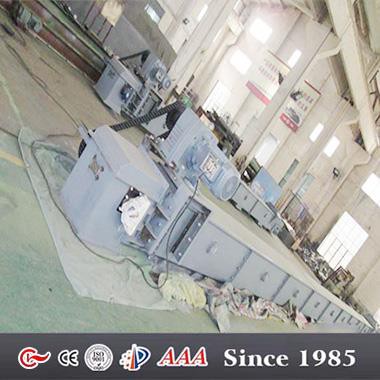
If you're in the market for a drag conveyor for your chemical process, I'd love to help. We offer a wide range of drag conveyors made from different materials to meet your specific needs. You can check out our Grain Drag Conveyor Drag Chain Conveyor for more information. Feel free to reach out to us to discuss your requirements and get a quote. We're here to help you find the perfect solution for your chemical handling needs.
References
- Chemical Engineering Handbook
- Corrosion Resistance of Materials Guide
- Conveyor Design and Selection Manual