

Hey there! As a supplier of Auger Feeders, I get asked a lot about how to select the appropriate size of these nifty machines. It's not as straightforward as you might think, but don't worry – I'm here to break it down for you.
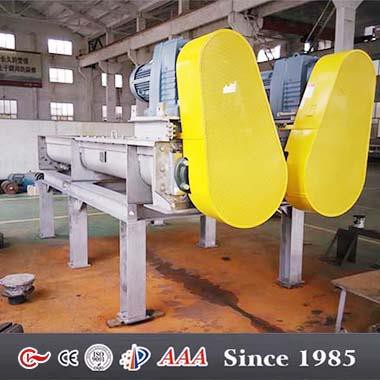
First off, let's understand what an Auger Feeder is. It's a device that uses a rotating helical screw blade, called an auger, to move materials from one place to another. They're super useful in a bunch of industries, like agriculture, food processing, and manufacturing. But getting the right size is crucial for efficient operation.
Factors to Consider
1. Material Characteristics
The type of material you're feeding through the Auger Feeder plays a huge role in determining the size. Different materials have different properties, such as density, flowability, and particle size.
For instance, if you're dealing with a dense material like sand or gravel, you'll need a larger and more robust Auger Feeder. These materials are heavy and can put a lot of stress on the auger, so you want to make sure it can handle the load. On the other hand, a lighter material like flour or sawdust can be fed through a smaller Auger Feeder.
The flowability of the material is also important. Some materials flow easily, while others tend to clump or stick. If you're working with a material that doesn't flow well, you might need a larger Auger Feeder with a higher pitch on the auger to help move the material along. You can check out Flour Silo Systems for more info on handling materials like flour.
2. Feed Rate
How much material do you need to move per unit of time? This is known as the feed rate, and it's a key factor in sizing an Auger Feeder. If you have a high feed rate requirement, you'll need a larger Auger Feeder with a faster rotating speed or a larger diameter auger.
Let's say you're running a large-scale manufacturing operation where you need to feed a lot of raw materials into a production line. In this case, a small Auger Feeder just won't cut it. You'll need a bigger one that can keep up with the demand. On the flip side, if you have a small-scale operation with a low feed rate, a smaller Auger Feeder will be sufficient.
3. Space Constraints
The available space in your facility is another important consideration. You need to make sure the Auger Feeder you choose will fit into the area where it will be installed. If you have limited space, you might have to go for a smaller Auger Feeder or a more compact design.
For example, if you're working in a tight corner of a warehouse, a large, bulky Auger Feeder might not be practical. You'll need to look for a model that can be installed vertically or at an angle to save space. You can also consider Wheat Storage Silos which might have integrated Auger Feeders that are designed to fit within specific storage setups.
4. Mounting and Installation
How you plan to mount and install the Auger Feeder can also affect the size you choose. Some Auger Feeders are designed to be mounted horizontally, while others can be installed vertically or at an angle. The mounting method can impact the overall dimensions and performance of the feeder.
If you're mounting the Auger Feeder vertically, you'll need to make sure it has enough clearance above and below to operate properly. You'll also need to consider the weight of the feeder and the materials it will be handling to ensure the mounting structure can support it. On the other hand, a horizontally mounted Auger Feeder might require more floor space but can be easier to access for maintenance.

Sizing Calculations
Now that we've covered the main factors to consider, let's talk about how to actually calculate the appropriate size of an Auger Feeder. There are a few formulas and equations that can help you with this, but don't worry – I'll keep it as simple as possible.
The first thing you need to know is the volumetric feed rate, which is the volume of material you need to move per unit of time. You can calculate this by multiplying the cross-sectional area of the material in the auger by the speed of the auger.
The cross-sectional area of the material in the auger depends on the diameter of the auger and the depth of the material in the flight (the space between the turns of the auger). The speed of the auger is usually given in revolutions per minute (RPM).
Once you have the volumetric feed rate, you can use it to determine the appropriate diameter and pitch of the auger. The diameter of the auger affects the capacity of the feeder, while the pitch (the distance between the turns of the auger) affects the speed at which the material is moved.
There are also some online calculators and software programs available that can help you with these calculations. These tools can take into account all the factors we've discussed and give you a more accurate sizing recommendation.
Choosing the Right Manufacturer
When it comes to selecting an Auger Feeder, choosing the right manufacturer is just as important as getting the right size. You want to work with a company that has a good reputation for quality and reliability.
Look for a manufacturer that offers a wide range of Auger Feeder sizes and configurations to meet your specific needs. They should also provide detailed technical information and support to help you choose the right feeder for your application.
You can also check out customer reviews and testimonials to get an idea of what other users have experienced with the manufacturer's products. A good manufacturer will stand behind their products and offer a warranty or guarantee.
If you're interested in a more comprehensive solution that includes an Auger Feeder, you might want to look into Screw Conveyors with Hopper Volumetric Feeder. These systems combine a hopper, a screw conveyor, and a volumetric feeder to provide a more efficient and accurate way to handle materials.
Conclusion
Selecting the appropriate size of an Auger Feeder is a critical step in ensuring the efficient and reliable operation of your material handling system. By considering the material characteristics, feed rate, space constraints, and mounting requirements, you can make an informed decision and choose the right feeder for your application.
If you're still not sure which Auger Feeder is right for you, don't hesitate to reach out to us. As a supplier, we have the expertise and experience to help you find the perfect solution for your needs. We can work with you to understand your requirements, perform the necessary calculations, and recommend the best Auger Feeder for your specific situation.
So, if you're in the market for an Auger Feeder, give us a call or send us an email. We're here to help you make the right choice and get your material handling system up and running smoothly.
References
- "Material Handling Handbook" by Raymond A. White
- "Auger Feeder Design and Application Guide" by a leading Auger Feeder manufacturer
- Online resources and industry articles on material handling and Auger Feeders