

Hey there! I'm from a screw feeders supplier, and today I wanna chat about how the filling ratio affects the performance of a screw feeder.
First off, let's get a basic understanding of what a screw feeder is. It's a device that uses a rotating screw to move materials from one place to another. It's super common in industries like agriculture, food processing, and chemical manufacturing. And as a supplier, we offer different types of screw feeders, like the Small Auger Feeders Screw Feeders and the Twin Screw Feeder Feed Conveyor System.
Now, the filling ratio is basically the proportion of the screw's volume that's filled with the material being conveyed. It can have a huge impact on how well the screw feeder works.
1. Material Flow and Consistency
When the filling ratio is too low, say less than 20%, the material might not flow smoothly through the screw feeder. There's not enough material to create a continuous flow, so it can lead to what we call "starving" of the feeder. This means that the screw is turning, but it's not moving a consistent amount of material. You might see gaps in the material flow, and it can be really hard to control the feed rate accurately.
For example, in a food processing plant where you're feeding ingredients into a mixer, if the filling ratio is too low, you won't get a uniform mixture because the ingredients aren't being added at a steady rate. On the other hand, if the filling ratio is too high, like over 80%, the material can become compacted. This makes it difficult for the screw to turn, and it can even cause the motor to overload. The compacted material might also start to bridge or arch inside the feeder, blocking the flow completely.
2. Power Consumption
The filling ratio also has a big effect on power consumption. When the filling ratio is low, the screw has to work harder to pick up the scattered material. It's like trying to scoop up a few grains of sand with a big shovel. The motor has to use more energy to turn the screw, even though it's not moving a lot of material. So, you end up with high power consumption for a low output.
As the filling ratio increases, the power consumption initially goes down because the screw can more easily pick up and move the material. But if the filling ratio gets too high, the power consumption shoots up again. The increased resistance from the compacted material means the motor has to work extra hard to keep the screw turning. This can lead to higher electricity bills and more wear and tear on the motor.
3. Wear and Tear
The filling ratio can also impact the wear and tear of the screw feeder. When the filling ratio is low, the screw might be hitting the sides of the trough more often because there's not enough material to cushion the movement. This can cause abrasion on the screw and the trough, reducing their lifespan.
When the filling ratio is high, the increased pressure from the compacted material can also cause more wear on the screw. The material can act like an abrasive, wearing down the surface of the screw over time. So, finding the right filling ratio is crucial to minimize wear and tear and extend the life of your screw feeder.
4. Accuracy of Feed Rate
One of the most important aspects of a screw feeder is its ability to deliver a precise feed rate. The filling ratio plays a key role in this. A proper filling ratio ensures that the screw is always moving a consistent amount of material with each revolution.
If the filling ratio is off, it's really hard to calibrate the feeder accurately. For example, in a chemical manufacturing process where you need to add a specific amount of a reactant at a set rate, an inconsistent filling ratio can lead to incorrect chemical reactions and poor product quality.
Finding the Optimal Filling Ratio
So, how do you find the optimal filling ratio for your screw feeder? Well, it depends on a few factors. The type of material is a big one. Different materials have different flow properties. For example, free - flowing materials like grains or powders might have a different optimal filling ratio compared to sticky or cohesive materials like wet clay.
The design of the screw feeder also matters. The pitch of the screw, the diameter of the screw, and the shape of the trough can all affect the ideal filling ratio. In general, for most applications, a filling ratio between 30% and 60% is a good starting point. But you might need to do some testing to find the exact ratio that works best for your specific situation.
Why Choose Our Screw Feeders
As a screw feeders supplier, we've spent years perfecting our products. Our Small Auger Feeders Screw Feeders are great for small - scale operations where space is limited. They're easy to install and maintain, and they offer accurate feed rates.

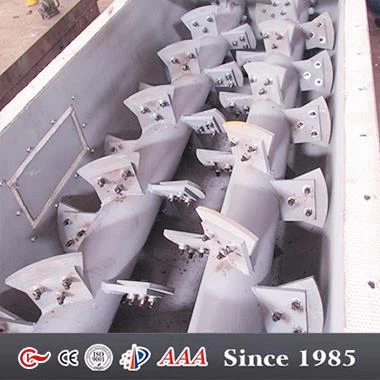
Our Twin Screw Feeder Feed Conveyor System is ideal for applications where you need to handle larger volumes of material or where you need a more precise feed rate. The twin - screw design allows for better control and a more consistent flow.
We understand the importance of the filling ratio and how it affects the performance of our screw feeders. That's why we provide detailed instructions and support to help you find the optimal filling ratio for your specific needs.
Let's Talk
If you're in the market for a screw feeder, or if you're having issues with your current one related to the filling ratio or any other aspect, we'd love to hear from you. We can offer expert advice, customized solutions, and high - quality products. Whether you're a small business or a large industrial operation, we have the right screw feeder for you. Don't hesitate to reach out and start a conversation about your requirements.
References
- "Handbook of Powder Technology: Volume 2 - Particle Technology" by C. E. Capes
- "Industrial Feeding Equipment: Principles and Applications" by various authors
So, that's all about how the filling ratio affects the performance of a screw feeder. I hope this blog has been helpful to you. If you have any questions or need more information, just let me know!