

Auger feeders are essential components in various industrial processes, serving as a reliable and efficient way to convey and meter bulk materials. As a leading supplier of auger feeders, we understand the importance of these devices in maintaining smooth operations across different industries. In this blog post, we will delve into the workings of auger feeders, exploring their components, operating principles, and applications.
Components of Auger Feeders
An auger feeder consists of several key components that work together to ensure efficient material handling. The main components include:
- Auger Screw: The auger screw is the heart of the auger feeder. It is a helical blade wrapped around a central shaft, which rotates to move the bulk material along the trough. The design of the auger screw can vary depending on the type of material being handled, the flow rate requirements, and the application.
- Trough: The trough is a U-shaped or semicircular channel that houses the auger screw. It provides a smooth and continuous path for the material to move along, preventing spillage and ensuring efficient conveyance. The trough can be made of various materials, such as stainless steel, carbon steel, or plastic, depending on the application and the properties of the material being handled.
- Drive Unit: The drive unit is responsible for rotating the auger screw. It typically consists of an electric motor, a gearbox, and a coupling. The drive unit can be mounted at either end of the trough, depending on the design of the auger feeder.
- Inlet and Outlet: The inlet is where the bulk material enters the auger feeder, while the outlet is where it exits. The design of the inlet and outlet can vary depending on the application and the type of material being handled. For example, the inlet may be equipped with a hopper to facilitate the flow of material into the auger feeder, while the outlet may be connected to a processing unit or a storage silo.
Operating Principles of Auger Feeders
The operating principle of an auger feeder is based on the rotation of the auger screw. When the auger screw rotates, the helical blade pushes the bulk material along the trough, creating a continuous flow. The rate of material flow is determined by the speed of the auger screw, the pitch of the helical blade, and the diameter of the trough.
The speed of the auger screw can be adjusted to control the flow rate of the material. A higher speed will result in a higher flow rate, while a lower speed will result in a lower flow rate. The pitch of the helical blade also affects the flow rate. A larger pitch will result in a higher flow rate, while a smaller pitch will result in a lower flow rate.
The diameter of the trough also plays an important role in the operation of the auger feeder. A larger diameter trough can handle a larger volume of material, while a smaller diameter trough is suitable for handling a smaller volume of material. The design of the trough should be carefully selected to ensure that it can accommodate the flow rate requirements of the application.
Types of Auger Feeders
There are several types of auger feeders, each designed to meet specific application requirements. The most common types of auger feeders include:
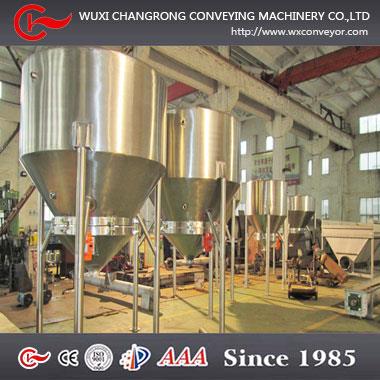

- Horizontal Auger Feeders: Horizontal auger feeders are the most commonly used type of auger feeder. They are suitable for handling a wide range of bulk materials, including powders, granules, and pellets. Horizontal auger feeders are typically used in applications where the material needs to be conveyed over a short distance.
- Vertical Auger Feeders: Vertical auger feeders are used to convey bulk materials vertically. They are typically used in applications where the material needs to be lifted to a higher level, such as in a storage silo or a processing unit. Vertical auger feeders are designed to prevent the material from flowing back down the auger screw, which can cause blockages and reduce the efficiency of the feeder.
- Inclined Auger Feeders: Inclined auger feeders are used to convey bulk materials at an angle. They are typically used in applications where the material needs to be conveyed over a short distance while being lifted to a higher level. Inclined auger feeders are designed to ensure that the material flows smoothly along the trough, preventing spillage and blockages.
Applications of Auger Feeders
Auger feeders are used in a wide range of industries, including agriculture, food processing, chemical, pharmaceutical, and mining. Some of the common applications of auger feeders include:
- Bulk Material Handling: Auger feeders are used to convey and meter bulk materials, such as grains, seeds, fertilizers, chemicals, and minerals. They are commonly used in storage silos, hoppers, and other material handling equipment to ensure a smooth and continuous flow of material.
- Process Feeding: Auger feeders are used to feed materials into processing equipment, such as mixers, crushers, and grinders. They are designed to provide a precise and controlled flow of material, ensuring that the processing equipment operates efficiently and effectively.
- Packaging and Filling: Auger feeders are used in packaging and filling machines to dispense precise amounts of bulk materials into containers, such as bags, boxes, and bottles. They are designed to ensure that the packaging and filling process is accurate and consistent, reducing waste and improving productivity.
Advantages of Auger Feeders
Auger feeders offer several advantages over other types of material handling equipment, including:
- Efficient and Reliable: Auger feeders are designed to provide a continuous and reliable flow of material, ensuring that the production process operates smoothly and efficiently. They are also relatively easy to maintain and repair, reducing downtime and maintenance costs.
- Precise and Accurate: Auger feeders can be designed to provide a precise and accurate flow of material, ensuring that the production process meets the required specifications. They can also be equipped with sensors and controls to monitor and adjust the flow rate of the material, ensuring consistent quality and productivity.
- Versatile and Flexible: Auger feeders can be used to handle a wide range of bulk materials, including powders, granules, and pellets. They can also be customized to meet the specific requirements of the application, such as the flow rate, the material properties, and the installation space.
- Cost-Effective: Auger feeders are relatively inexpensive compared to other types of material handling equipment, making them a cost-effective solution for many applications. They also require less energy to operate, reducing operating costs and environmental impact.
Conclusion
Auger feeders are essential components in various industrial processes, providing a reliable and efficient way to convey and meter bulk materials. As a leading supplier of auger feeders, we offer a wide range of products to meet the specific requirements of our customers. Our auger feeders are designed to provide a precise and accurate flow of material, ensuring that the production process operates smoothly and efficiently.
If you are interested in learning more about our auger feeders or other material handling equipment, please visit our website or contact us today. Our team of experts will be happy to assist you in selecting the right equipment for your application and providing you with a competitive quote.
Links
References
- CEMA Standard 350-2014, “Bulk Material Handling - Belt Conveyors for Bulk Materials,” Conveyor Equipment Manufacturers Association.
- ASME B29.1-2011, “Roller Chains, Attachment, and Sprockets,” American Society of Mechanical Engineers.
- ISO 15378:2011, “Primary Packaging Materials for Medicinal Products -- General Requirements for Their Design, Production, and Control,” International Organization for Standardization.