

Can silo unloaders be used for metal powders? That's a question I get asked a lot as a supplier of silo unloaders. In this blog, I'll dig into this topic, sharing my insights based on years in the industry.
First off, let's understand what silo unloaders are. Silo unloaders are machines designed to move bulk materials out of silos efficiently. They come in different types, each suited to specific materials and operational needs. Some are great for free - flowing materials, while others are built to handle more challenging substances.
Now, metal powders. Metal powders can vary widely in their properties. Some are fine and free - flowing, like aluminum powder, while others can be sticky or prone to agglomeration, such as iron powder with a high moisture content. These differences in properties are crucial when considering whether a silo unloader can be used for metal powders.
Factors Affecting the Use of Silo Unloaders for Metal Powders
Particle Size and Shape
The particle size of metal powders plays a huge role. Fine powders can be more difficult to handle because they tend to stick together and form bridges inside the silo. A silo unloader needs to be able to break these bridges and ensure a smooth flow. For example, spherical metal powder particles may flow more easily compared to irregularly shaped ones. If the particle size is too small, it might also be more likely to cause dust problems during unloading.
Density
Metal powders can have different densities. High - density powders may require more powerful unloaders to move them out of the silo. For instance, tungsten powder is much denser than magnesium powder. A silo unloader that works well for a low - density powder might struggle with a high - density one. The design of the unloader, including the power of its motor and the type of conveying mechanism, needs to be appropriate for the density of the metal powder.
Flowability
As mentioned earlier, the flowability of metal powders can vary. Some metal powders are free - flowing, which means they can easily move down through the silo and into the unloader. Others may be cohesive or sticky, especially if they have absorbed moisture or have a high surface area. For sticky powders, the silo unloader needs to have features that can break up the material and promote flow. This could include vibrating mechanisms or agitators.
Types of Silo Unloaders Suitable for Metal Powders
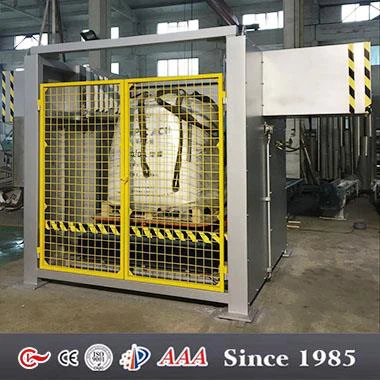
Big Bag Unloading Station Bulk Bag Unloading
For metal powders that come in big bags, a Big Bag Unloading Station Bulk Bag Unloading can be a great option. These stations are designed to safely and efficiently empty bulk bags of various materials. They usually have features like bag massaging devices or vibratory plates to help the powder flow out of the bag. The unloading process is often enclosed, which helps to control dust and maintain a clean working environment. This is especially important when dealing with metal powders, as some can be hazardous if inhaled.
Hybrid Silo Unloader Super Sack Unloading Station
A Hybrid Silo Unloader Super Sack Unloading Station is another versatile option. It combines different technologies to handle a wide range of materials, including metal powders. These unloaders can be equipped with multiple discharge mechanisms, such as gravity, screw conveyors, or pneumatic systems. This flexibility allows them to adapt to the specific properties of different metal powders. For example, if a powder is difficult to flow, the screw conveyor can provide the necessary force to move it out of the silo.
Challenges in Using Silo Unloaders for Metal Powders
Dust Generation
One of the biggest challenges when unloading metal powders is dust generation. Fine metal powders can easily become airborne, creating a health hazard for workers and potentially causing environmental issues. To address this, silo unloaders need to be equipped with proper dust collection systems. These can include filters, cyclones, or baghouses. The design of the unloading process also needs to minimize the amount of agitation that causes dust to be released.
Abrasion
Metal powders can be abrasive, especially those with hard particles. Over time, the abrasive nature of the powder can wear down the components of the silo unloader, such as the conveyor belts, augers, or valves. To combat this, the unloader should be made of materials that are resistant to abrasion, such as hardened steel or ceramic - coated parts. Regular maintenance and inspection are also essential to detect and replace worn - out components before they cause major problems.
Oxidation
Some metal powders are prone to oxidation, especially in the presence of air and moisture. Oxidation can change the properties of the powder, making it less useful for its intended applications. When using a silo unloader, it's important to control the environment inside the silo and during the unloading process. This might involve using inert gases, such as nitrogen, to displace the air and prevent oxidation.
Solutions and Best Practices
Proper Design and Selection
When choosing a silo unloader for metal powders, it's crucial to consider the specific properties of the powder. Work with a knowledgeable supplier who can help you select the right type of unloader based on factors like particle size, density, and flowability. The design of the unloader should also take into account the challenges of dust generation, abrasion, and oxidation.
Regular Maintenance
Regular maintenance is key to ensuring the long - term performance of the silo unloader. This includes cleaning the equipment, lubricating moving parts, and inspecting for wear and tear. A well - maintained unloader is less likely to break down and will provide more consistent performance when unloading metal powders.
Training and Safety
Proper training for operators is essential. They need to understand how to operate the silo unloader safely and effectively, especially when dealing with potentially hazardous metal powders. Safety measures should be in place, such as personal protective equipment (PPE) for workers and proper ventilation in the unloading area.

Conclusion
So, can silo unloaders be used for metal powders? The answer is yes, but it's not a one - size - fits - all situation. With the right type of silo unloader, proper design, and appropriate safety measures, metal powders can be unloaded efficiently and safely. Whether you're dealing with fine, free - flowing powders or sticky, high - density ones, there are solutions available.
If you're in the market for a silo unloader for your metal powder handling needs, I'd love to have a chat. Our team of experts can help you find the perfect solution for your specific requirements. Don't hesitate to reach out and start the conversation about how we can improve your powder handling processes.
References
- "Bulk Solids Handling Handbook" by John A. Wiles
- "Powder Technology: Fundamentals and Applications" by Pieter J. M. van der Werff