

Hey there! As a custom mixer supplier, I often get asked if a custom mixer can be used for mixing liquids and solids. Well, the short answer is yes, but there's a lot more to it than that. In this blog post, I'll dive deep into the world of custom mixers and explain how they can handle both liquids and solids, the factors to consider, and some real - world applications.
How Custom Mixers Can Mix Liquids and Solids
First off, let's talk about how custom mixers are designed to handle this dual task. Custom mixers come in various types, such as paddle mixers, ribbon mixers, and planetary mixers, each with its own way of blending liquids and solids.
Paddle mixers use large paddles that rotate to push the materials around. When it comes to mixing liquids and solids, the paddles can break up clumps of solids and disperse them evenly throughout the liquid. The design of the paddles can be customized based on the specific materials being mixed. For example, if you're mixing a thick liquid with large solid particles, you might need paddles with a more aggressive shape to ensure proper mixing.
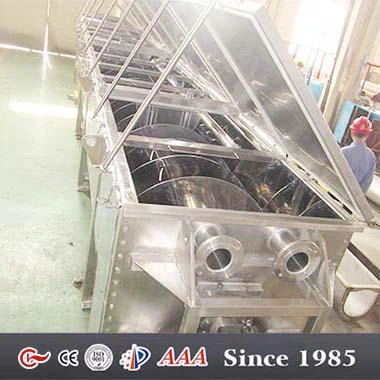
Ribbon mixers, on the other hand, have a unique ribbon - like agitator. The outer ribbon moves the materials in one direction while the inner ribbon moves them in the opposite direction. This creates a continuous flow that helps in thoroughly mixing liquids and solids. It's especially effective for mixing powders and granular solids with liquids. For instance, when making a sauce that contains spices (solids) and water or oil (liquids), a ribbon mixer can ensure that the spices are evenly distributed.
Planetary mixers have a mixing tool that rotates on its own axis while also orbiting around the mixing bowl. This multi - directional movement allows for efficient mixing of both liquids and solids. It's great for applications where you need a high - level of homogeneity, like in the food industry when making batters that contain flour (solid) and milk (liquid).
Factors to Consider
When using a custom mixer for mixing liquids and solids, there are several factors that you need to take into account.

Viscosity: The viscosity of the liquid plays a huge role. If the liquid is very thick, like honey, it will require a more powerful mixer to move it around and incorporate the solids. On the other hand, a thin liquid like water will be easier to mix. You might need to adjust the speed and torque of the mixer depending on the viscosity.
Particle Size of Solids: The size of the solid particles matters too. Smaller particles are generally easier to mix into a liquid compared to larger ones. Large solid particles might require pre - processing, such as grinding, to make them more manageable for the mixer. For example, if you're mixing chunks of fruit into a smoothie, you'll get a better result if you chop the fruit into smaller pieces first.
Density: The density difference between the liquid and the solids can also affect the mixing process. If the solids are much denser than the liquid, they might sink to the bottom and not mix evenly. In such cases, you might need to use a mixer with a more powerful agitation system to keep the solids suspended in the liquid.
Chemical Compatibility: It's crucial to ensure that the materials being mixed are chemically compatible with the mixer's components. Some liquids or solids might be corrosive and can damage the mixer over time. So, you need to choose the right materials for the mixer, like stainless steel for its corrosion - resistant properties in many applications.
Real - World Applications
Let's look at some real - world scenarios where custom mixers are used to mix liquids and solids.
Food Industry: In bakeries, custom mixers are used to combine flour, sugar, eggs, and milk to make dough. The mixer needs to ensure that all the ingredients are well - mixed to create a consistent texture. In the production of salad dressings, mixers blend oil, vinegar, herbs, and spices. The Conveyor Screw Coffee Screw Ribbon Mixer for Coffee System can be used in coffee processing, where it mixes coffee beans (solid) with flavoring agents (liquid) to create flavored coffee products.
Chemical Industry: Chemical manufacturers often use custom mixers to combine different chemicals in liquid and solid forms. For example, in the production of paints, pigments (solids) are mixed with solvents and binders (liquids). The mixer has to ensure that the pigments are evenly dispersed to achieve the desired color and consistency.
Wastewater Treatment: In wastewater treatment plants, Sludge Mixer Mixing Screw Conveyors are used to mix sludge (a semi - solid) with chemicals (liquids) for treatment. The mixer helps in breaking up the sludge and ensuring that the chemicals are evenly distributed for effective treatment.
Advantages of Using a Custom Mixer
There are several advantages to using a custom mixer for mixing liquids and solids.
Tailored to Your Needs: Since it's custom - made, the mixer can be designed specifically for your application. You can choose the right size, shape, and agitation system based on the materials you're mixing. This ensures a more efficient and effective mixing process compared to using a standard mixer.
Improved Quality: Custom mixers can provide a higher level of homogeneity in the final product. This means that the solids will be evenly distributed throughout the liquid, resulting in a better - quality end - product. Whether it's a food item or a chemical product, consistent quality is crucial for customer satisfaction.
Increased Productivity: A well - designed custom mixer can mix materials faster and more efficiently. This reduces the mixing time and increases the overall productivity of your production process. You can produce more products in less time, which is great for your bottom line.
Contact for Purchase and洽谈
If you're interested in purchasing a custom mixer for your liquid - solid mixing needs, I'd love to hear from you. Whether you're in the food, chemical, or any other industry, we can design a mixer that suits your specific requirements. Reach out to us to start the conversation and let's find the perfect custom mixer for your business.
References
- "Mixing Technology Handbook" - A comprehensive guide on various mixing processes and equipment.
- Industry reports on food, chemical, and wastewater treatment industries that discuss the use of mixers.